Multi-Agent System: Build Apps & Automate Workflows Without Code
Master multi-agent system architecture for autonomous development. Explore practical use cases and system challenges as you build apps with the Enter Pro workflow.
Software development is shifting. We are moving past isolated, single-prompt tools toward a networked multi-agent system. If you are wondering what is multi agent system in practical terms, think of it as a coordinated digital team. Instead of forcing one model to handle everything—which often leads to stalled projects and buggy code—this framework relies on autonomous units working together. They handle the complex logic that standard setups simply cannot process. By handing over the heavy technical lifting to these specialized entities, founders can finally orchestrate intricate workflows. You can build robust, professional-grade software efficiently, without taking on the burden of technical debt or needing a massive engineering budget.
Understanding Multi-Agent System Architecture
Decentralizing your workload is always much more efficient than crossing your fingers and hoping a single model gets every detail right. By breaking massive, sprawling projects down into manageable, bite-sized pieces, distributed intelligence keeps development moving forward reliably.
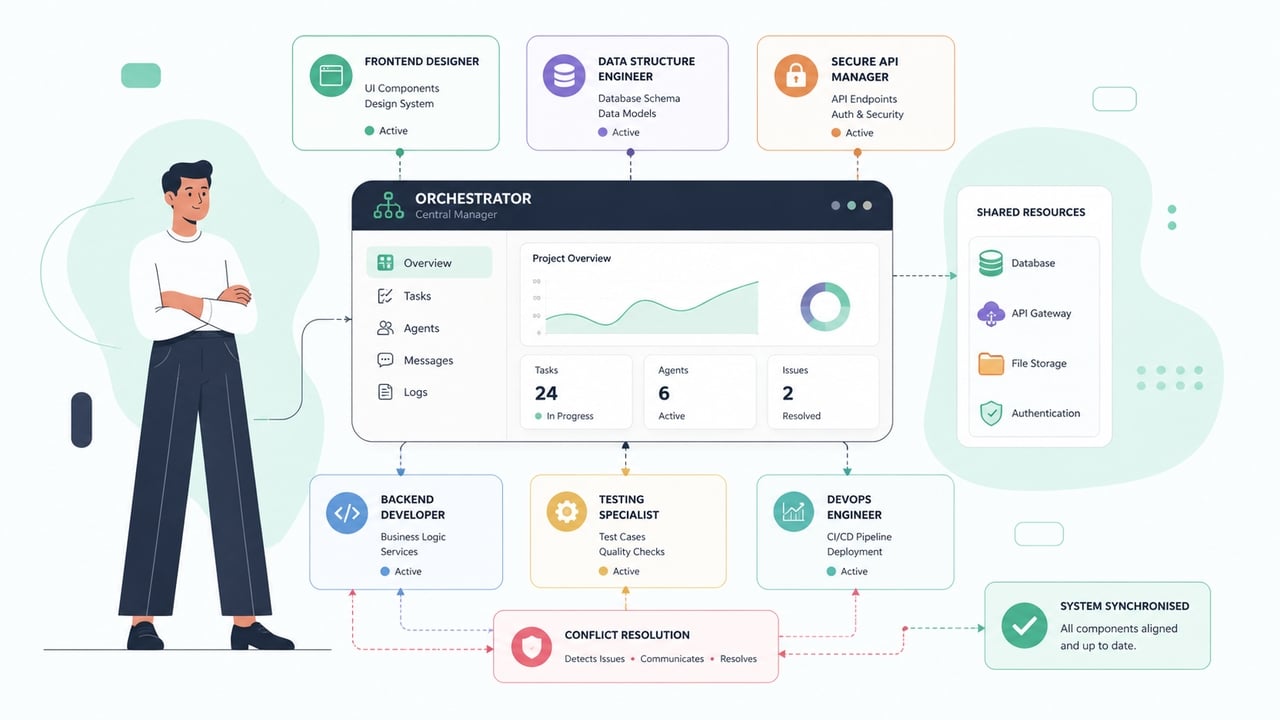
In a typical multi-agent system architecture, a primary "orchestrator" takes the lead. This central manager assigns specific jobs—like a frontend designer, a data structural engineer, or a secure API manager—to keep the entire project aligned. This setup completely prevents the context-loss that ruins long, manual agentic coding sessions.
Crucially, these frameworks feature built-in conflict resolution. If someone updates a database schema and it breaks the frontend, the agents communicate to fix the mismatch instantly. That structural integrity keeps every layer of your app synchronized.
Core Characteristics of an Effective Framework
These collaborative setups aren't just sitting around waiting for you to type out a command. They bring a proactive energy you simply won't find in traditional, reactive software, thanks to a few core traits:
-
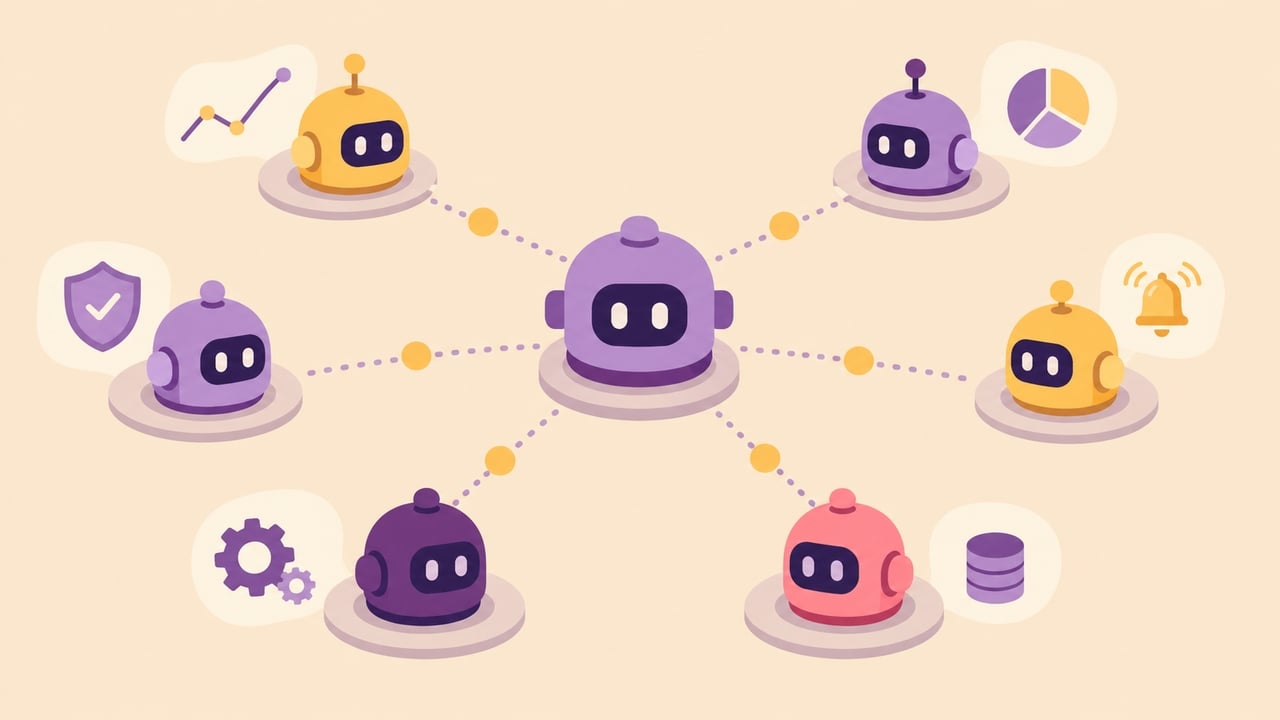
Built-In Proactivity: These units don't just react; they take the initiative based on local goals, user intent, and subtle shifts in their environment. For example, if a live deployment starts throwing unexpected errors, a dedicated monitoring unit can trigger an automatic rollback to the last stable version immediately. It doesn't need to wait for a developer to wake up and notice the downtime—it just handles it.
-
Decentralized Focus: Because the entire setup is decentralized by design, no single unit actually has to understand the entire scope of the project. Each one focuses intensely on its own specialty, sharing only the most essential data points with the rest of the network.
-
Emergent Behavior: This localized focus creates what engineers call emergent behavior. Simple, individual actions merge to solve highly complex engineering problems, ultimately producing a total output that is far superior to its individual parts.
Classifying Agent Interactions: Cooperative vs. Competitive Models
Interactions inside these complex networks usually follow one of two distinct paths, depending on the end goal of the software:
-
The Cooperative Approach: This path relies entirely on shared goals, where distinct units help each other optimize a final build. This forms the backbone of modern development platforms like Enter Pro. In this environment, a logic unit and a visual design unit work in constant tandem, passing data back and forth to ensure that an application not only processes transactions securely but also looks visually appealing to the end-user.
-
The Competitive Approach: On the flip side, this setup features units actively vying for limited resources. This is a strategy incredibly common in fast-paced environments like automated financial trading or algorithmic ad bidding.
-
The Need for Negotiation: No matter which path is taken, negotiation is a vital component. These units have to use standard communication protocols to settle on task priorities, which keeps the network from getting stuck in those endless logic loops that stall your progress and eat up valuable compute resources.
Critical Use Cases in the Real World
Today, this technology shines the brightest in environments where data is spread out, and business requirements shift constantly.
Smart Grid Energy Management
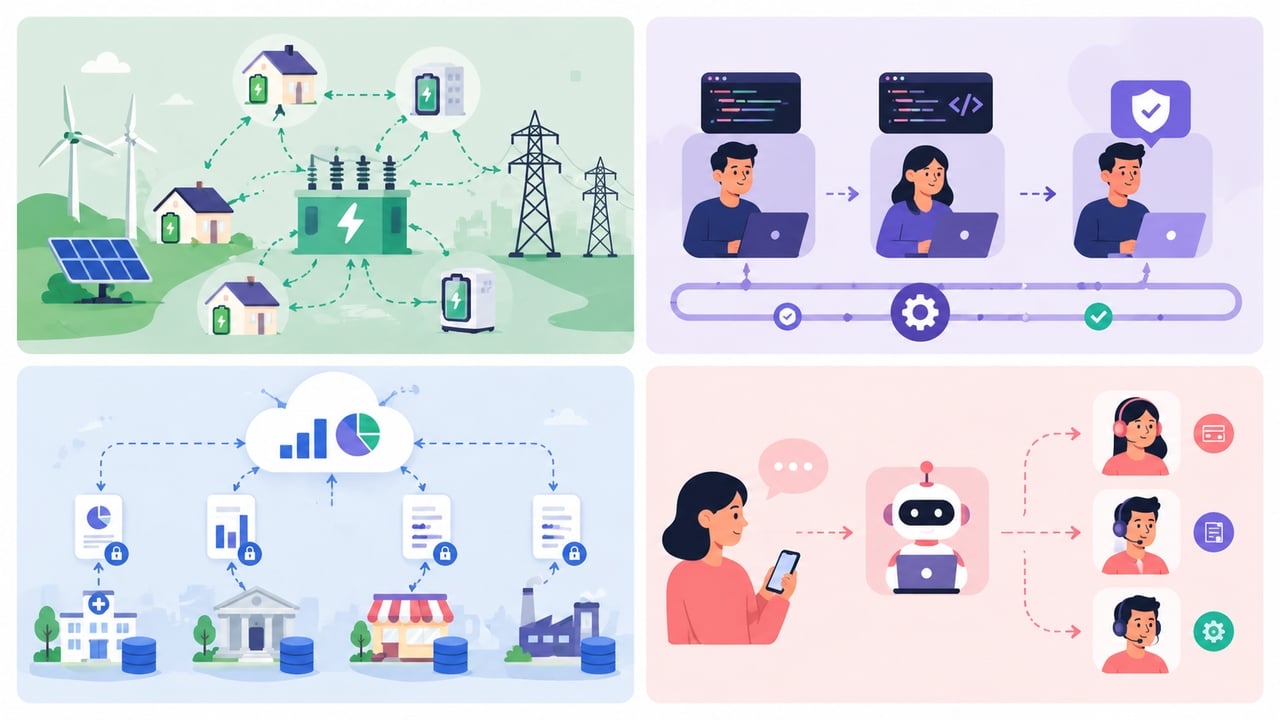
Modern grids must balance renewable solar and wind power with constantly shifting consumer demand. In this scenario, home batteries and neighborhood transformers act as individual nodes. They trade energy locally to reduce the central grid's load, keeping power distribution highly efficient.
Collaborative Software Engineering
This is a massive operational shift for non-technical founders. By utilizing a multi agent system in AI, you can essentially automate the entire software product development lifecycle. One digital unit writes the foundational tests, another generates the core code, and a third runs a rigorous security audit before anything goes live.
Distributed Data Analytics
When privacy laws, like GDPR, prevent companies from moving sensitive user data to a central cloud server, federated analysis steps in. This allows analytical units to travel directly to the local data source, perform their work locally, and return only the anonymized, summarized results to the central hub.
Customer Support Routing
Instead of a simple chatbot that frustrates users, a collaborative network can triage complex issues. A greeting unit collects the user's problem, securely passes the context to a billing unit, or escalates to a technical troubleshooting unit, ensuring the customer never has to repeat their issue.
Challenges of Multi-Agent Systems
While distributing tasks offers immense operational benefits, building and maintaining these networks introduces specific hurdles. Understanding these obstacles is essential for anyone looking to set up a reliable, scalable workflow.
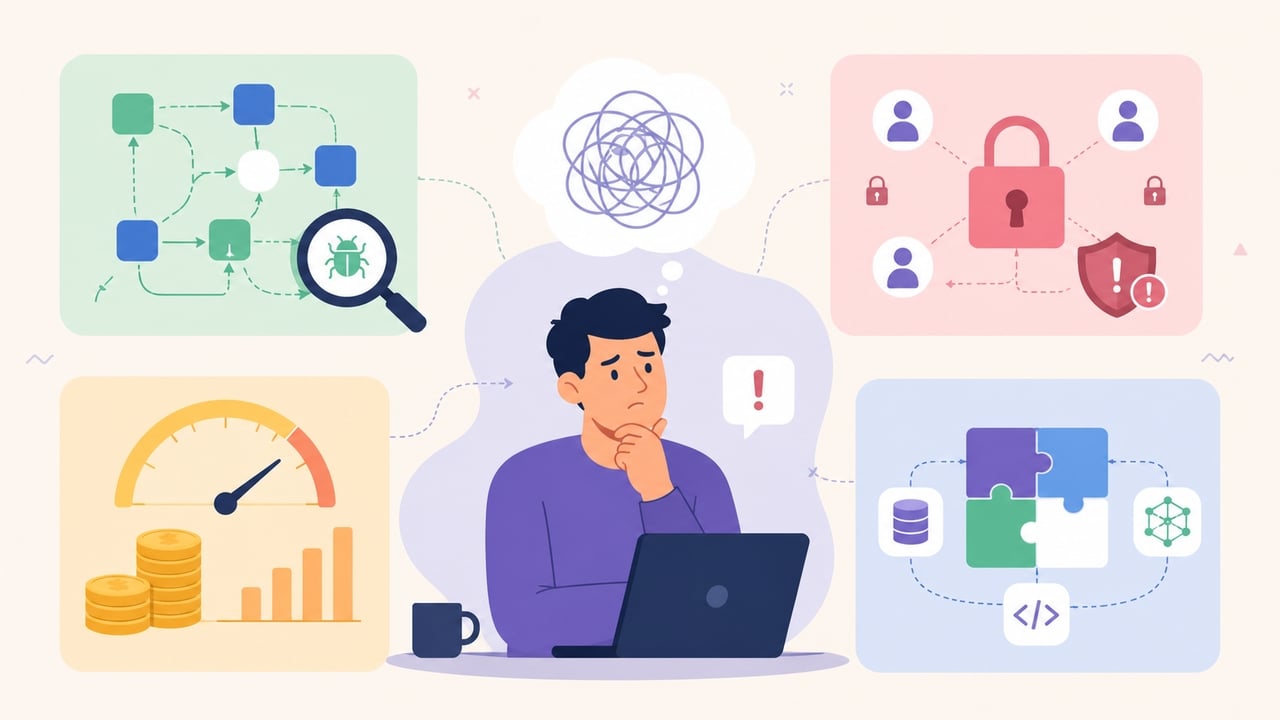
Navigating System Complexity
Finding the exact root cause of a logic error becomes incredibly difficult when multiple entities collaborate on a single file. Standard developer debugging tools often fail to track issues across a decentralized network. This makes it hard to pinpoint exactly which unit made a mistake, requiring highly specialized monitoring dashboards.
Security and Privacy Risks
Adding more autonomous units to your workflow naturally opens up more potential vulnerabilities. Keeping sensitive customer data secure as it moves between different digital workers requires a commitment to rigorous encryption and incredibly strict access controls.
Balancing Computational Costs
Running several elite-tier models at the exact same time consumes massive amounts of processing power. For many small businesses and independent creators, the sheer cost of the compute resources needed to keep the network running smoothly can quickly become a heavy financial burden.
Maintaining Interoperability
Different foundational models often process and format data in unique, proprietary ways. Forcing these distinct tools to truly understand each other and share context without losing critical information requires highly standardized communication protocols, which are difficult to maintain as the software updates.
The Business Value of a Multi Agent AI System
For a scaling business looking to stay lean, adopting a multi agent AI system provides a significant operational edge that heavily outweighs the initial setup challenges. It allows you to use the absolute best tool for the specific job at hand—assigning a heavy reasoning model to map out your database types and logic, while dedicating a faster, visually-focused model to handle frontend design processing.
This parallel workflow actively cuts your time-to-market. You are building the user interface, structuring the database, and connecting external APIs all at the exact same time. It also acts as an incredible safety net. Because specialized units act as harsh critics for one another, the network is far less prone to the hallucinations seen in basic chat setups, consistently delivering reliable, functional code.
Enter Pro: A Production-Ready Hub for Vibe Coding
Enter Pro** **steps in as your virtual technical co-founder. It uses a sophisticated network to turn a simple idea into a live application while completely managing the computational costs and interoperability challenges mentioned above. By managing specialized digital workers, the platform handles the frustrating backend logic and real-time debugging. You can switch between the best models available to ensure the smartest processor is always on the task. Better yet, you can watch the entire process unfold in the Chat Queue, seeing exactly how the network plans and executes your build.
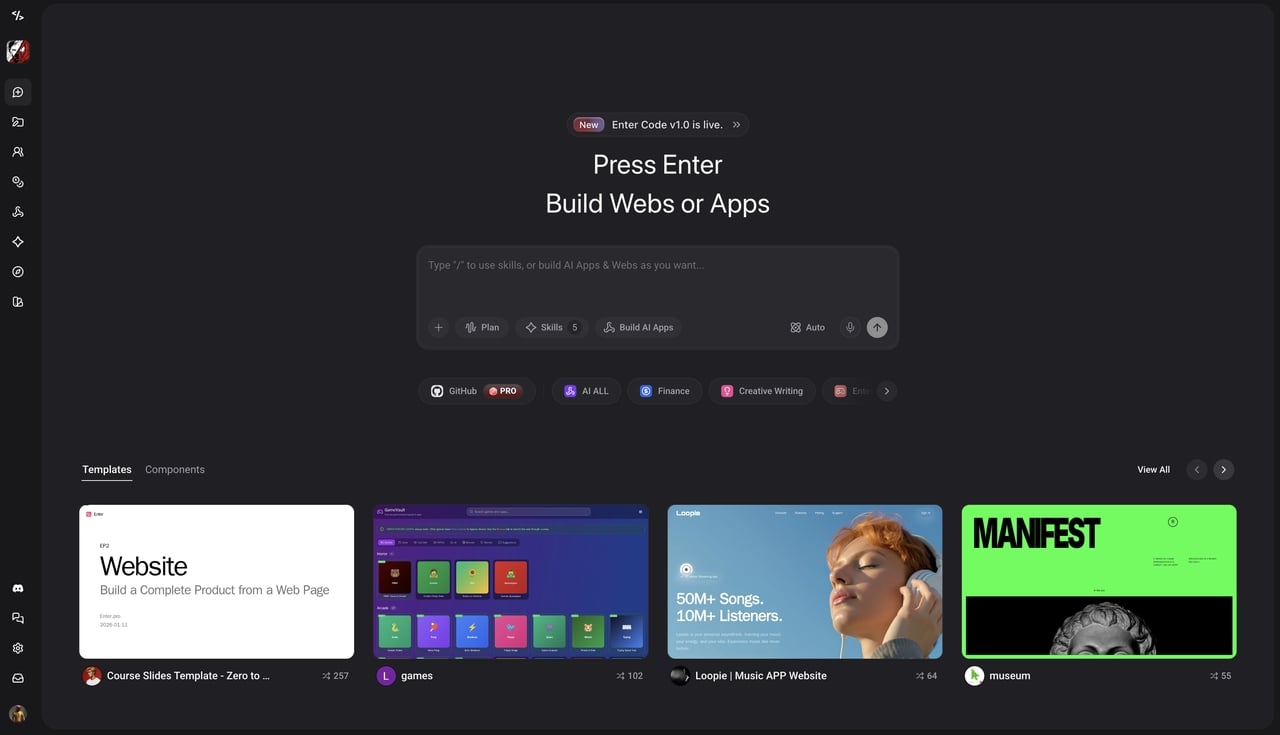
Building and Deploying Apps Through Coordination
Taking a rough idea to a live product is a straightforward, reliable process:
Step 1: Describe Your Vision
Drop the technical jargon and type your core app idea straight into the prompt box. You get to focus entirely on shaping the user experience—like designing a sleek mini-player or curating custom playlists—while the platform quietly handles the complex database architecture in the background.
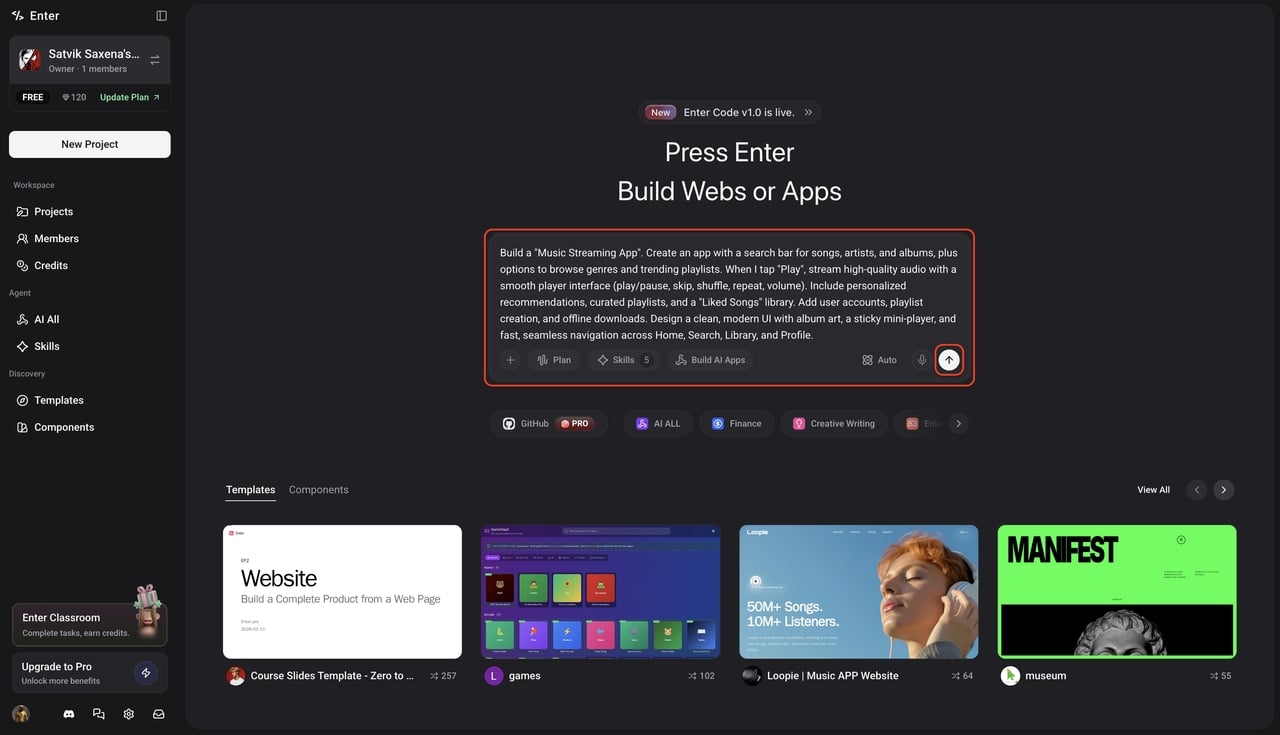
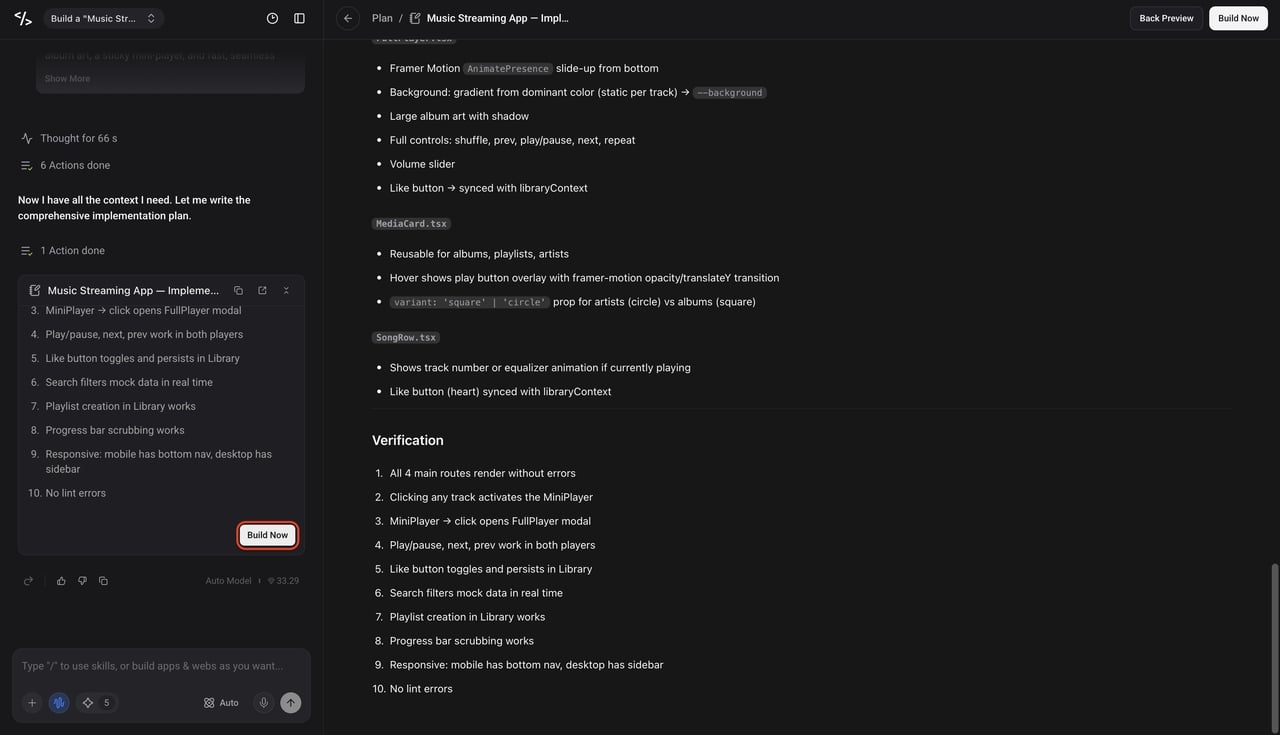
Step 2: Review the Implementation Plan
Now, the moment you hit submit, the system translates your raw concept into a structured implementation plan that maps out every necessary component. Take a quick look over this generated architecture to confirm it captures your exact intent, then click "Build Now" to let the network handle the heavy lifting.
Step 3: Preview, Refine, and Publish
Toggle the canvas to see your preview in desktop, tablet, and mobile layouts, selecting to edit any component or text block right where it sits. If you need deeper control, just go to the code, adjust your integrations, or pull up the agent tools before hitting "Publish to Live."
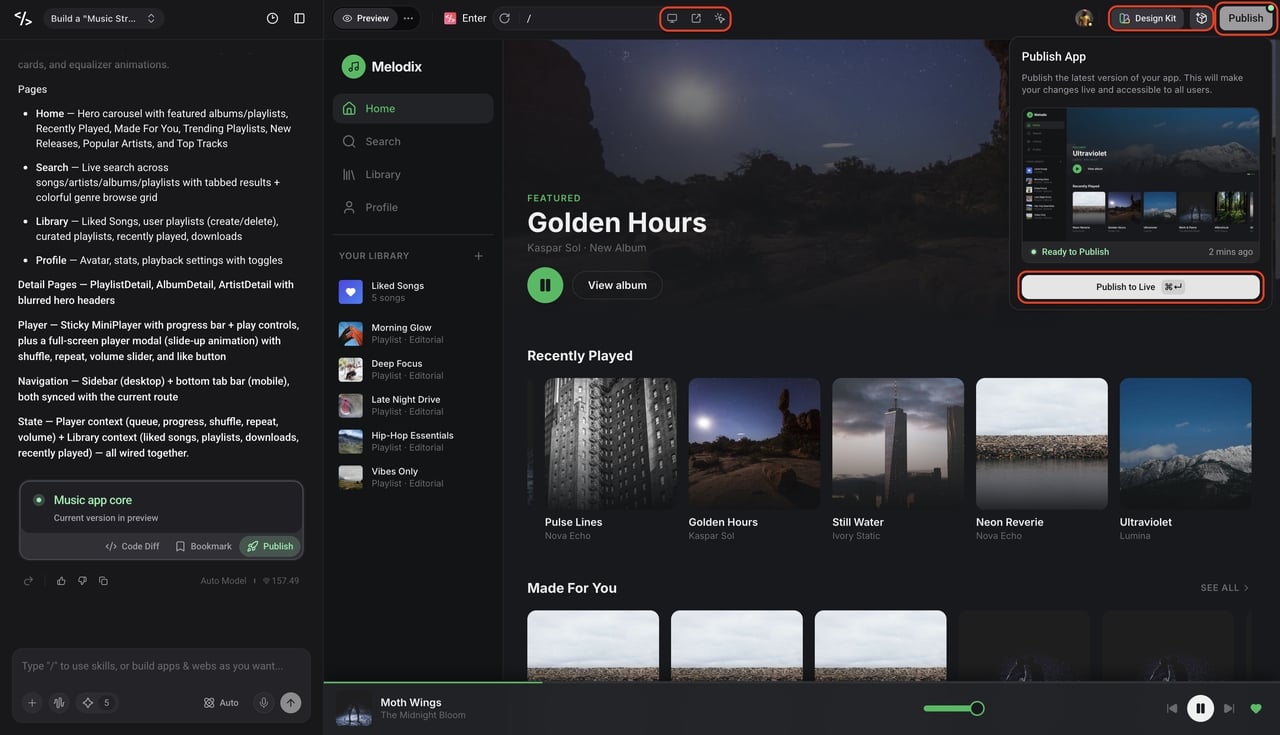
Pro Tip: Always dial in your mobile layout before tweaking the desktop view; this guarantees a flawless, responsive experience for the vast majority of your users right out of the gate.
Scaling Collaborative Workflows
-
Native Core Capabilities: Get instant access to top-tier models with zero configuration. We manage the compute power and API keys so you can focus on building efficiently.
-
Collaborative Workspace: Innovation shouldn't happen alone. Invite your team to a shared space to review code and co-create alongside your digital workers.
-
100% Code Ownership: We are your launchpad, not a cage. Export your full source code whenever you want and host it on your own servers.
Conclusion: The Competitive Edge of Collaborative Building
The rise of collaborative agent networks is fundamentally shifting how small businesses and founders approach innovation. By fully embracing distributed intelligence, you can move rapidly from a basic concept to a production-ready application without the massive overhead of hiring a large engineering team. This modular, transparent approach ensures your software is built efficiently and designed to last.
Enter Pro offers the transparency, the power, and the orchestration required to turn any idea into a scalable business asset. As digital creation continues to evolve away from manual typing and toward natural language, those who build with agent-based workflows will firmly lead the next wave of innovation.
FAQs
- What is a multi agent system in simple terms?
Think of it as a digital project team. Instead of one tool trying to do absolutely everything, you have a group of distinct specialists—like a manager, a visual designer, and a backend coder—working together to finish the job quickly.
- How does this architecture benefit a non-technical founder?
It completely removes the traditional coding barrier. You do not need to spend months learning syntax or hiring expensive freelancers. You just share your business intent through natural language, and the architecture handles all the technical execution.
- Is a collaborative system more reliable than a single model?
Yes, significantly more reliable. Because the units continuously audit and review one another, the network catches subtle errors that a solo model would easily miss. This constant peer-review process makes the final code much more stable.
- Can I use different models within the exact same project?
Absolutely. Professional platforms like Enter Pro let you toggle between different top-tier models seamlessly. This ensures you always have the right intelligence tool for a specific part of your app development.
- Do I actually own the code that the agents build?
Yes. You retain complete and total code ownership over everything generated in your workspace. You can export the entire project folder and host it anywhere, giving you total freedom over your digital assets.