Generative vs Agentic AI: Differences, Examples, and Use Cases
Agentic AI vs generative AI explained: compare how each works, the key differences, real examples, and when to use one or both for your next project.
The distinction between agentic AI and generative AI lies in their functions: creating versus executing tasks. Generative AI generates new content, such as text, code, or images, in response to prompts. In contrast, agentic AI is assigned a specific goal. It plans the necessary steps, utilizes various tools, and takes action with minimal supervision. Typically, it operates on a generative model, which serves as its reasoning engine.
So, what is agentic AI vs generative AI? Here’s a simple example: A prospect fills out a form. Generative AI can draft a follow-up email when prompted. Meanwhile, an agentic system manages the entire process. It retrieves the CRM record, assesses the lead’s intent, drafts the email, schedules it, and logs the outcome, all without needing prompts at each step. People are still sorting this out. Thomson Reuters’ latest survey found that 74% of professionals use AI several times a week. Many are still working out what agentic AI changes.
This guide covers definitions, a side-by-side comparison of agentic AI vs generative AI differences, real examples, how the two work together, and how to choose. It ends with a hands-on Enter Pro build. Want to see both in one project? Jump to the Enter Pro walkthrough.
What Is Generative AI?
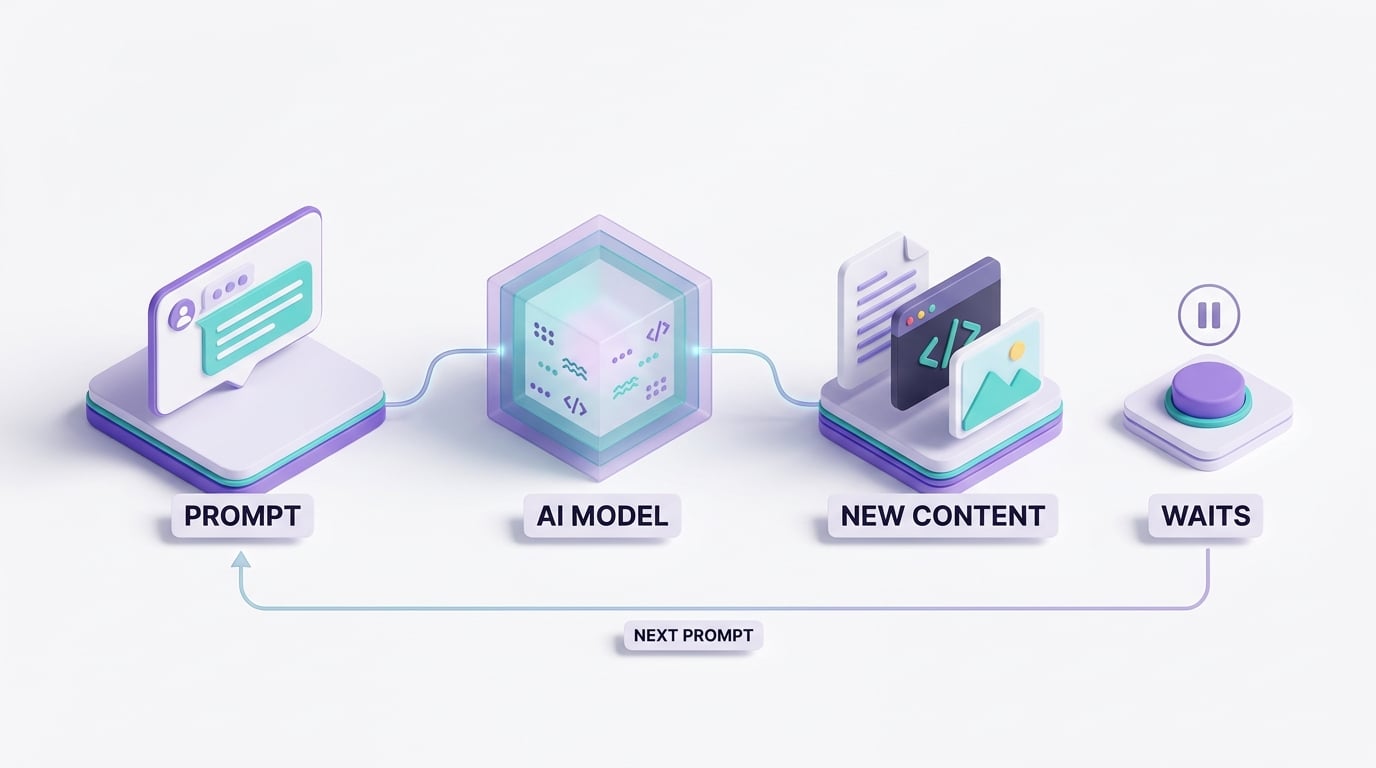
Generative AI creates new content based on patterns it has learned during its training. You provide it with a prompt, and it generates a response before waiting for the next prompt. So, what is generative AI vs agentic AI? Generative AI responds to prompts but does not pursue its own goals independently.
How Generative AI Works
Large language models and other deep-learning models generate text, images, audio, video, and code. ChatGPT and Google Gemini are the ones you know. They also summarize, translate, and restructure content you already have. The pattern is simple: request in, response out. Retrieval-augmented generation (RAG) adds a lookup step. The model checks current facts before it answers. IBM’s overview goes deeper.
Where Generative AI Falls Short
It can present incorrect information with complete confidence. This is known as a hallucination, which is why a person should always verify the output. Additionally, it cannot interact with other systems unless tools are developed for that purpose.
What Is Agentic AI?
Agentic AI takes a goal-oriented approach. The system plans, makes decisions, utilizes tools, and works through multiple steps. It always works with human approval for critical moments.
How Agentic AI Works
Consider a four-step loop: perceive, plan, act, and observe. An agent reads the context and utilizes its memory. It breaks down the main goal into smaller subtasks and then interacts with tools or APIs as needed. After executing these tasks, the agent evaluates the results and makes necessary adjustments. The Model Context Protocol (MCP) is an emerging standard aimed at connecting agents with tools and data effectively. IBM explains it well.
Not every “agent” is truly agentic. A chatbot that merely answers questions is fundamentally generative. Gartner refers to this rebranding tactic as “agent washing.” In a June 25, 2025 press release, they estimated that only about 130 of the thousands of AI vendors claiming to be agentic are genuine.
Agentic AI vs AI Agents
An AI agent is software that acts. Agentic AI is the broader style of goal-directed behavior. Here’s a quick test: does it plan and act across several steps without being told each one? If yes, it’s agentic. For the build side, see our AI coding agent guide.
Agentic AI vs Generative AI Differences at a Glance
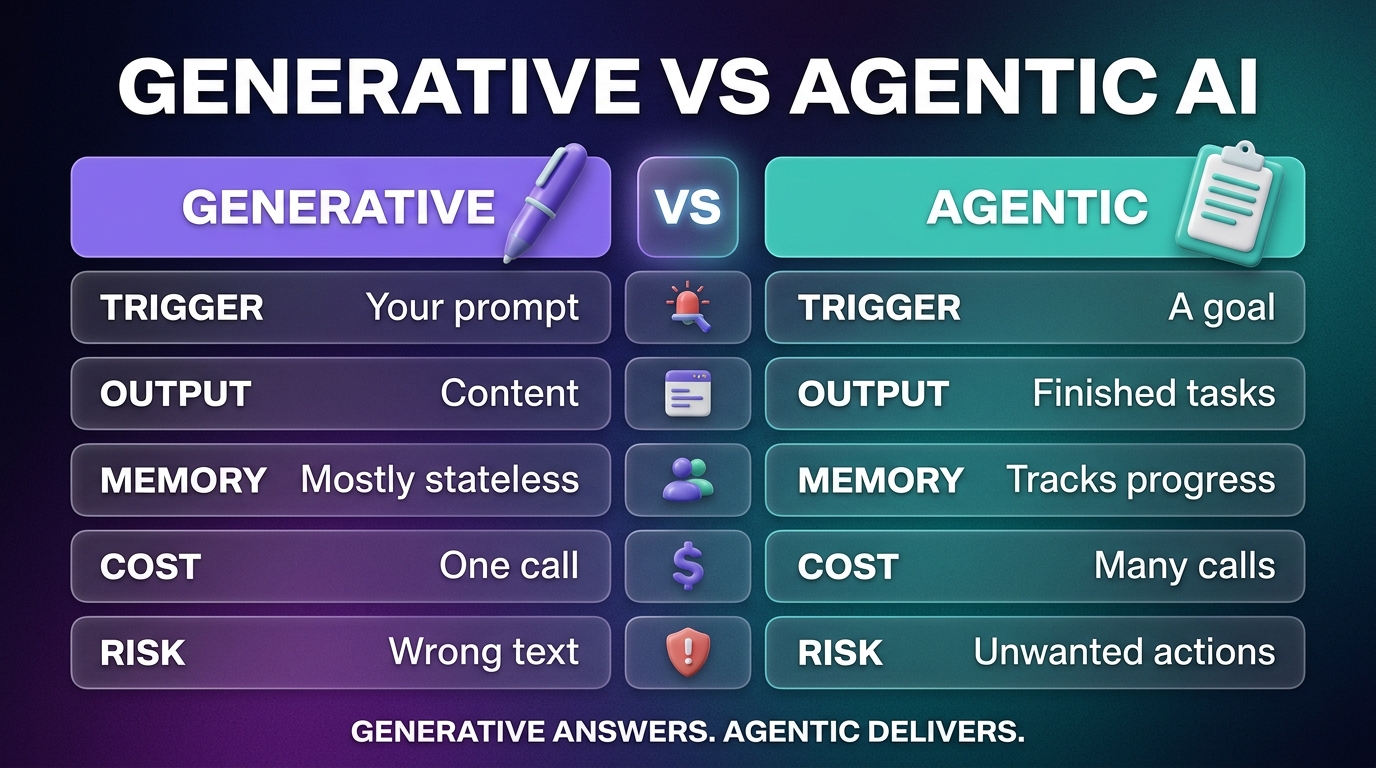
Generative AI answers. Agentic AI delivers. Here’s an easy way to remember it. Generative AI is a skilled writer you brief on every task. Agentic AI is a project manager you give the outcome to.
Autonomy and Initiative
Generative AI responds to each prompt individually, while agentic AI operates towards a specific goal and chooses the next steps within established parameters. For example, if you ask generative AI for a refund policy, it will write one for you. In contrast, if you give agentic AI the goal of “clearing this week’s refund requests,” it will systematically work through the queue to accomplish that task.
Tool Use and Memory
Agentic systems call APIs, databases, and other software. They also track progress across steps. Generative models are mostly stateless per request unless extra tooling is added, as Databricks notes.
Risk, Cost, and Oversight
Each agentic step triggers one or more model calls. Compute cost grows with workflow depth. A generative request is a single call. Risk differs too. Generative AI risks wrong or biased text. Agentic AI risks unwanted actions in live systems.
Real-World Examples of Agentic AI and Generative AI
Here are some agentic AI vs generative AI examples you may have used: ChatGPT and Gemini. Additionally, there are agentic tools like n8n, CrewAI, Relevance AI, AutoGPT, and Devin. Coding agents such as Claude Code and Enter Code also belong in this category. Each example below includes a specific task, a proof point, and a limitation.
Software Development
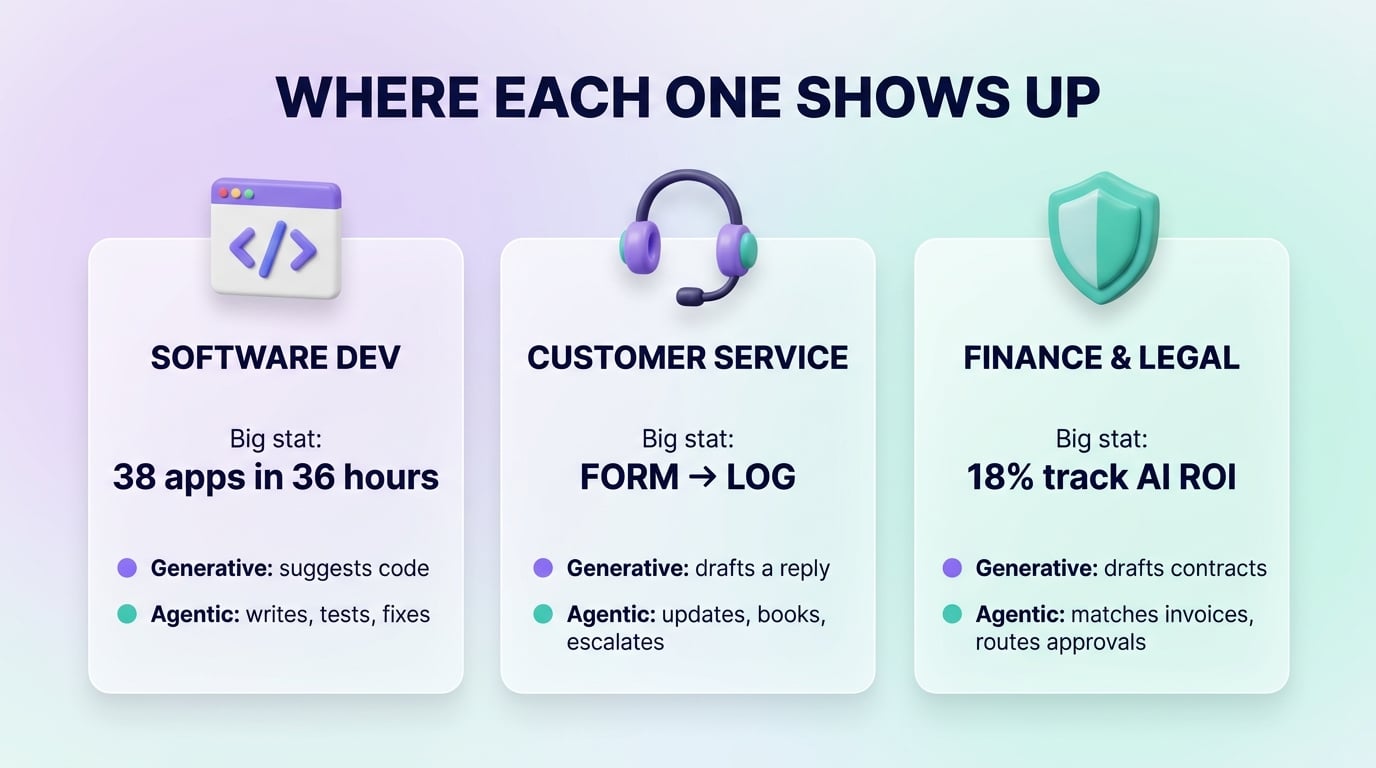
Generative AI suggests a snippet, explains unfamiliar code, or drafts tests when you ask. Agentic AI reads the requirement, writes code across files, runs tests, fixes failures, and hands the result back for review. At a spring hackathon at Princeton University, 105 participants built 38 projects in 36 hours. Enter Pro sponsored the event, and Converge AI’s recap features three first-time builders who made their app on it. The catch is scale. Enter’s own coding-agent guide notes that performance drops on very large codebases without careful task scoping. More in our agentic coding guide.
Customer Service and Sales
Generative AI drafts a reply or summarizes a chat for a human agent. Agentic AI looks up the customer, updates the account, processes a return or books an appointment, and escalates the hard cases. Sales shows the full chain. A form comes in, and the agent finds the CRM record, scores intent, writes the email, schedules it, and logs it. That’s Databricks’ example, retold. The catch is control. Actions on customer records need approval thresholds, so refunds above a set amount should go to a person.
Finance, Legal and Compliance
Generative AI drafts contracts, filings, and client communications. Agentic AI handles accounts payable by checking invoices against purchase orders, routing approvals, scheduling payment, and monitoring regulations across jurisdictions. The catch is judgment. Thomson Reuters says agentic systems should stop and hand off when professional judgment is needed. Only 18% of organizations track AI ROI, so set measurable goals first. Read the full breakdown.
Agentic vs Generative AI: How They Work Together
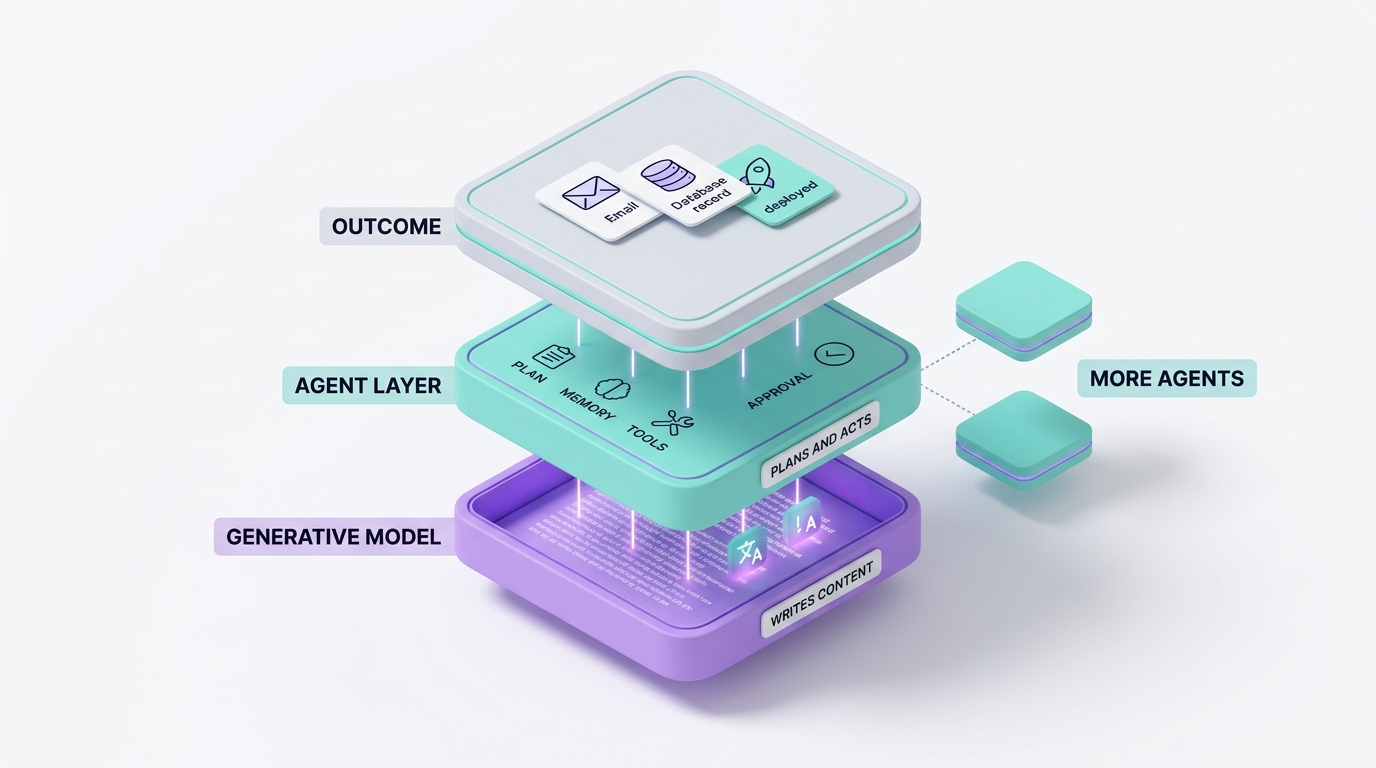
They’re layers, not rivals. Agentic AI usually runs on top of a generative model. The model handles language and content. The agentic layer handles planning, tools, memory, and approvals. Take a market-intelligence agent. The goal would be to summarize competitor activity this week. It queries news APIs and pulls structured data. It asks a generative model to summarize each item. Then it formats the digest.
Multi-model stacks are normal. Databricks reports that 78% of companies in its customer data use two or more LLM families. When one agent isn’t enough, teams split the work across several. See our multi-agent coding guide and Databricks’ compound AI systems glossary.
Generative AI vs Agentic AI: Which Should You Use?
Pick by task, not hype. Ask three questions. Is it one step or many? Does it touch other systems? What happens if it’s wrong?
| Task type | Best fit | Why | Example |
|---|---|---|---|
| Single-turn content or summary | Generative AI | One prompt, one output, easy to check | Summarize a report |
| Multi-step work across systems | Agentic AI | Needs planning, tools, and memory | Process invoices end to end |
| Mixed (draft, send, log) | Both | Model writes, agent executes | Send and log a follow-up email |
| High-stakes decisions needing an audit trail | Agentic AI with human approval | Approvals and action logs | Refunds above a set limit |
See the Difference Yourself: Build an App With Enter Pro
Enter Pro is an AI dev agent that turns a prompt into a working app. The first half of the workflow is generative: prompt in, code out. The second half is agentic: the agent builds, checks, and ships. We’ll use one scenario throughout: “Build a waitlist landing page for a mobile app launch.”
Step 1: Open Enter Pro and Start a New Project
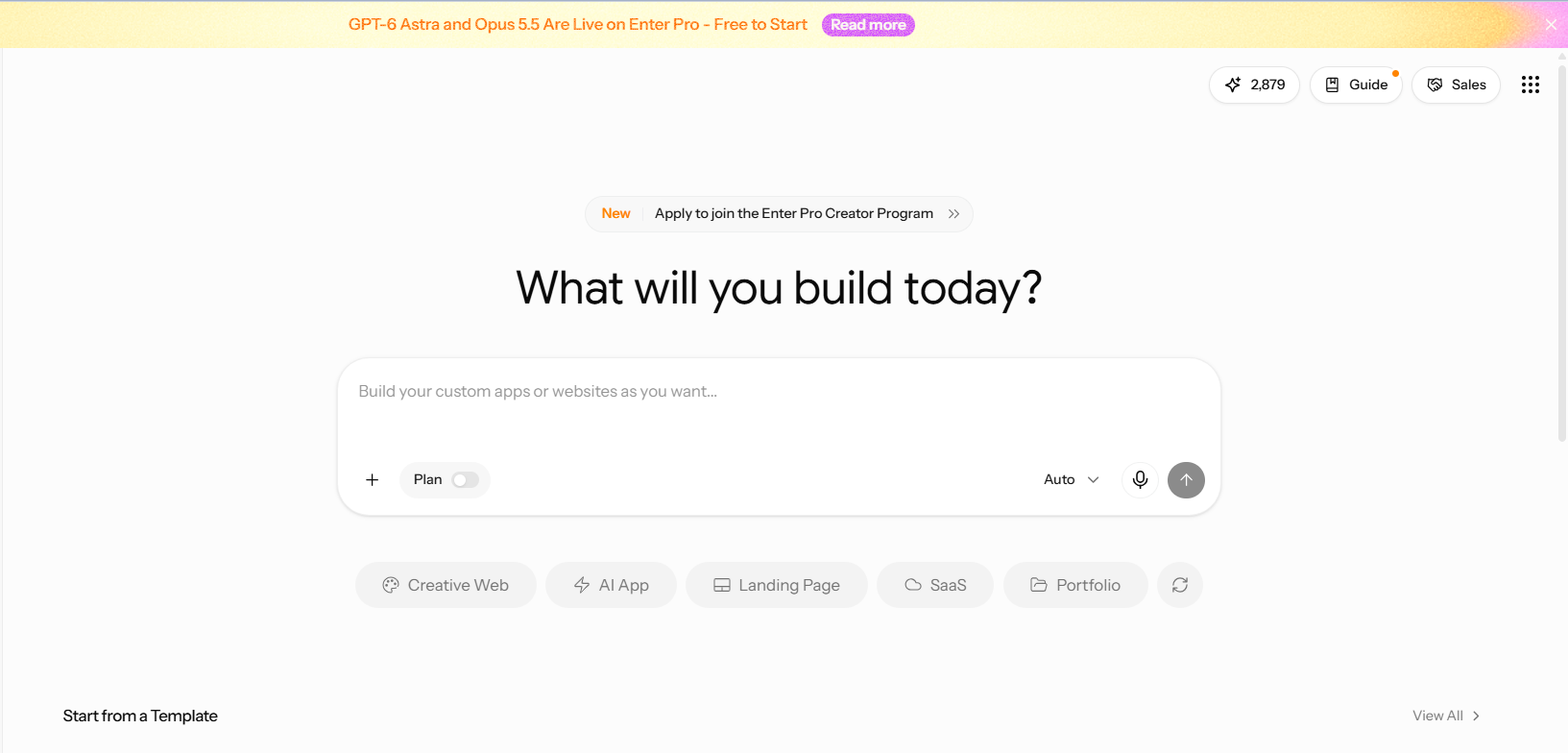
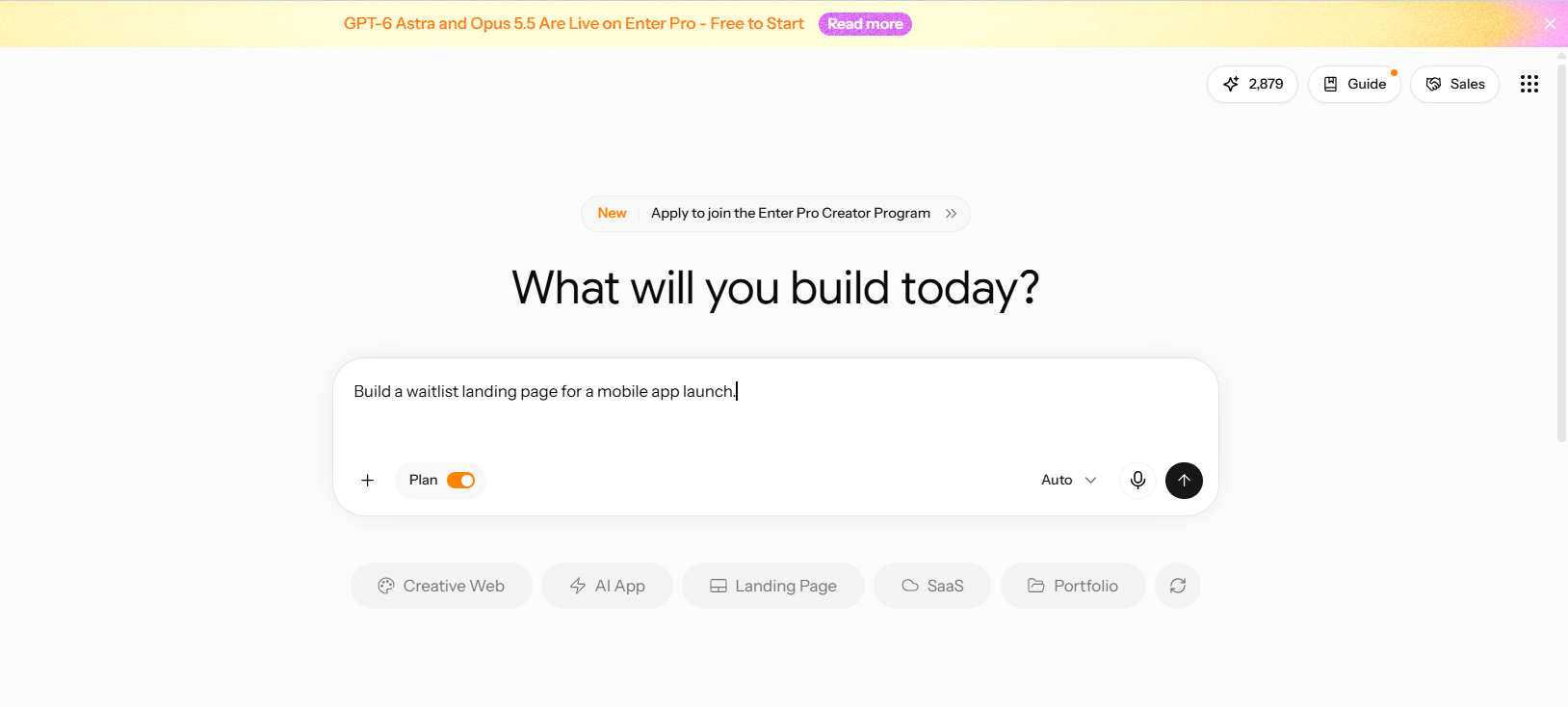
Sign in at enter.converge.ai and open a new project. You’ll land on an empty prompt box.
Step 2: Write Your Prompt
Give the goal, audience, and must-haves in two or three sentences. This is the generative moment. One prompt in, content and code out.
Step 3: Review the Generated Plan
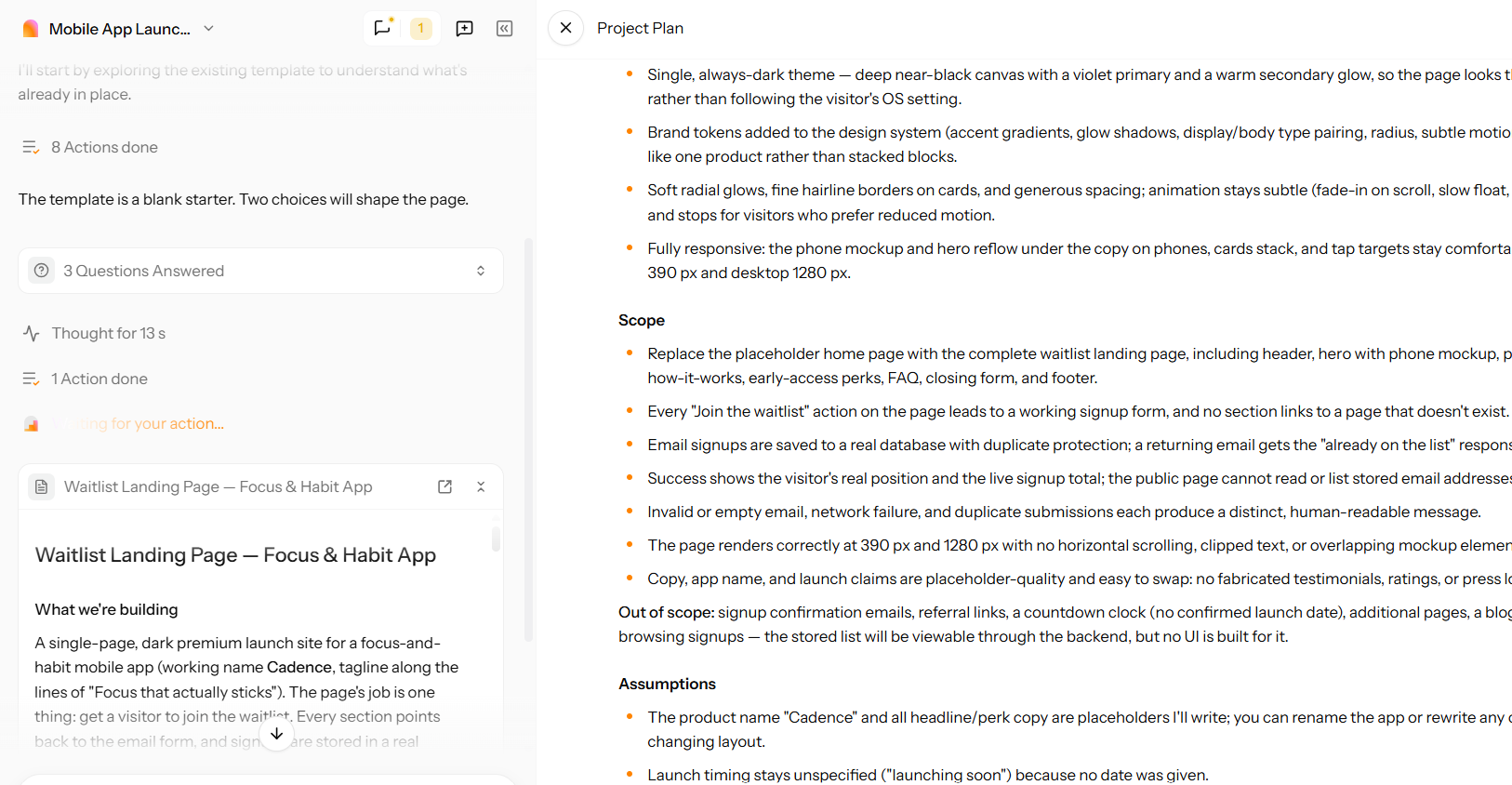
Open the plan view. Scan the structure, sections, and file layout. Even a capable model can miss a section or misread your brief. A quick human check saves rework.
Step 4: Click Build Now
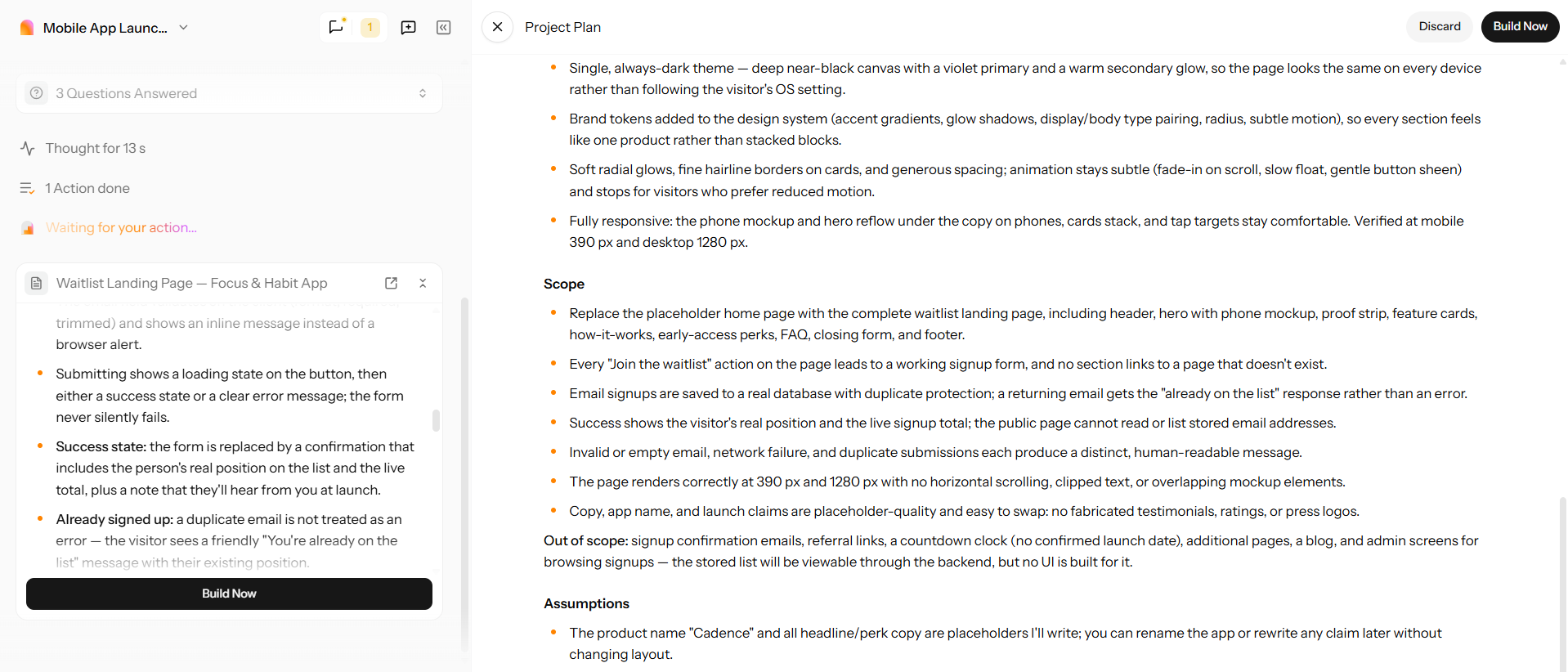
This is the agentic moment. The agent plans, writes multiple files, runs the build, and fixes errors. You don’t prompt each action. Watch the live progress and chat queue while it works.
Step 5: Preview Your Build
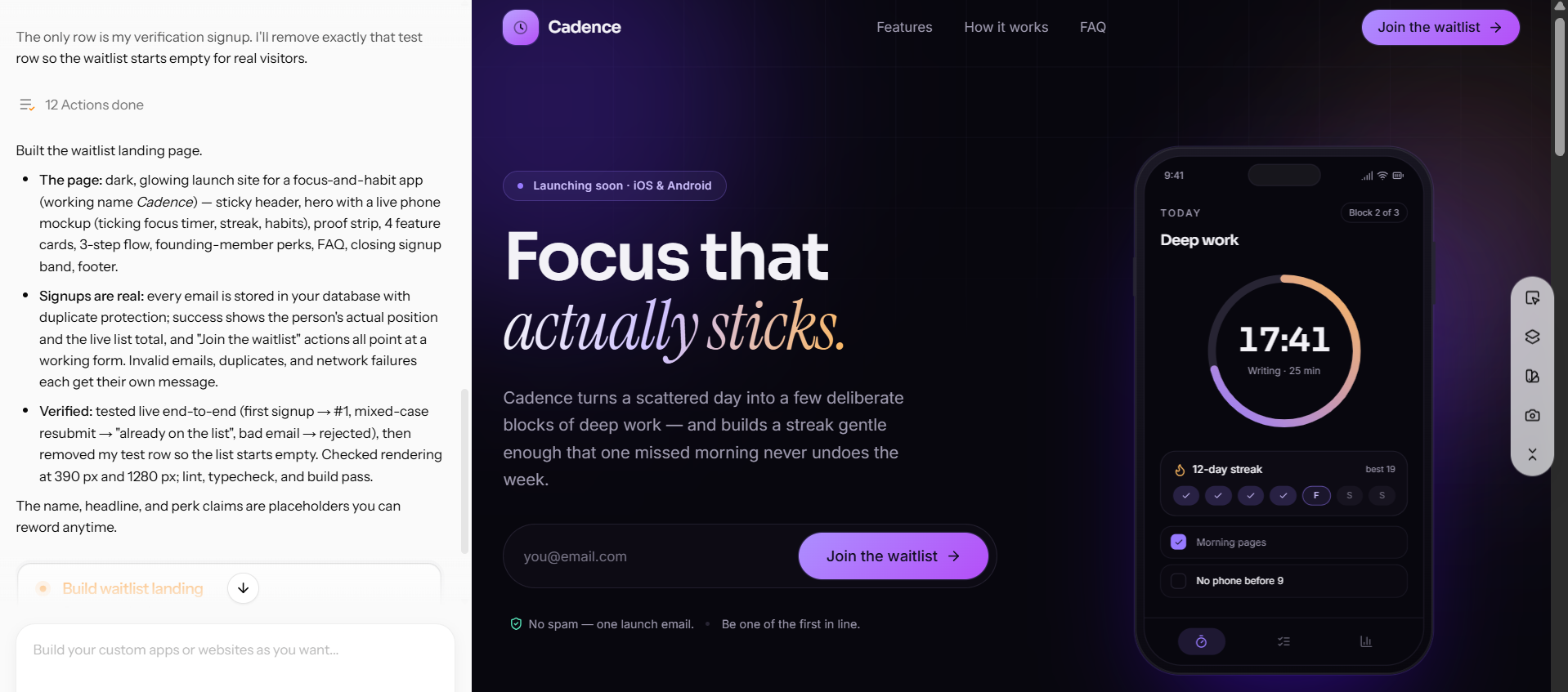
Open the live preview and check it as a visitor would. Scroll the whole page. Click the buttons. Check desktop and mobile. Jot down what bugs you: a weak headline, a clashing color, a section in the wrong order. Those notes feed the next step.
Step 6: Refine With the Visual Editor
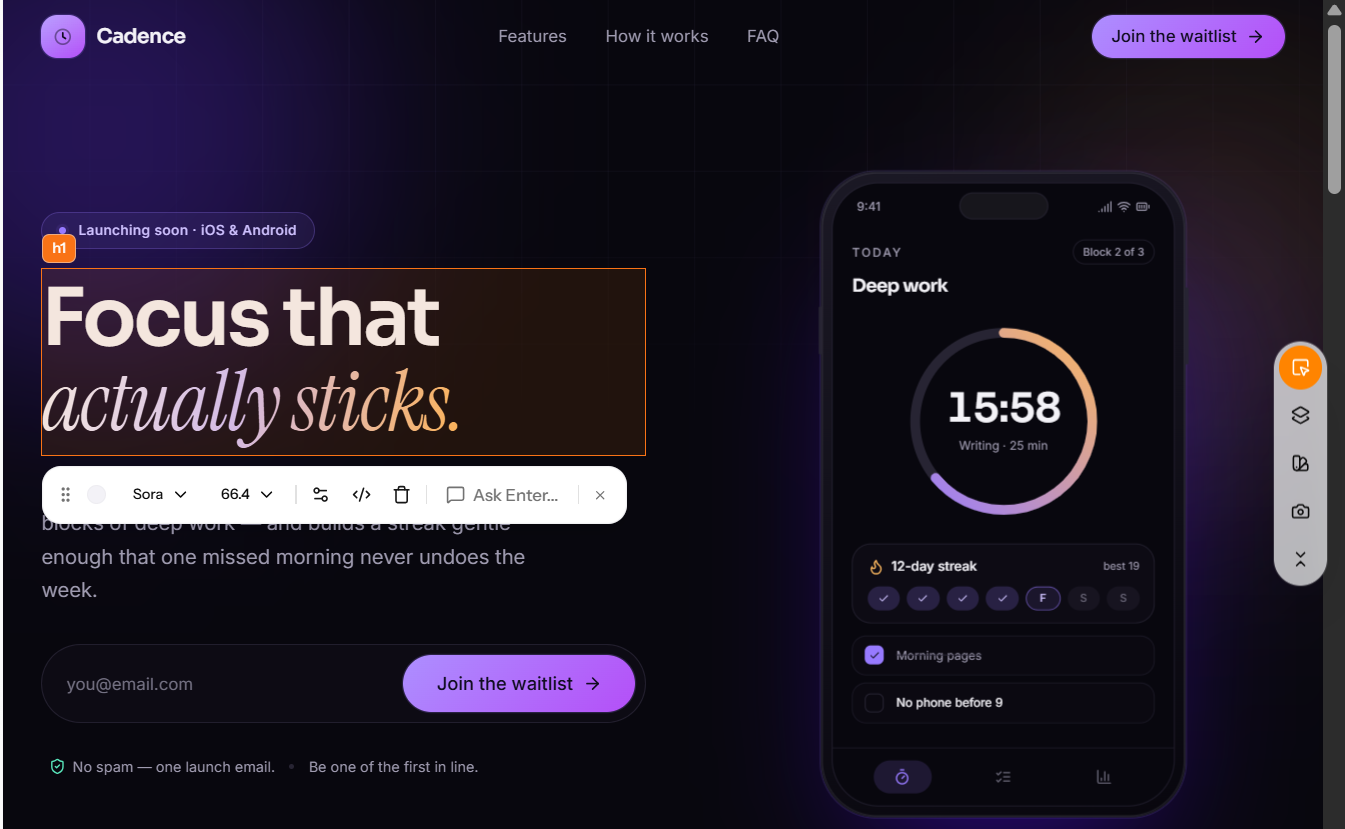
Click any element in the preview to edit it directly. Headline text, a link, an image, a color. Use the visual editor for small, precise changes. Ask the agent for bigger ones, like a pricing section or a new layout. Track which edits you made by hand and which you asked the agent to make. That’s the generative-agentic split in practice.
Step 7: Publish Your Project
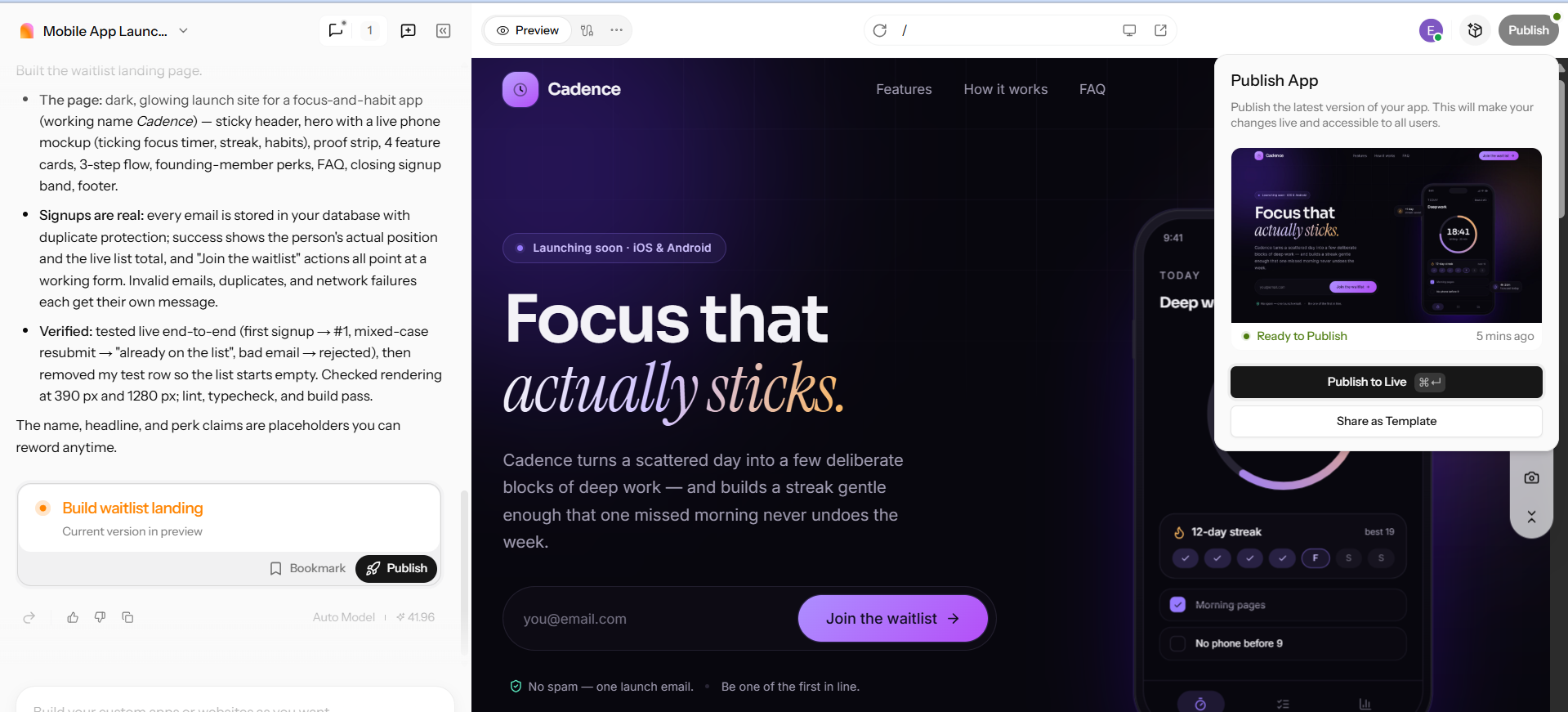
Publish and open the live link. Steps 2–3 are generative. Steps 4–7 add the agentic loop. Build your first project in Enter Pro.
Conclusion
Generative AI creates. Agentic AI acts. The best systems use both. Agentic vs generative AI is less a contest than a stack. The rule is simple. Use generative AI for single-turn content. Use agentic AI for multi-step work across systems. Add approvals as stakes rise. If you want to see the difference in a real build, Enter Pro takes you from prompt to published app. Open the workspace when you’re ready.
FAQs About Agentic AI vs Generative AI
What is the difference between agentic AI and generative AI?
Generative AI creates content when you prompt it. Agentic AI pursues a goal by planning, using tools, and acting across steps. The differences between agentic AI and generative AI show up in the work. Generative AI drafts a follow-up email. Agentic AI runs the whole follow-up: it finds the lead, writes the message, sends it, and logs the result. One responds. The other completes.
Is ChatGPT generative AI or agentic AI?
It’s both, depending on the mode. Ordinary ChatGPT chat is generative. Since July 17, 2025, ChatGPT also has an agent mode. It can browse sites, run code, and finish multi-step tasks for you. It asks permission before consequential actions. So the same product can answer a question one minute and complete a task the next. The mode decides which one you’re using.
Is agentic AI better than generative AI?
Neither is better. They fit different jobs. Use generative AI for bounded content, like a draft or a summary. Use agentic AI for multi-step workflows. Thomson Reuters frames it the same way: match the tool to the task. The trade-offs are real. Agentic AI costs more per workflow because every step is a model call. It also carries more operational risk.
Can agentic AI and generative AI work together?
Yes, and most real systems do. The generative model reasons and writes. The agentic layer plans, remembers, and calls tools. A market-intelligence agent shows how. It queries news APIs, pulls data, asks a generative model to summarize each item, and formats the weekly digest. Without the agentic layer, the model just talks. Without the model, the agent can’t understand the work.
What are some examples of agentic AI and generative AI?
Generative ones include ChatGPT and Gemini. While agentic includes n8n, CrewAI, Devin, and Enter Pro’s build agent. Enter Pro combines both. A model writes the code. Then an agent builds, previews, and publishes the app. That split mirrors this whole topic. Creating is generative. Carrying work through to a live result is agentic. Many modern tools blend the two, so check what each one actually does.
Is agentic AI the same as an AI agent?
No. An AI agent is the software that acts. Agentic AI is the broader approach to goal-directed behavior. Think of the agent as the worker and “agentic” as the way it works. One system can use one agent or several. Here’s the quick test: does it plan and act across multiple steps without being told each one? If yes, it’s agentic, whatever the label says.
Is generative AI or agentic AI riskier?
They carry different risks. Generative AI risks wrong or biased content. Agentic AI risks unwanted actions in live systems, which are harder to undo. Set approval thresholds and keep action logs. Tighten them as stakes rise. Enter Pro’s preview step helps here. You review the build like a visitor would before you publish anything.
Do I need to code to use agentic AI?
Not always. Many agent tools are no-code or low-code. In Enter Pro, you describe the app in plain language and review the result. The agent handles the build. A basic read-through of the code is still wise. You don’t need to write it. You do need to know what shipped. That habit matters more as agents take on bigger jobs.