

Best Ecommerce Website Builder: Top 6 Online Store Builders in 2026
Discover the 6 best ecommerce website builders for 2026! Find the perfect platform to create your online store with ease and boost your sales today.
Finding the best ecommerce website builder might be challenging and confusing due to the availability of various tools that offer ease in creating an online store. Most tools demand technical expertise and sometimes come with costly prices that may increase quickly. If you wish to set up an online store without any stress, it is essential to consider the most effective builder. This guide breaks down the top 6 options for 2026, with pros, cons, pricing, and features. This helps you pick the one that matches your business, so you can start selling today.
What is an eCommerce website builder?
An eCommerce website builder is a platform that helps individuals and businesses create online stores. It does not demand any high-end technical expertise. It offers a range of ready-to-use templates and a drag-and-drop interface. It also provides built-in tools for managing products and orders. Users can easily add product pages and shopping carts with an eCommerce builder. It helps in adding a checkout system. Most of these builders offer integrations with various payment gateways and shipping providers. These builders help businesses quickly set up and run online stores. They also make sure that the website works well on all devices. In general, an eCommerce website builder makes it easier to set up and run a professional online store.
How to choose the best website builder for eCommerce
Selecting the best eCommerce site builder depends on your specific objectives and financial constraints. Find a platform that supports your growth without causing unnecessary stress. Consider these five essential elements:
-
Ease of use: Choose a platform that is simple to use. A user-friendly interface and drag-and-drop functionality allow newcomers to build stores with ease. You should be able to add items, tweak pages, and handle orders without needing a tech degree or a complicated setup process.
-
Ecommerce features: Seek out platforms with integrated eCommerce tools. This encompasses essential elements such as product management, inventory control, and payment processing capabilities. Other features that should be included are options like discount codes and shipping.
-
Scalability & future-proofing: Your store should grow right along with your business. Choose a builder that won't crash when you get more traffic or add hundreds of new products. It is important to have tools that can adapt as your needs change.
-
Design and customization: Design and customization are key when it comes to branding. A solid website builder needs to provide customizable templates and layout choices. This allows you to build a distinctive online store that reflects your brand and enhances the overall customer experience.
-
Pricing, fees & TCO: Check the full cost before choosing a platform. This includes subscription fees, transaction charges, and add-on costs. Understanding the total cost of ownership (TCO) helps you select a solution that fits your budget long term.
Top 6 eCommerce website builders in 2026
Discover the leading online store builders that simplify selling. These six platforms provide the most effective tools for launching and expanding your business in the present day.
- Enter Pro — Best for AI-powered store creation
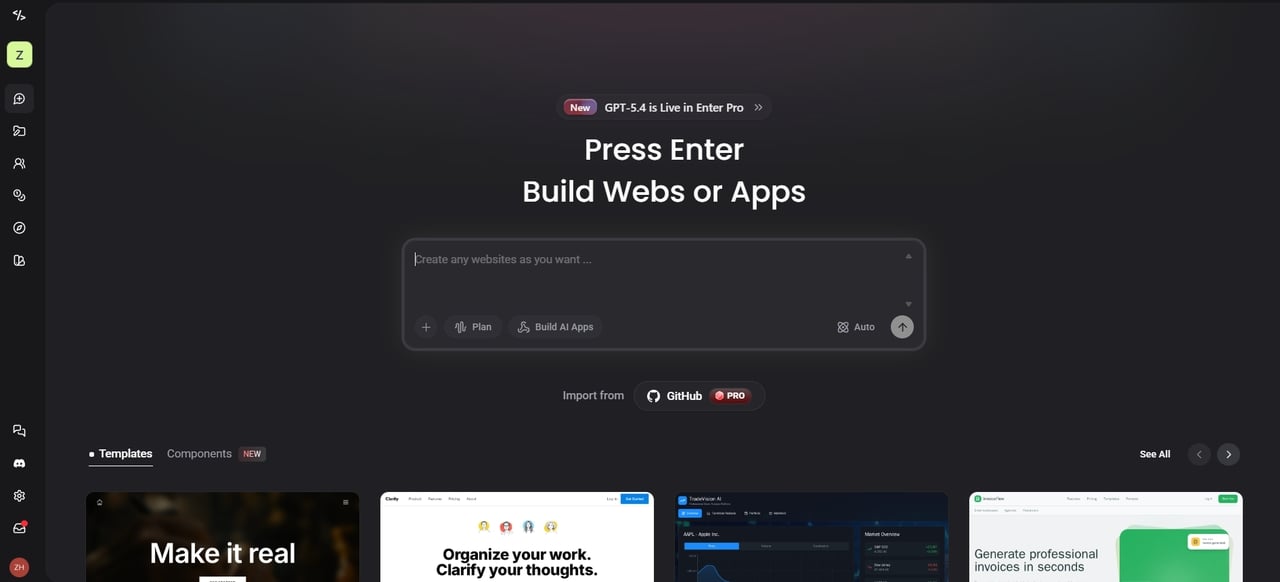
Enter Pro is a game-changer for anyone seeking the best ecommerce website maker. Using "vibe coding," you simply chat with the AI to build a professional store instantly—no manual dragging or complex coding required. It streamlines the entire process: design, backend functionality, and hosting, all in one go, and it works with the best AI models available. You retain complete control over your code, and it integrates smoothly with Stripe and Supabase, making scaling a breeze. This is the quickest route to transforming your concepts into a fully operational, production-ready online business.
Pros
-
Instant store generation via AI chat.
-
No coding or technical skills required.
-
100% code ownership and export options.
-
Built-in access to** **top-tier AI models (Claude, Gemini, GPT, etc.).
Cons
- Since it is cloud-based, you need a stable connection to build and edit.
- Shopify — Best for scaling high-volume stores
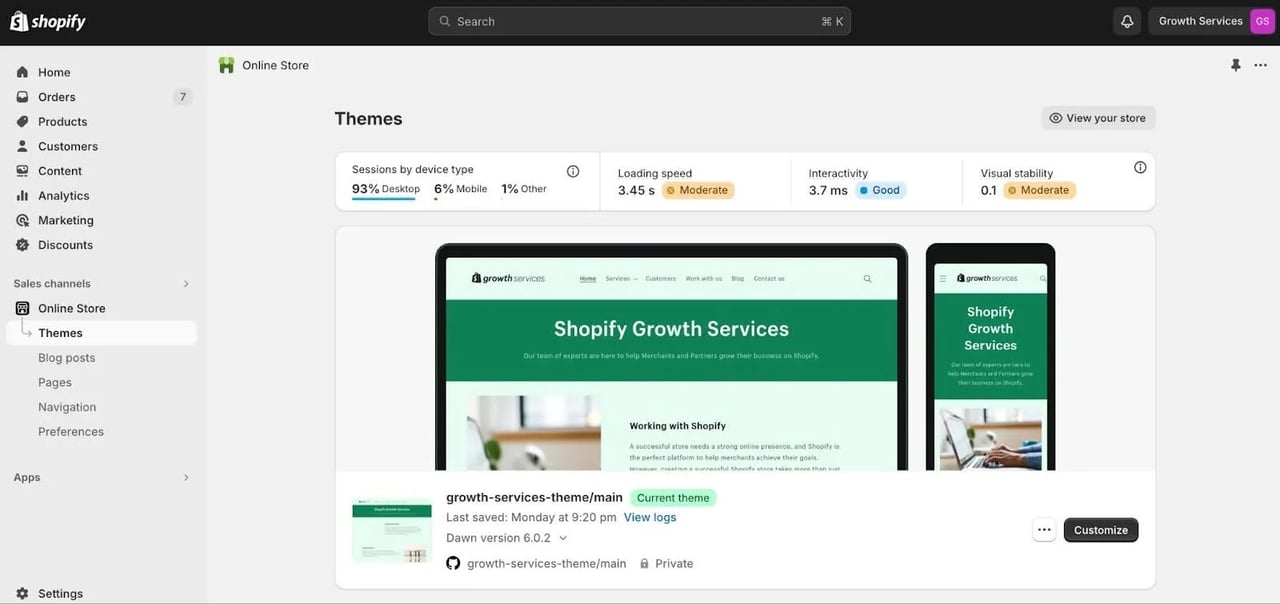
Shopify is a top ecommerce website builder known for its massive power. It is designed to handle everything from small startups to global brands. Its huge app store lets you add almost any feature you can imagine, from advanced rewards programs to complex shipping rules. In 2026, it evolved into an AI-driven growth engine, using predictive tools to help you find more customers.
Pros
-
Amazing scalability for growing brands.
-
Hundreds of professional apps and themes.
-
Built-in payment processing is very secure.
-
Great 24/7 customer support for owners.
Cons
-
Monthly costs go up as you add more apps.
-
Charges extra fees if you don't use their payment system.
- Wix eCommerce — Best for Creative Design Freedom
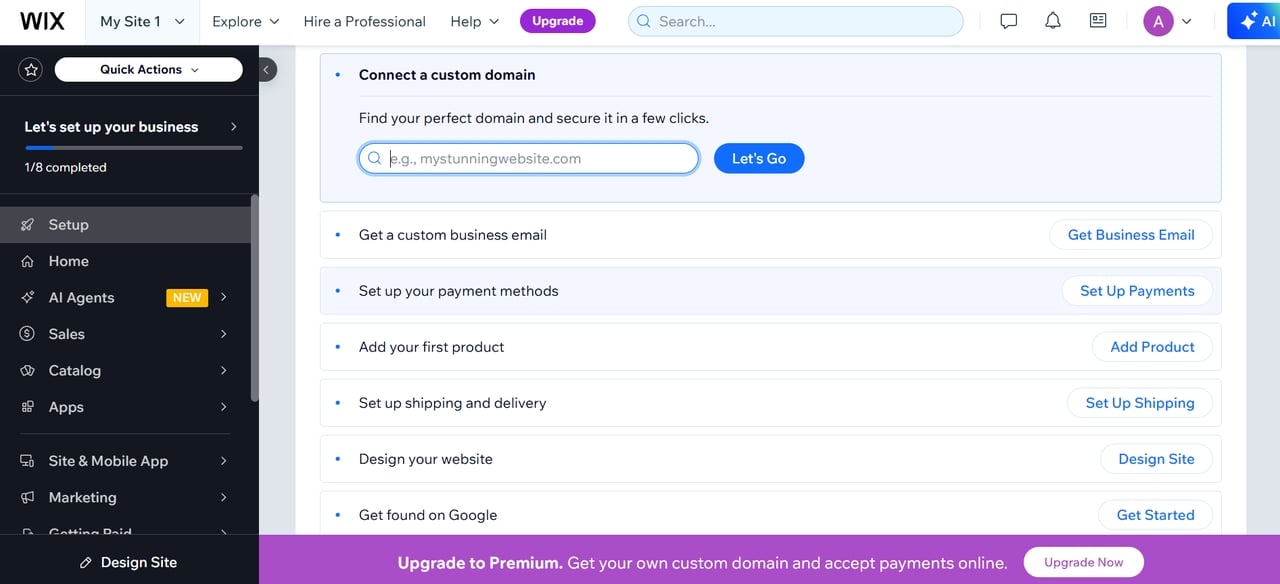
Wix is the best ecommerce website design choice for those who want total control over how their shop looks. The platform offers drag-and-drop design tools, customizable templates, and built-in ecommerce features. It includes tools for product management, payments, marketing, and analytics in one dashboard. This makes it easy for small businesses and creators to launch and manage online stores. Wix is especially known for its flexible design system and large template library.
Pros
-
Drag-and-drop website editor that is beginner-friendly
-
Large library of customizable templates
-
Built-in ecommerce tools like payments, inventory, and analytics
-
Strong design flexibility for branding and visual stores
Cons
-
The editor can feel slow with too many elements.
-
Once the website goes live, you are unable to modify your template.
- Squarespace — Best for stunning visuals & aesthetics
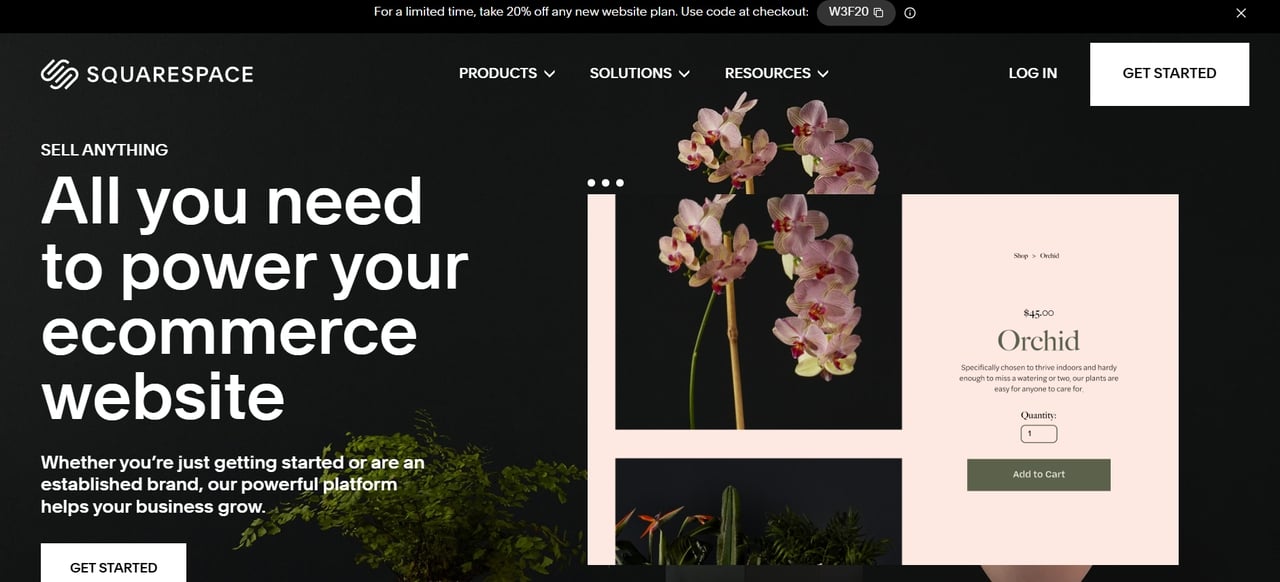
If you want a shop that looks like a high-end magazine, Squarespace is the best store website builder for you. Renowned for its stunning templates and layouts, the emphasis is squarely on exceptional design. You can build a stylish, modern store without ever touching a line of code. It is the perfect choice for brands that want to make a lasting first impression. The platform gives you all the tools you need to manage your products, payments, and stock in one place. You can easily play with colors, fonts, and layouts until everything looks just right.
Pros
-
Award-winning, beautiful website templates.
-
Strong focus on high-quality imagery.
-
Simple and clean inventory management.
-
Great social media integration.
Cons
-
The editor has a steeper learning curve.
-
Limited third-party app integrations compared to some platforms.
- Hostinger — Best budget-friendly choice
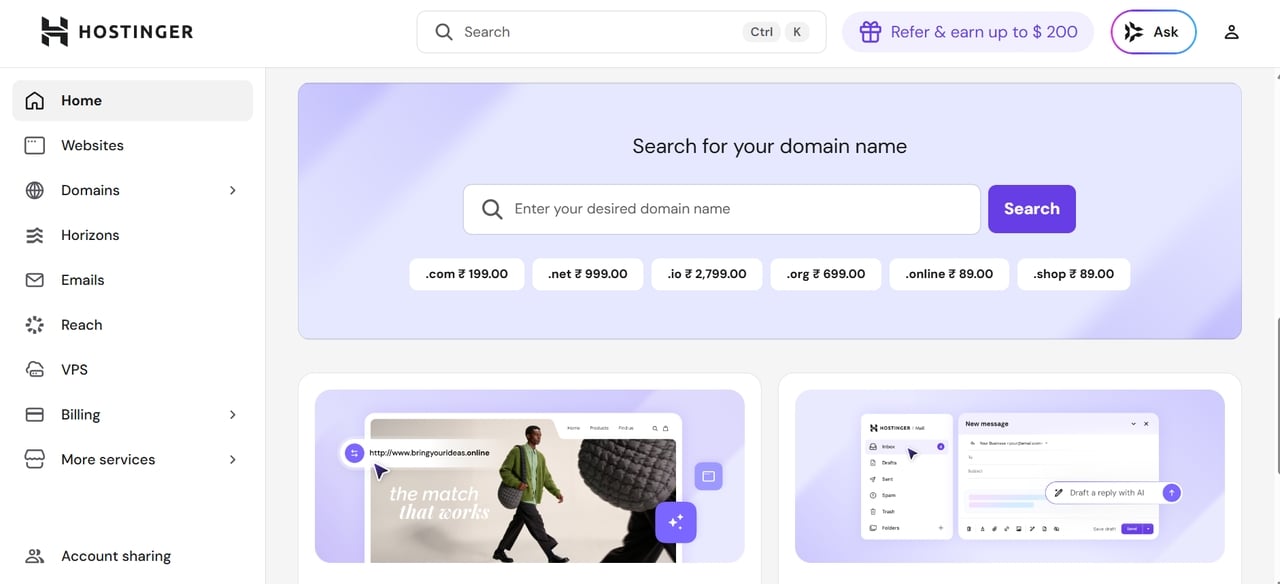
Hostinger is the best ecommerce website provider for anyone who wants a budget-friendly and fast ecommerce website builder. It offers powerful AI tools that can help create a unique design for your store's layout, logo, and even product descriptions. With its focus on speed and affordability, Hostinger is perfect for anyone who wants to create an ecommerce website. You get everything needed to start selling, including secure payments and reliable hosting, at a fraction of the price.
Pros
-
Very affordable pricing compared to most ecommerce builders.
-
Beginner-friendly interface with AI website creation tools.
-
Built-in hosting, domain, and security features.
-
Integrates marketing tools like Google Ads and analytics.
Cons
-
Ecommerce features are more basic than enterprise platforms.
-
It offers very limited integrations and customization.
- BigCommerce — Best for enterprise-level features
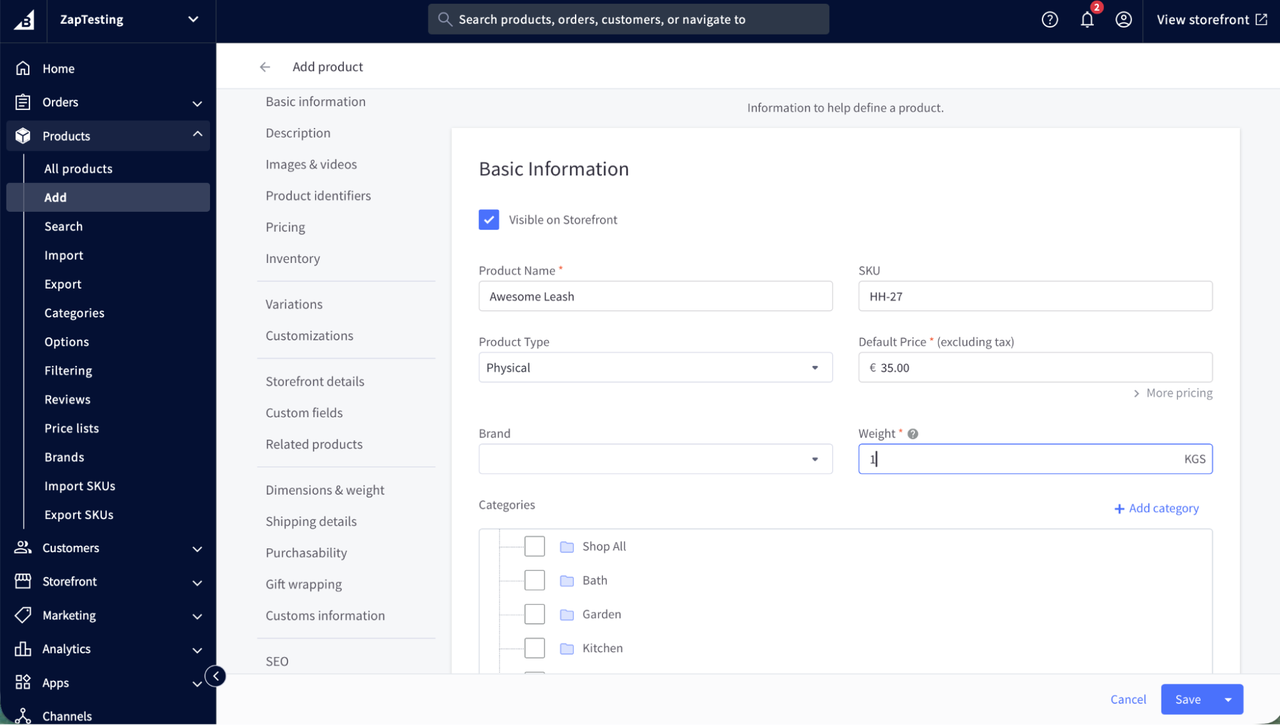
BigCommerce is one of the best website builders for the online store business that wants to grow fast. It offers a powerful ecommerce platform that offers tools for managing your products, payments, and marketing. The platform is designed for brands that want strong performance and advanced selling features. From one dashboard, businesses can keep track of their inventory, sales channels, and customer information. BigCommerce also supports multi-storefront selling and integrations with marketplaces like Amazon and eBay.
Pros
-
Strong built-in ecommerce features for growing businesses.
-
Supports multi-storefront and omnichannel selling.
-
No platform transaction fees on sales.
-
Advanced SEO and analytics tools.
Cons
-
For new users, the interface may be overwhelming.
-
Pricing tiers increase automatically as your sales grow.
Which eCommerce website builder is right for you?
Finding the best ecommerce website builder depends on your specific goals. Check the table below to pick the perfect tool for your needs.
| Platform | Best for | Pricing (Starting) | Transaction Fees |
|---|---|---|---|
| Enter Pro | AI-powered store creation and quick website generation | $18/month | 0% |
| Shopify | Scaling high-volume ecommerce stores | ~$29/month | 2.9% + 30¢ (lower with Shopify Payments) |
| Wix eCommerce | Creative design freedom and drag-and-drop store building | ~$27/month | No additional Wix transaction fees |
| Squarespace | Stunning visuals and design-focused brands | ~$23/month | 0% on Commerce plans |
| Hostinger | Budget-friendly online stores | ~$3–$4/month | 0% transaction fee |
| BigCommerce | Enterprise-level ecommerce features | ~$39/month | 0% platform transaction fees |
Bonus: How to build an eCommerce website using Enter Pro
It doesn't have to take a long time to set up your online store. Enter Pro's AI lets you go from an idea to a real shop in just a few minutes. To start your brand today, just follow these simple steps:
Step 1: Log in and access the dashboard
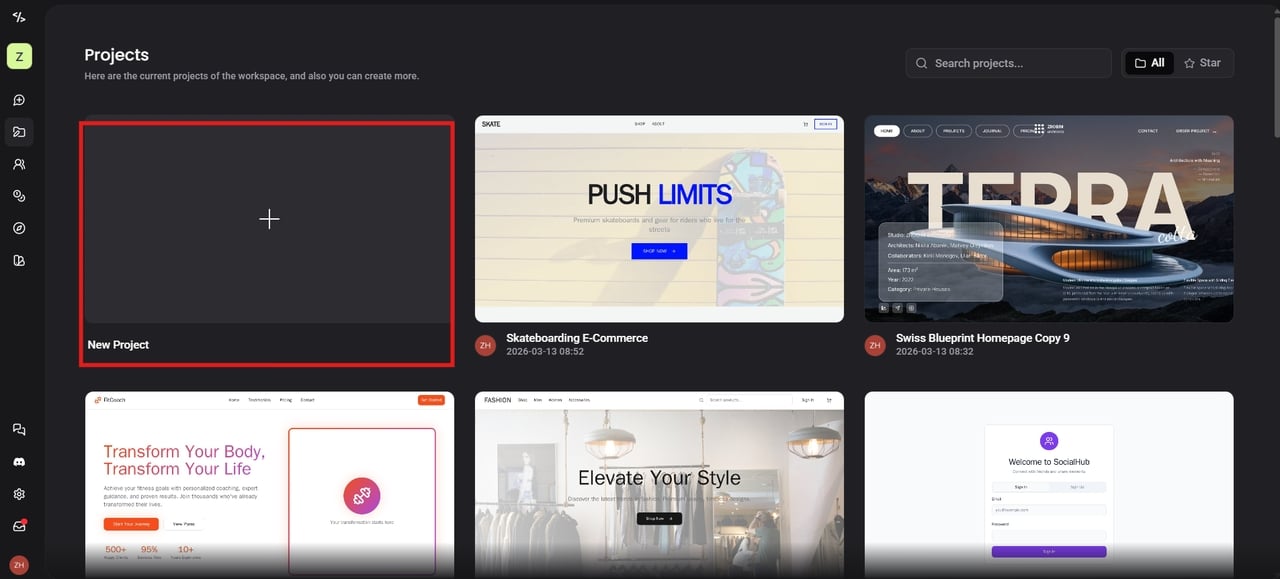
Head over to the Enter Pro website, and sign up (or log in if you already have an account). It's free to start with daily credits—no credit card required upfront. Once inside, click to create a new project. The dashboard is clean and ready for your chat.
Step 2: Describe your eCommerce store, and start building
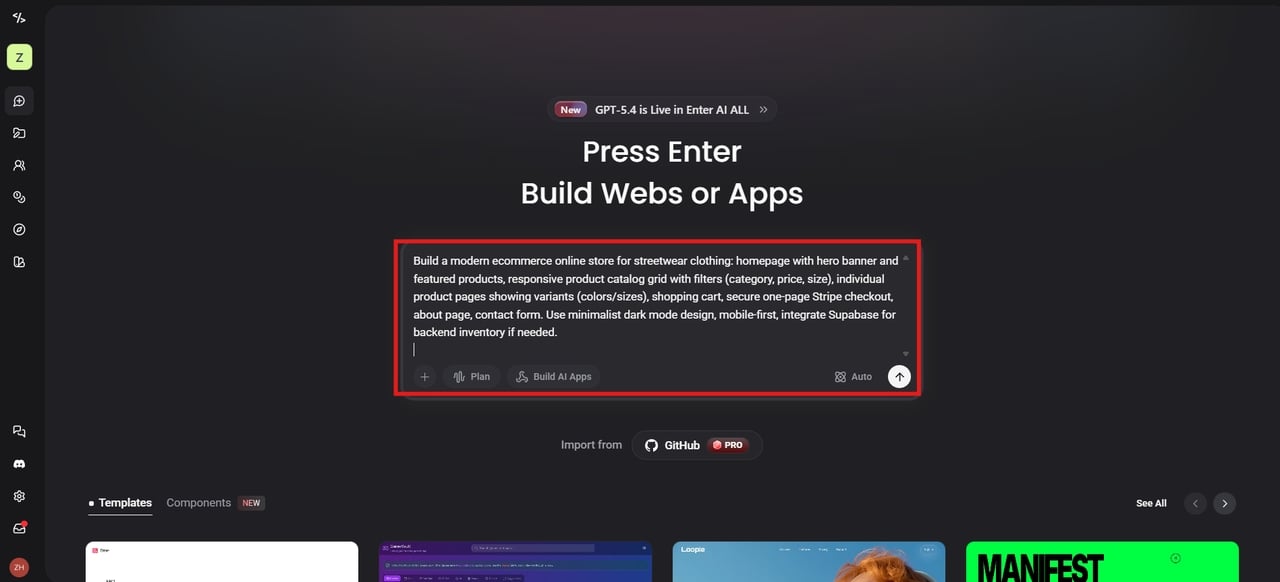
Open the chat window. Just type something along the lines of: "Build a modern ecommerce online store for streetwear clothing: homepage with hero banner and featured products, responsive product catalog grid with filters (category, price, size), individual product pages showing variants (colors/sizes), shopping cart, secure one-page Stripe checkout, about page, contact form. Use minimalist dark mode design, mobile-first, and integrate Supabase for backend inventory if needed." Hit the Build button. It will handle the layout, product pages, and backend logic while you watch it build in real-time. It usually takes seconds to a couple of minutes.
Step 3: Review the website and publish
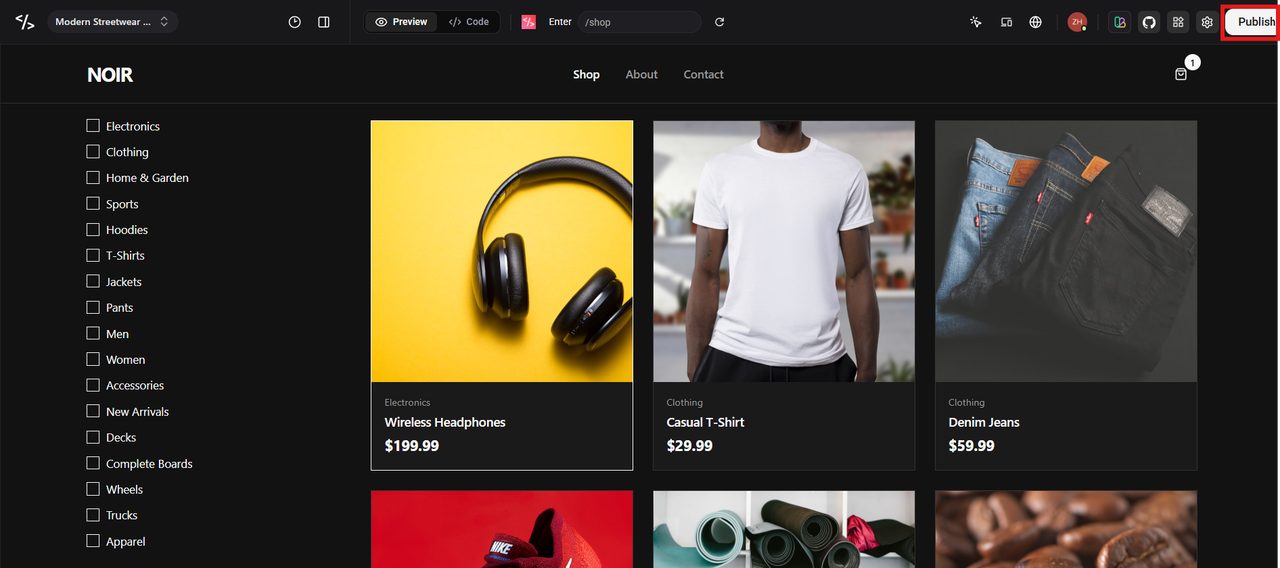
Switch to the visual editor to see everything live. Preview how it looks on phone, tablet, and desktop. Tweak anything with clicks—change colors, fonts, spacing, upload your own images—or just chat more. When it feels right, hit "Publish." One click deploys it to a fast global edge network. Connect your custom domain, set up payments, add products if needed, and start selling.
Conclusion
The best ecommerce website builder for 2026 is based on your needs, budget, and skills. Shopify or BigCommerce is best for big or rapidly growing stores. Wix, Squarespace, or Hostinger is great for small businesses that need simple tools and great design options. Enter Pro stands out by using artificial intelligence to bridge the gap between imagination and a live store. You have full code ownership and speed. Don't let technical hurdles hold you back from your first sale. Ready to launch? Start building your professional online store with Enter Pro today!
FAQs
- How much does it cost to build an ecommerce website in 2026?
Basic stores usually cost between $500 and $2,000 to launch. Larger projects with custom features can range from $5,000 to $50,000. For those seeking value, Enter Pro offers an affordable way to generate production-ready code while avoiding the expensive "app taxes" found on other platforms.
- Can I build an ecommerce website without coding?
Yes, modern platforms make it simple to build a store without any technical skills. Traditional tools use drag-and-drop editors, while Enter Pro allows you to build a full shop just by chatting with an AI. It handles the backend logic for you, so you can focus entirely on your business.
- What features should I look for in the best ecommerce website maker?
Look for secure payment processing, mobile-ready designs, and easy inventory tracking. The best online shop website builder should also offer scalability and SEO tools. Enter Pro excels here by providing full code ownership and seamless integrations with powerful services like Stripe and Supabase.
- What is the best ecommerce website creator for beginners?
Wix and Shopify are two popular options, but Enter Pro is the most beginner-friendly, especially for those who are not tech-savvy. You don't have to learn how to use menus, as you simply need to tell your vision to an AI assistant. It is the easiest way to get a professional, high-performing store without a high learning curve or a high setup cost.
- How long does it take to build an ecommerce website?
Traditional builds usually take 4 to 10 weeks. This time depends on how complex your store is. However, AI tools have changed the game. With Enter Pro, you can move from a blank page to a live store in just a few minutes. It is the fastest way to launch a new brand today.