
Best LLM for Coding in 2026: Top AI Models Compared
Discover what LLM is best for coding in 2026 with free, local, and open-source models. Compare tools and improve coding efficiency with Enter Pro.
The rise of large language models (LLMs) has revolutionized software development from code writing to system debugging. The need to use AI extends beyond coding tasks to the entire development process. With numerous choices in the market, the million-dollar question becomes, "Which is the best LLM for coding in 2026?" There may be different factors to consider depending on the situation. The following discussion compares popular LLMs and how they can be combined using Enter Pro.
Key factors that define the best LLM for coding performance
Core aspects that determine the best LLM for coding across real development tasks.
-
Code generation quality (accuracy, readability): Better LLMs will produce cleaner, more readable code with fewer syntactic and logical errors. This helps in faster development, easier debugging, and production-quality code across many languages and frameworks.
-
Debugging and reasoning ability: LLMs with strong debugging and reasoning capabilities will be able to detect and track down logical and code errors, and provide solutions accordingly. This is useful for software engineering and production debugging.
-
Context window (large codebase handling): A large context window allows the model to understand entire repositories, multiple files, and dependencies. This is essential for working on enterprise applications and maintaining consistency across large-scale software projects.
-
Speed and latency: High speed is critical to improving developer efficiency by minimizing wait times during code generation and debugging. Low latency is crucial for interactive coding environments and real-time development processes.
-
Integration with developer tools: Integrating LLMs with integrated development environments, terminal applications, and continuous integration/continuous delivery (CI/CD) systems can facilitate better workflows. Developers will be able to utilize LLMs within their coding platform.
Best LLMs for Coding in 2026
Top LLMs for coding in 2026 compared for real-world development, debugging, and automation use cases.
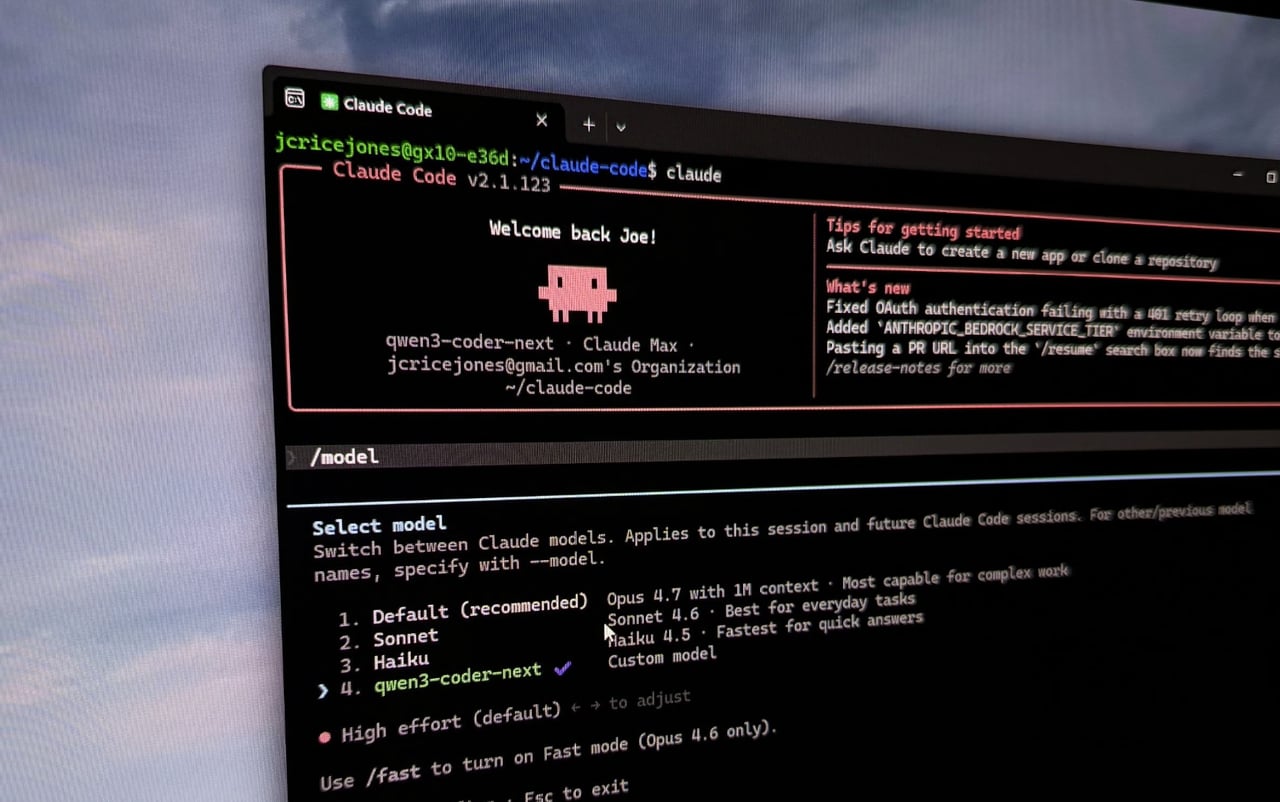
Claude (Opus & Sonnet): Best for complex codebases
Claude is often considered one of the best-performing LLMs in programming due to its outstanding ability to reason, deep understanding of context, and competence in handling large software engineering projects. It can successfully debug complex programs, refactor existing code, and maintain architectural consistency across multiple files. Software engineers use Claude in developing large-scale software that requires precision and logical accuracy.
GPT models: Best for agent workflows
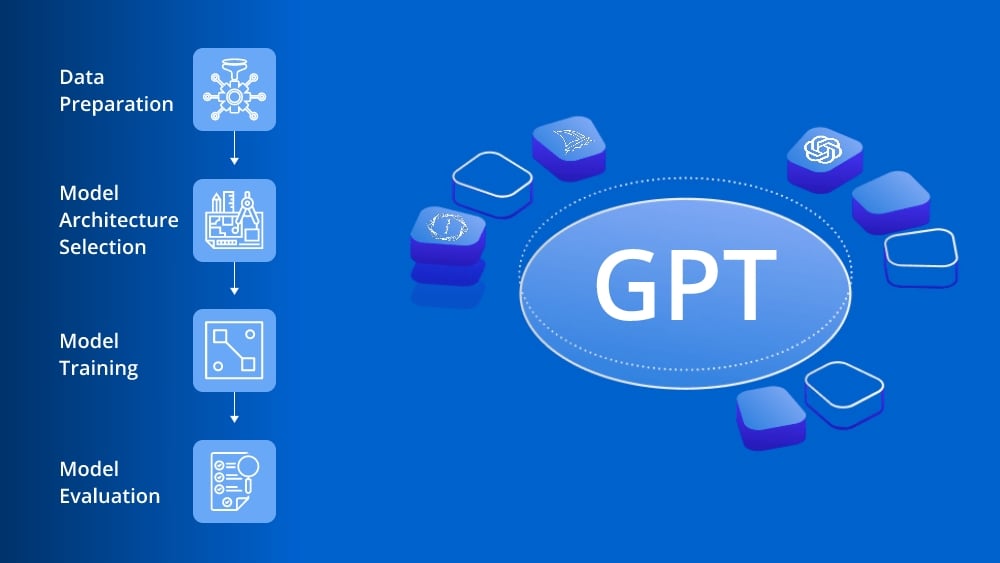
GPT models are strong for the best LLM for coding workflows involving automation, agents, and multi-step reasoning. They are widely used for building coding assistants, API automation, and structured problem-solving systems. Their ability to break down tasks and execute step-by-step logic makes them ideal for AI-driven development pipelines, workflow automation, and intelligent coding agents used in modern software engineering environments.
Gemini: Best for balanced performance
Gemini is versatile enough to offer a balanced set of abilities for an optimal LLM proficient in coding. The model is reliable when writing code, detecting errors, and generating documentation, and fits well into today's developer environment. Gemini is most frequently employed in routine coding activities where reliability and stability are preferred to specialized coding knowledge.

DeepSeek-Coder: Best open source LLM for coding
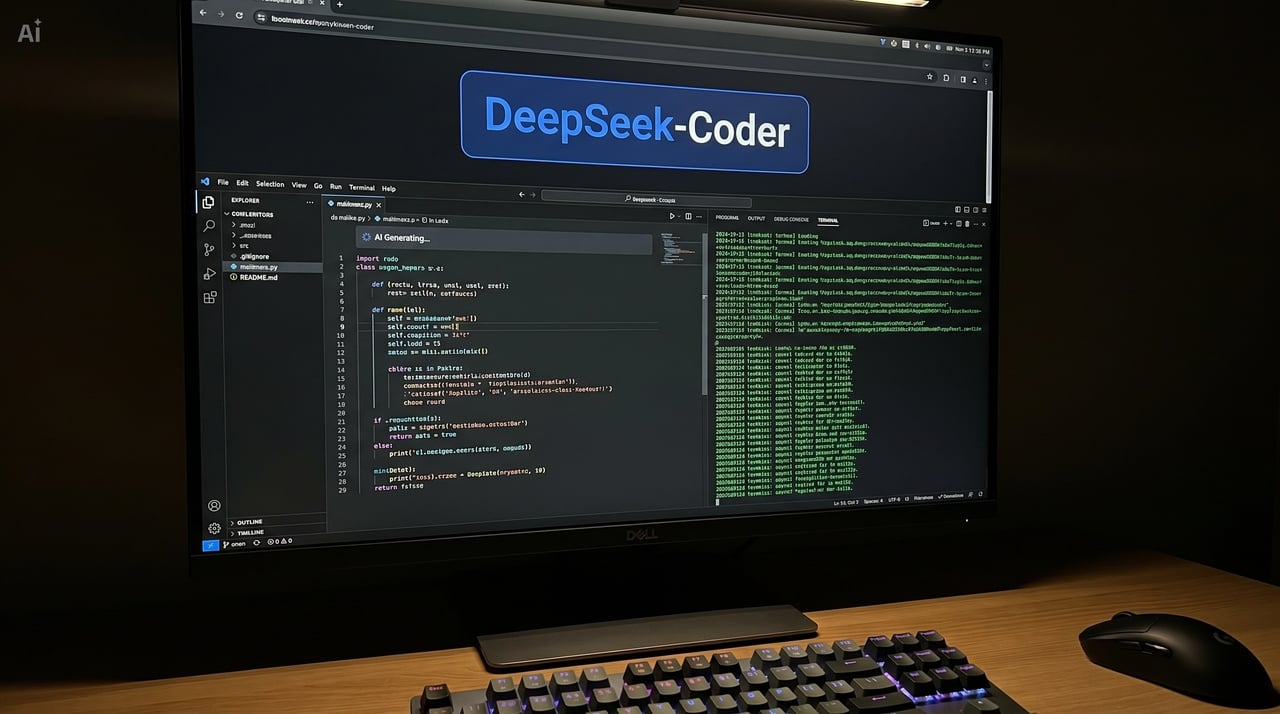
DeepSeek-Coder is one of the top choices in open-source software for the best LLM for coding. The software performs excellently well in benchmark tests and supports multiple programming languages. It is commonly used due to its flexibility, openness, and affordability when using it on your own server infrastructure. Developers use DeepSeek-Coder for code generation, code completion, and AI coding experimentations.
Qwen & others: Best for customization
Qwen and its counterparts are ideal for the best LLMs for coding, where customization, fine-tuning, and self-hosting are necessary. They cater to enterprise-level AI solutions that require custom behavior and domain-specific optimization. The popularity of Qwen and similar models indicates rising interest in flexible coding models that can be customized for software engineering needs.

Best Local LLM for Coding (offline models guide)
Best local LLM for coding models used in offline development and private coding environments today.
- DeepSeek (quantized versions):
The optimized version of the DeepSeek model is perfect for local deployment, allowing programmers to use a powerful LLM on their consumer-level computers. They allow code writing, code debugging, and light automation all locally without cloud-based computing resources.
- Qwen:
Qwen is a versatile model that can be run locally for coding, allowing developers to customize it for their needs when developing personal and enterprise-level applications. Qwen models are widely used in internal applications, AI coding assistants, and other coding environments.
- Requires high-performance GPUs:
Efficient running of LLMs locally demands the use of high-end GPUs with enough RAM capacity to facilitate proper model inference and coding performance.
- Needs technical setup:
Deployment locally will require setting up the environment, installing dependencies, and optimizing the models, which are better suited for technical users.
Best free LLM for coding options for developers
Free LLM options help developers learn to code, test ideas, and build small projects easily.
-
Open-source LLM options: Open-source LLMs provide free access to powerful coding models that can be self-hosted or used via community tools for learning, testing, and lightweight development workflows.
-
Free AI coding platforms: These platforms typically offer limited access to coding assistants that provide support such as code generation, debugging, and auto-completion.
-
Performance limitations on free models: Some disadvantages of free language modeling platforms include limited context, slow response times, and lower accuracy compared to paid platforms.
-
Ideal use cases for beginners: The best use cases for novice programmers include coding education, code generation practice, prompt testing, and project creation without subscribing to premium AI coding services.
Comparison table: Which LLM is best for coding
This comparison table highlights the best LLM for coding options in 2026, showing key strengths and ideal use cases across debugging, automation, open-source development, and enterprise workflows.
| LLM | Strength | Best for | Key benefit |
|---|---|---|---|
| Claude | Deep reasoning | Debugging and enterprise systems | High accuracy in complex problem solving |
| GPT | Automation | Agents and workflows | Strong multi-step task execution |
| Gemini | Balanced performance | General coding tasks | Consistent across ecosystems |
| DeepSeek | Open-source | Custom development | Full control and flexibility |
| Qwen | Flexible deployment | Enterprise systems | Easy customization and scaling |
| Code Llama | Local usage | Offline coding | Works without internet dependency |
| Mistral | Fast inference | Lightweight apps | Very low latency performance |
| StarCoder2 | Open coding | Multi-language projects | Strong community and open support |
| WizardCoder | Instruction-based | Prompt-driven coding | Follows structured instructions well |
AI All in Enter Pro: Access multiple advanced LLMs in one platform
Enter Pro enhances the most advanced coding LLM on the market by integrating multiple models into a cohesive framework that maximizes developer productivity. Enter Pro directs coding activities like debugging, generation, and optimization to the appropriate LLM model. The process saves time and effort while ensuring the quality of the final output. It aligns with the current trend in software engineering, which leverages multiple AI systems to achieve higher productivity.
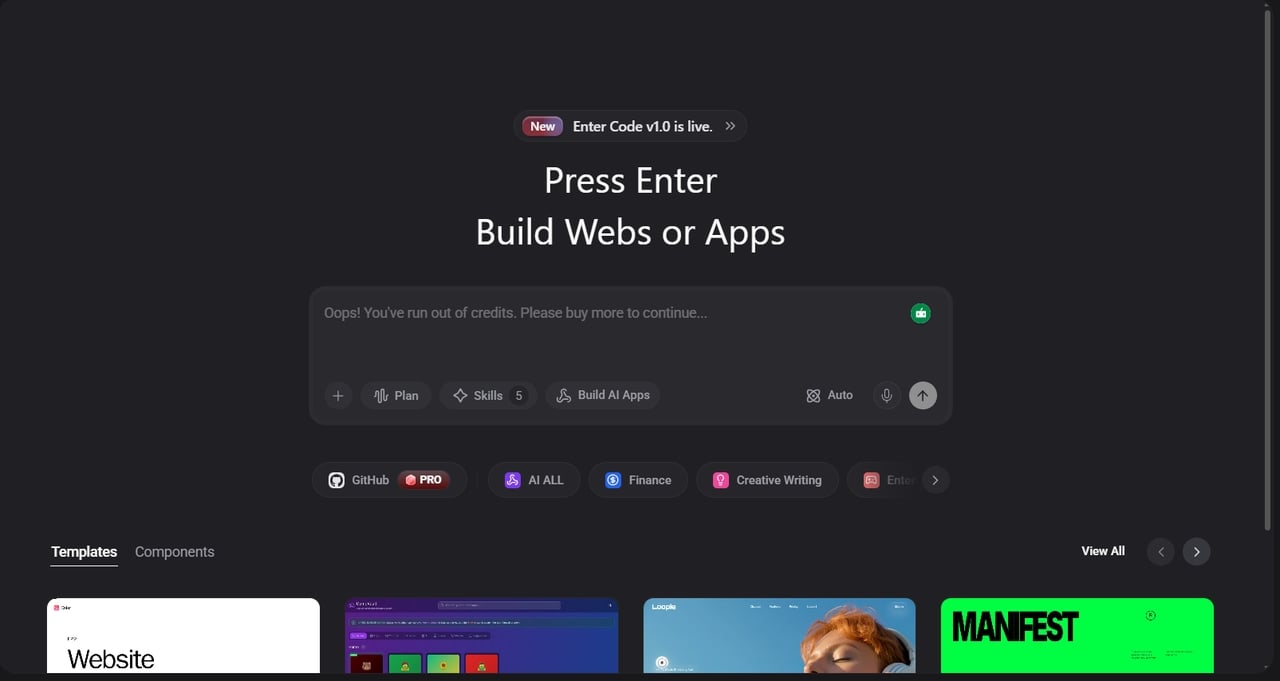
Steps to use Enter Pro in coding workflows
Simple workflow showing how Enter Pro improves coding efficiency using LLMs.
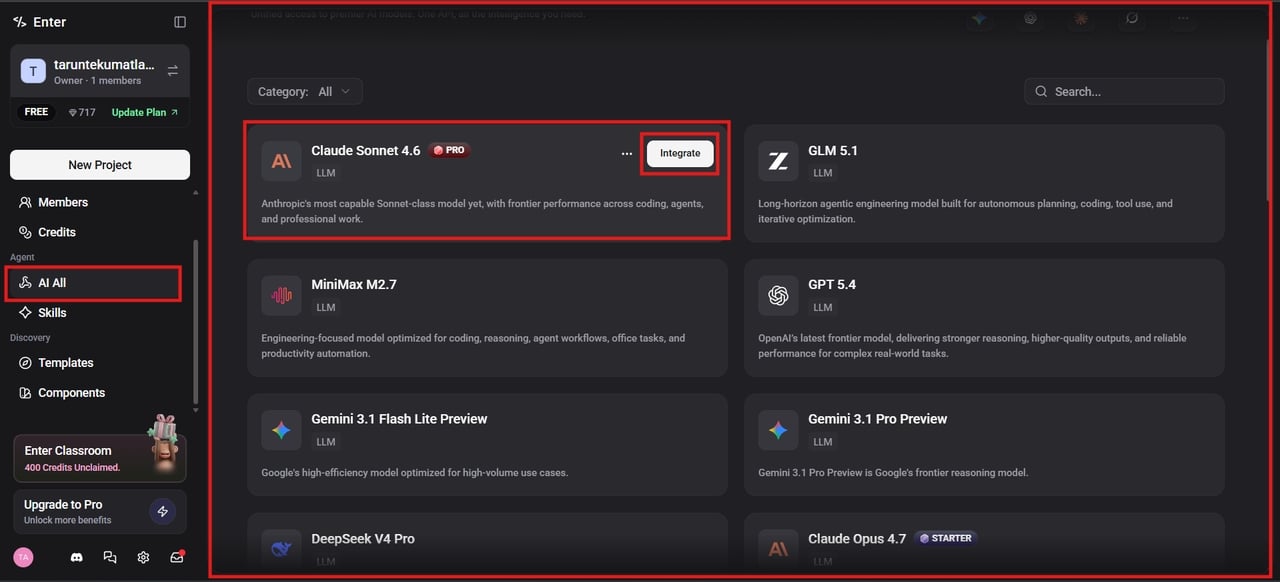
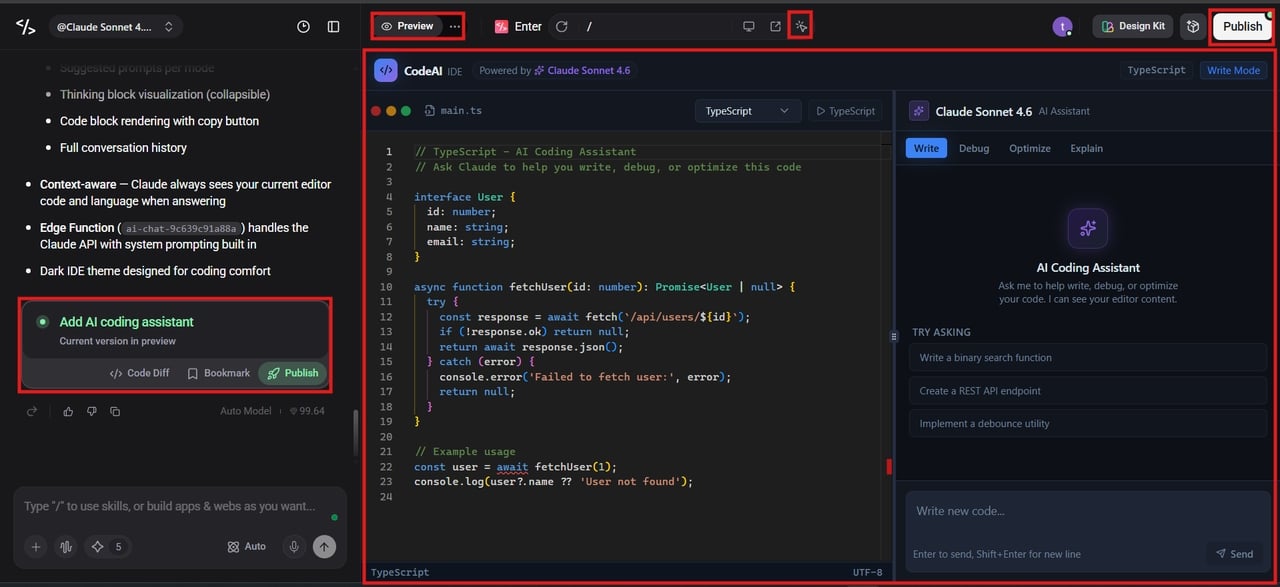
Step 1: Setup and connect
Open Enter Pro and go to settings. Activate AI All capability, connect to Claude Sonnet 4.6 model, then integrate your IDE or terminal. Enable the workspace to access multi-LLM features and start coding.
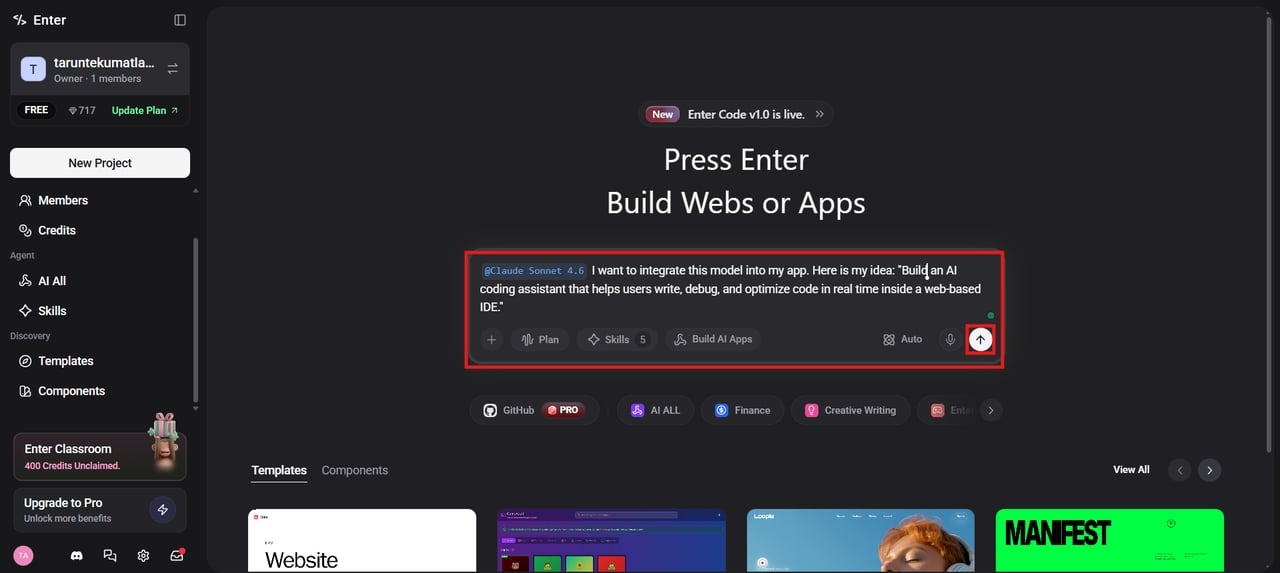
Step 2: Create and run tasks
After moving to the AI workspace and creating a new task by entering your coding assistant idea. Choose the task type, like code generation or debug, run the model, and refine outputs using built-in tools.
Step 3: Review and Publish
Open the results panel to review generated code, refine it for better accuracy, and test the logic. Once finalized, publish the code directly to deploy your AI-powered coding assistant efficiently.
Key features
-
Combines multiple LLMs: Combines different LLMs into a single platform, allowing the developer to work with all of them without changing any tools.
-
Routes tasks to the best model: Automatically assigns each coding task to the most suitable LLM, ensuring better accuracy, faster results, and improved handling of complex development problems.
-
Reduces switching between tools: Prevents continuous switching between different contexts by having LLM use a centralized approach within a single interface, which streamlines development for programmers.
-
Better debugging capability: Assists in efficient debugging by employing the best-suited LLM to perform the job and thus minimizing the time required to resolve problems.
-
Enhances developer productivity: Speeds up development cycles by combining model strengths, reducing manual effort, and improving overall coding workflow efficiency across projects.
Why multi-model AI is shaping the future of coding
Multi-model LLM systems are redefining how developers build, debug, and optimize code today.
-
Task-based LLM specialization: Various LLMs can be used for different tasks such as programming, troubleshooting, reasoning, and automation, giving developers the opportunity to select the best LLM for each phase of the process.
-
Improved accuracy with combined models: The use of multiple LLMs concurrently improves output accuracy, ensuring more reliable code generation and problem-solving results.
-
Growing multi-model adoption: Programmers and organizations are progressively turning to multiple models, as they provide more flexibility and efficiency than using a single LLM.
-
Unified AI coding ecosystems: The future of programming involves unifying AI coding environments, combining different LLMs into a single environment.
Conclusion
The best LLM for coding depends on the particular applications, such as debugging, automation, and open source coding requirements. However, no single LLM can fit all applications, hence making it necessary to consider the particular workflow requirements in deciding which LLM to adopt. The multi-model platform comes in handy by allowing developers to leverage the strength of several LLMs in a single model. This is where Enter Pro fits in, offering an integrated platform for enhanced coding performance.
FAQs
- What is the best LLM for coding?
The best LLM to use for coding will depend on your workflows, but Claude, GPT, and Gemini are some of the popular ones due to their ability to reason effectively and generate good-quality code, besides debugging support.
- What is the best open source LLM for coding?
DeepSeek-Coder and Qwen are two of the best open-source LLMs for coding, thanks to their high benchmark scores and customization features, making them ideal for programmers seeking coding solutions within their organizations.
- How do LLMs assist in debugging code?
LLMs help debug code through error detection, problem explanation, and providing solutions. The best LLM for coding will enable one to debug by analyzing context and fixing logical errors.
- Which LLM is best for cost-efficient coding?
For cost-efficient coding, DeepSeek and other open source models are strong options. They provide reliable performance as an LLM for coding while reducing dependency on expensive API-based or subscription-based services.
- Can Enter Pro use multiple LLMs for coding tasks?
Yes, Enter Pro relies on multiple LLMs for programming, as each request is routed to the most suitable LLM for coding. This enhances accuracy and the debugging process, hence increasing productivity.