

Custom Mobile App Development: A Full Business Guide
Explore custom mobile apps development for Android, iOS, and enterprise needs with insights on cost, benefits, workflow, technologies, and digital transformation.
Custom mobile application development enables companies to design apps according to their requirements, which are scalable and secure. They are more efficient, user-friendly, and engaging than generic software, offering greater customization value. This article highlights all aspects of custom mobile app development, from its benefits and costs to how to develop a successful mobile app.
What is custom application development?
Customized app development is a method in which applications are developed to meet specific business needs rather than using standard tools. This involves creating customized applications based on the unique workflow and objectives of the business. Unlike pre-existing software, which comes with predetermined features and caters to a wide range of people, custom apps offer customization options. They can easily scale up and integrate with other systems. Custom development in enterprise settings enables companies to build secure, scalable systems.

Key benefits of custom mobile app development
Key benefits of custom mobile apps include UX, security, integration, ROI, and engagement.
-
Personalized UX: Custom mobile applications are built to meet individual user requirements and actions, providing a more user-friendly experience and enhancing user satisfaction and loyalty.
-
Strong security: Custom applications enable developers to implement more secure approaches, including high-end security measures such as role-based access controls and encryption.
-
Seamless integration: Custom apps easily connect with existing enterprise systems, such as CRM and ERP systems, and APIs, ensuring smooth data flow across platforms.
-
Scalable ROI: Applications can grow with the company, minimizing costs while ensuring efficiency and high ROI.
-
Higher user engagement: Purpose-built features and optimized performance keep users actively engaged, improving adoption rates and overall business impact.
Types of custom application development solutions
Custom apps include enterprise, customer, automation, e-commerce, and native mobile solutions.
-
Enterprise apps: The enterprise custom application development solution assists enterprises in managing their operations, data, and processes effectively. These applications boost productivity levels and increase collaboration within teams by integrating with other enterprise systems to make informed decisions.
-
Customer apps: The custom application development services in the case of customer apps aim at improving customer interaction and personalization. Mobile applications provide easy interaction between customers and the company with customized functionalities and services.
-
Workflow automation apps: Software that automates recurring business workflows for increased efficiency and reduced manual work and mistakes. It helps increase productivity, improve operational efficiency, and ensure tasks are performed consistently across departments.
-
E-commerce apps: Custom e-commerce software development is a service that creates secure e-commerce websites. Such software provides a seamless user experience for browsing products, making payments, and managing orders, helping brands grow their online presence and generate more revenue from online sales.
-
Native mobile apps (Android & iOS): Native mobile app development services help businesses build powerful mobile apps that run well on Android and iOS. This service ensures optimal use of hardware and software resources to deliver fast processing and outstanding performance.
Step-by-step custom app development process explained
The process of custom app development ensures clear planning, efficient execution, and smooth delivery of scalable applications aligned with business goals and user needs.

- Requirements and business analysis
In this phase, it becomes important to get into the depth of business objectives, user expectations, and functional requirements. This will help determine the scope of work, identify problems early, and ensure the custom app is relevant to the business's actual needs.
- UI/UX design and prototyping
Creating a user-friendly, convenient interface and navigation is the core of UI/UX design. At the same time, prototyping lets you see what the custom software will look like without actually implementing any code.
- Architecture and tech stack planning
At this stage, you need to decide on which system architecture and technology stack will be used for building the app. Proper system architecture and a technology stack guarantee high-quality, secure app deployment.
- Development and testing
During development, requirements are met, and continuous testing ensures it works reliably, performs well, and is secure. With this type of iterative process, one can avoid problems during implementation.
- Deployment and launch
This stage deploys the application to its production environment, where users will use it. It involves finalizing the application settings, testing its functionality, and validating its performance.
- Maintenance and updates
Once the application is put into use, it will continue to be monitored and improved upon via bug correction, optimization, and new functionality. Maintenance guarantees that the software remains robust, fast, and meets user requirements.
- Low-code development using WeWeb
Low-code development tools such as WeWeb make app development much simpler and faster by reducing manual coding. The low-code development approach results in faster development, easier modification, and faster prototyping.
New trendsetter: How Enter Pro streamlines custom app development
Enter Pro streamlines the whole custom app development process by making it faster, simpler, and more efficient. It makes it easier for businesses to design and develop their applications, thus facilitating collaboration and implementation. Enter Pro accelerates the process of prototyping and deployment of apps. Reduced reliance on extensive coding results in simpler applications being developed more quickly. Finally, it ensures scalability and efficiency throughout the entire app development cycle.
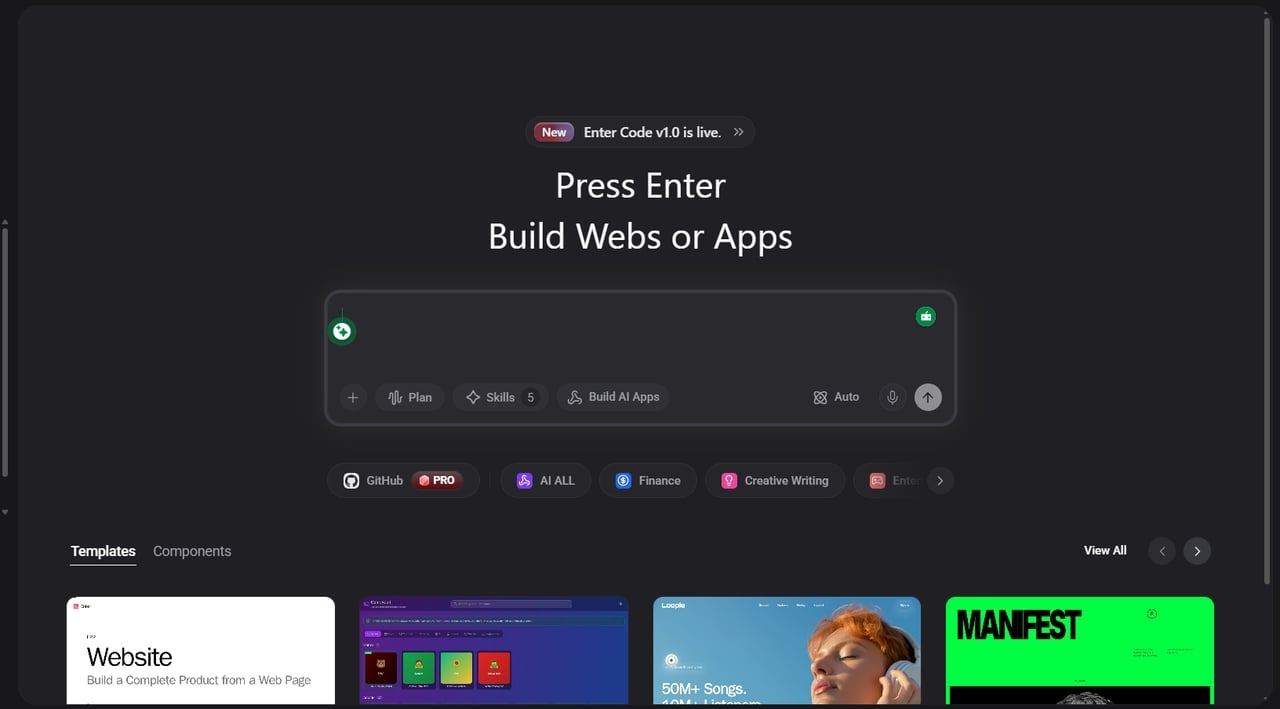
Quick Enter Pro app development process
Enter Pro enables fast, simple, and efficient app creation from idea to deployment.
Step 1: Describe your thought
Input a prompt that defines the app's purpose and characteristics. The Enter Pro system parses this information and automatically creates the app framework.
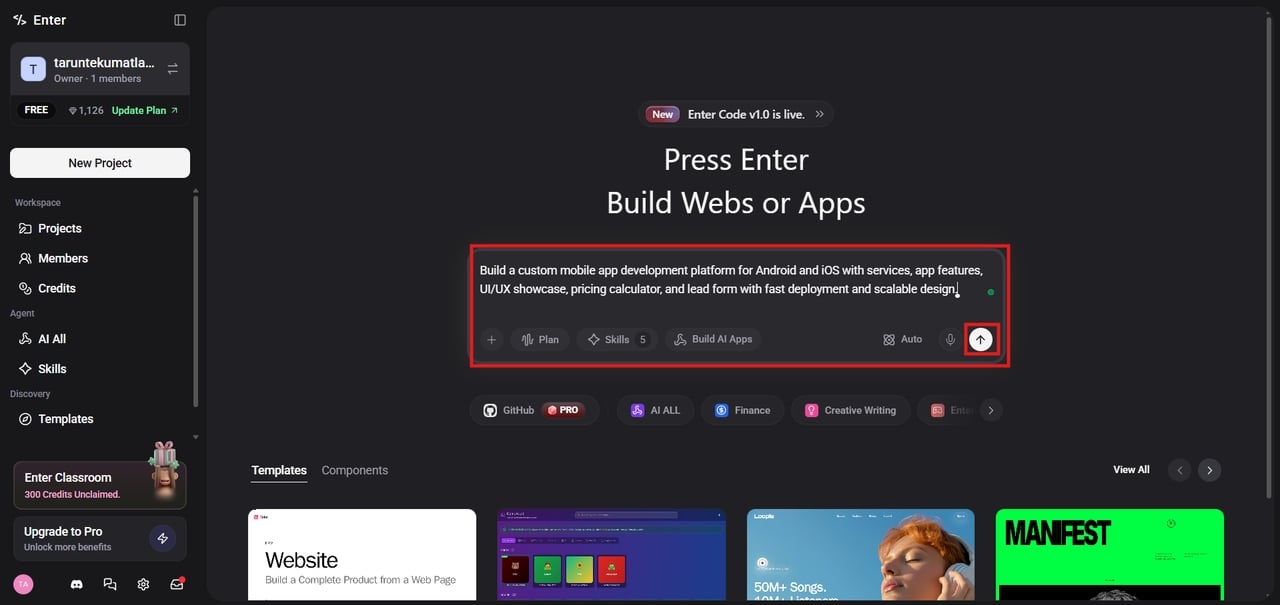
Step 2: Building the app
Enter Pro builds the app automatically, including the UI and core functionalities. Development time is significantly reduced because coding is automated and changes can be made on the fly.
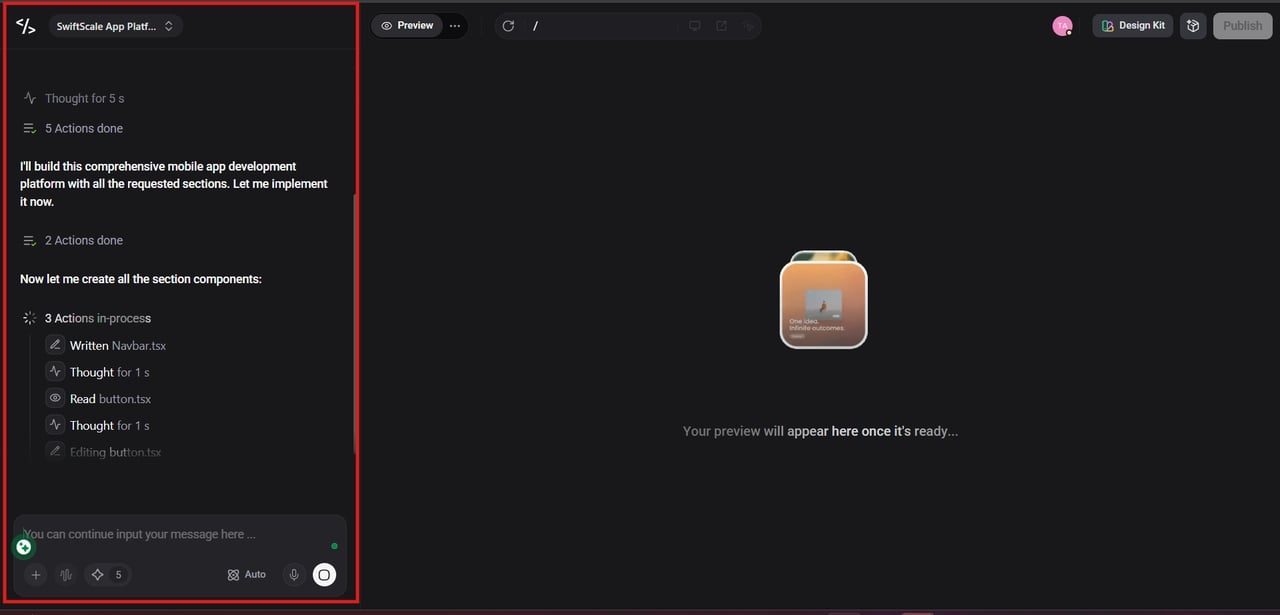
Step 3: Publish
When you are satisfied with your app, you can preview it and then publish it straight from Enter Pro to the live environment.
Challenges in custom mobile app development
Custom mobile app development faces challenges like cost, time, integration, and maintenance.
-
High initial cost: Custom mobile app development requires a significant upfront investment in design, coding, testing, and infrastructure, especially for feature-rich, scalable business solutions.
-
Longer timelines: Custom-made applications may need a lot of time to build because of planning, UX/UI design, coding, testing, and fixing, especially when the requirements are very specific.
-
Legacy integration: Connecting modern apps with legacy systems is challenging due to outdated technology, data migration issues, and compatibility constraints that require extra technical effort.
-
Security compliance: Modern applications must meet high security requirements, including encryption and other compliance requirements.
-
Ongoing maintenance: Post-launch maintenance includes bug fixes, updates, performance tuning, and new features to ensure the app remains secure, stable, and aligned with evolving needs.
Conclusion
Custom application development enables organizations to build scalable, secure applications that improve efficiency, enhance user experience, and drive growth. It is flexible for both enterprise and mobile applications, making it a viable option for organizations regardless of cost or other obstacles. For easy development and quicker deployment of apps, Enter Pro comes to your rescue with a state-of-the-art platform that lets you design, develop, and deploy your app quickly with minimal code.
FAQ'S
- How does custom mobile app development improve business efficiency?
Custom mobile app development increases efficiency by automating processes and reducing manual tasks. The custom solution provides increased productivity and decision-making speed associated with particular business processes.
- Which factors influence custom app development pricing the most?
The price of custom mobile application development depends on many factors, such as the complexity of applications, features, platforms, user interface/user experience (UI/UX), third-party integration, skills of the development team, and maintenance.
- What are the latest trends in custom application development?
Some current trends in custom application development include artificial intelligence, low-code/no-code tools, cloud-native solutions, cross-platform development, automation, and improved security, scalability, and user experience.
- What technologies are used in custom Android app development?
The process of custom Android application development involves the use of technology such as Kotlin, Java, Android Software Development Kit, Flutter, React Native, RESTful APIs, and cloud technology.
- Is custom app development better than off-the-shelf software?
Custom app development is better than off-the-shelf software as it offers flexibility, scalability, better integration, enhanced security, and tailored features designed specifically for unique business needs and long-term growth.