How to Start a Consulting Business Using AI and Secure Clients Fast
Looking for tips on how to start a consulting business? Discover the essential prerequisites, define your niche, and build an AI website to get clients fast.
Transitioning from a salaried employee to an independent advisor is one of the most lucrative career moves you can make today. However, figuring out exactly how to start a consulting business that generates consistent, scalable revenue requires more than just raw industry expertise—it demands a bulletproof operational strategy and a modern digital infrastructure. Whether you are aiming to bootstrap a lean side hustle or lay the groundwork for a fully autonomous agency, leveraging the right technology is your ultimate differentiator. This comprehensive breakdown reveals the exact prerequisites, technical workflows, and expert strategies you need to secure high-paying clients and establish digital authority.
What Do You Need to Start a Consulting Business?
There are several critical administrative and technical concerns to keep in mind regarding how to start a consulting business on the side. Before you begin pitching your services to potential clients, you must establish the operational foundation of your company. Focusing on these core prerequisites will ensure you are legally protected, financially optimized, and technologically prepared to handle enterprise-level workflows.

1. A Comprehensive, Data-Driven Business Plan
When establishing a new venture, it is incredibly helpful to have a rigorously researched written plan to guide your initial progress. Entrepreneurs looking to start a consulting firm should begin by outlining their core operational objectives and go-to-market (GTM) strategy. Whether it is a concise, one-page executive overview or a highly detailed operational description, your business plan should examine the Total Addressable Market (TAM), direct and indirect competitors, and tangible key performance indicators (KPIs). You must define exact metrics, such as projected first-year earnings, client acquisition costs (CAC), and the target number of monthly retainer clients required to maintain profitability.
2. A Formalized Legal Business Entity
Before taking on professional liability, you must determine the legal corporate structure you want your business to operate under. Common choices include:
-
Sole Proprietorship: This structure places a single individual in charge of all profits and legal liabilities. While it is incredibly simple to set up and requires very little paperwork, it is risky for high-stakes advisory roles. If a client sues you, your personal assets (like your house or savings) are entirely unprotected.
-
Limited Liability Company (LLC): Forming an LLC legally separates your personal assets from your business entity. This "corporate veil" limits your personal financial liability should a client dispute arise over a breach of contract or an unmet deliverable.
3. Dedicated Financial and Accounting Infrastructure
Under no circumstances should you mix personal and business funds. You need a dedicated business bank account and automated bookkeeping software from day one. Keeping these finances entirely separate not only makes quarterly tax reporting significantly easier but also establishes a clear paper trail of your deductible business expenses—such as cloud hosting fees, software subscriptions, computer equipment upgrades, or payments for external legal advisory services. Implementing cloud-based accounting software ensures you can easily track your Monthly Recurring Revenue (MRR) and issue professional, automated invoices.
4. A Professional, Automated Software Stack
Consultants sell their specialized time and communication skills, so your digital infrastructure must be flawless to avoid operational bottlenecks. Ensure you implement the following key components:
-
Custom-Domain Email: Secure a professional email address (rather than a generic provider) to establish and maintain immediate credibility with enterprise prospects.
-
HD Video Conferencing: Implement a reliable, high-definition communication tool to facilitate seamless, glitch-free remote client meetings.
-
Robust CRM Platform: Utilize a Customer Relationship Management system as your central operational hub. This allows you to automate meeting bookings, track outbound email sequencing, manage pipeline stages, and trigger asynchronous follow-ups with potential leads, ensuring no opportunity slips through the cracks.
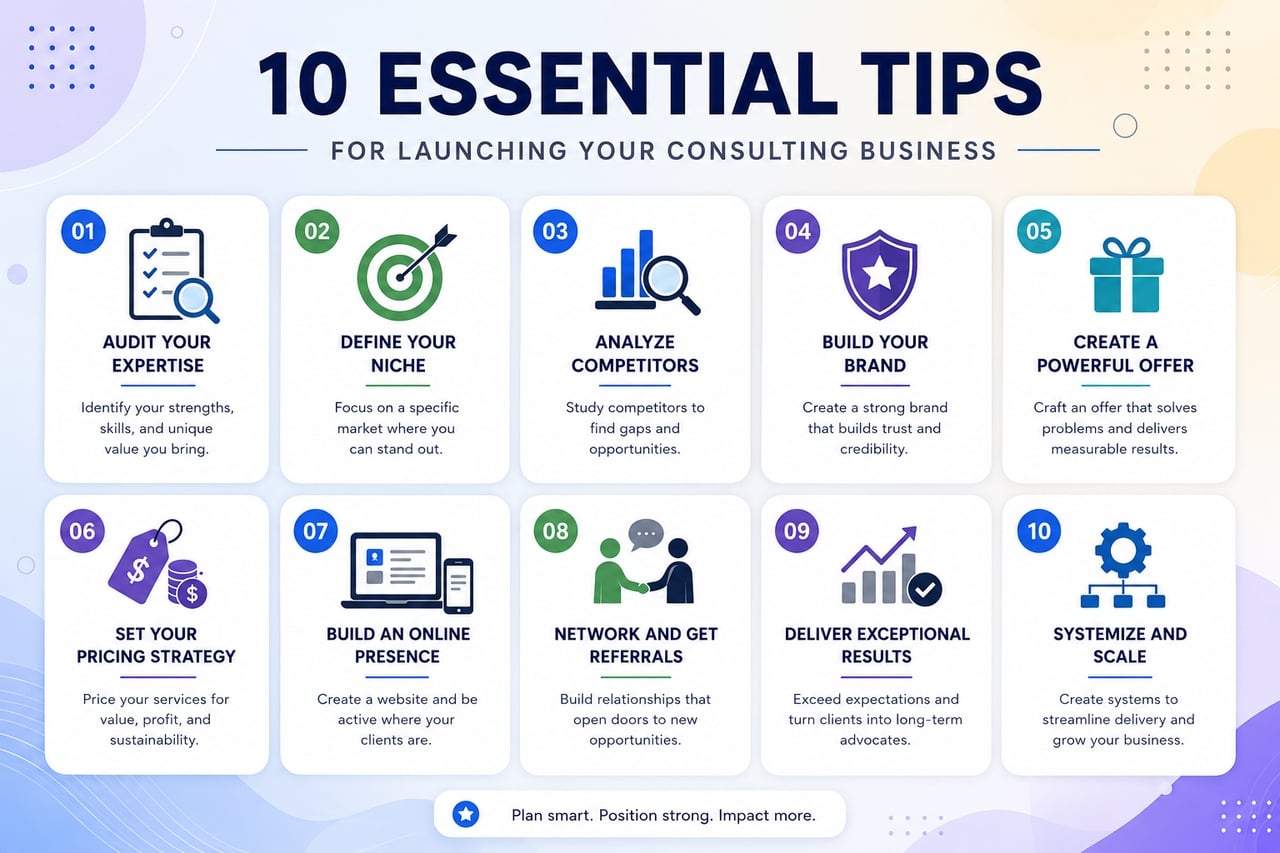
10 Essential Tips for Launching Your Consulting Business
Once your administrative and technical foundation is securely set, building a sustainable client base requires intent, focus, and aggressive execution. If you are researching how to start a business consulting practice from the ground up, these 10 authoritative tips will guide your strategic execution and help you land your first major contract.
Tip 1: Audit Your Professional Expertise and Track Record
Before you accept a single client, conduct a brutally realistic assessment of your specialized skills and technical competencies. A successful consultant provides high-level, actionable solutions that clients cannot easily execute in-house due to a lack of talent or resources. Document your past successes using hard data. What specific KPIs have you improved? What complex industry problems do you know how to solve faster than anyone else? Building a portfolio of quantitative results is what convinces prospects to hire you.
Tip 2: Identify a Highly Profitable Target Audience
Generalists inevitably compete on price, but true specialists compete entirely on value. Instead of offering broad, generic advice, you must narrow your target audience by developing a strict Ideal Customer Profile (ICP). For example, instead of offering general B2B marketing consulting, specialize deeply in "predictive lead scoring strategies for post-Series A SaaS startups." A tight, hyper-specific niche makes you the undeniable subject matter expert in that particular room, allowing you to command significantly higher consulting fees.
Tip 3: Analyze Competitor Offerings and Digital Footprints
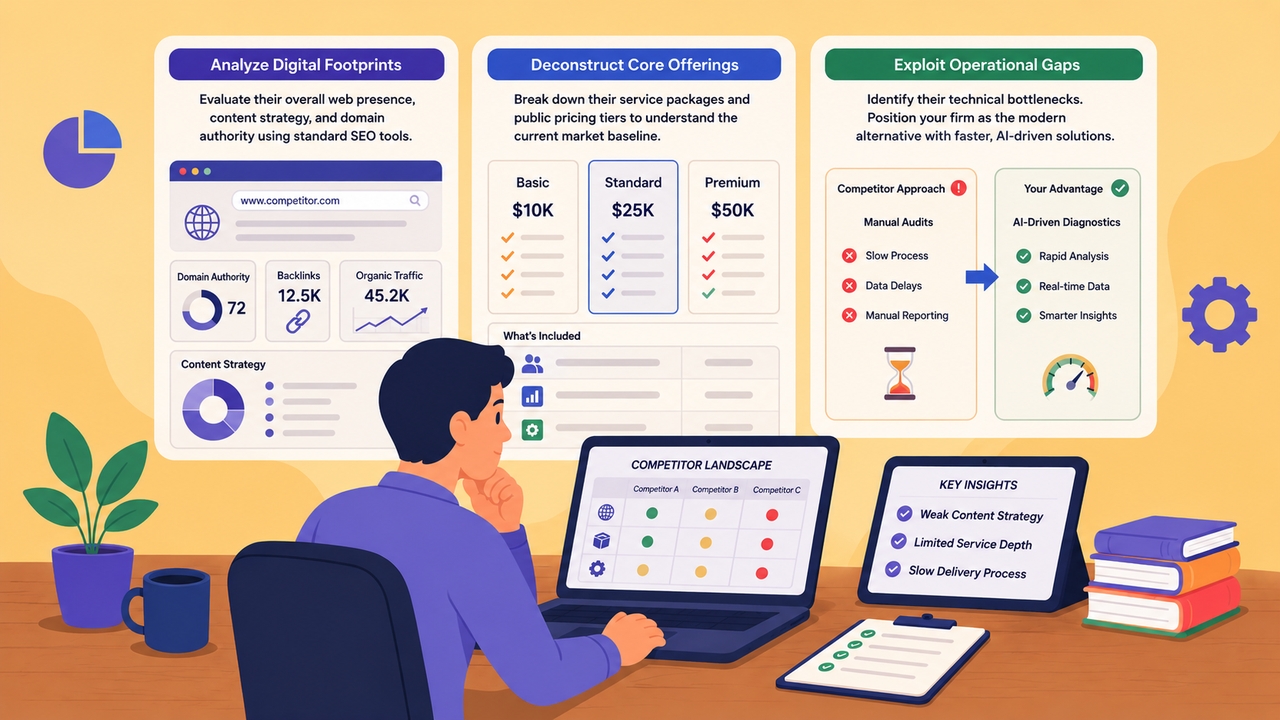
Don't just guess what the market wants—map it out. Spend time running a deep dive on the key players already operating in your target niche. Figuring out how to start a consultant business that actually wins enterprise contracts comes down to spotting exactly where your direct competitors drop the ball. When you execute your competitive analysis, break the data down into these core vectors:
-
Analyze Digital Footprints: Evaluate their overall web presence, content strategy, and domain authority using standard SEO tools.
-
Deconstruct Core Offerings: Break down their service packages and public pricing tiers to understand the current market baseline.
-
Exploit Operational Gaps: Identify their technical bottlenecks. If they still rely on slow, manual audits, you can immediately position your firm as the modern alternative by offering rapid, AI-driven diagnostics that deliver data in half the time.
Tip 4: Structure a Sustainable, Value-Based Pricing Strategy
Pricing is where most new advisors lose their leverage. If you're looking into how to start a consulting business, stop thinking in hourly rates—it's a ceiling on your growth. You have to decouple your income from the clock. Anchor your fees to the actual Return on Investment (ROI) you create for the client.
Whether you use project-based flat fees or a hybrid retainer, make sure you're paid for your expertise, not penalized for working fast. This keeps your margins high and ensures your earning potential stays uncapped as you become more efficient.
Tip 5: Draft Airtight Client Contracts and SOWs
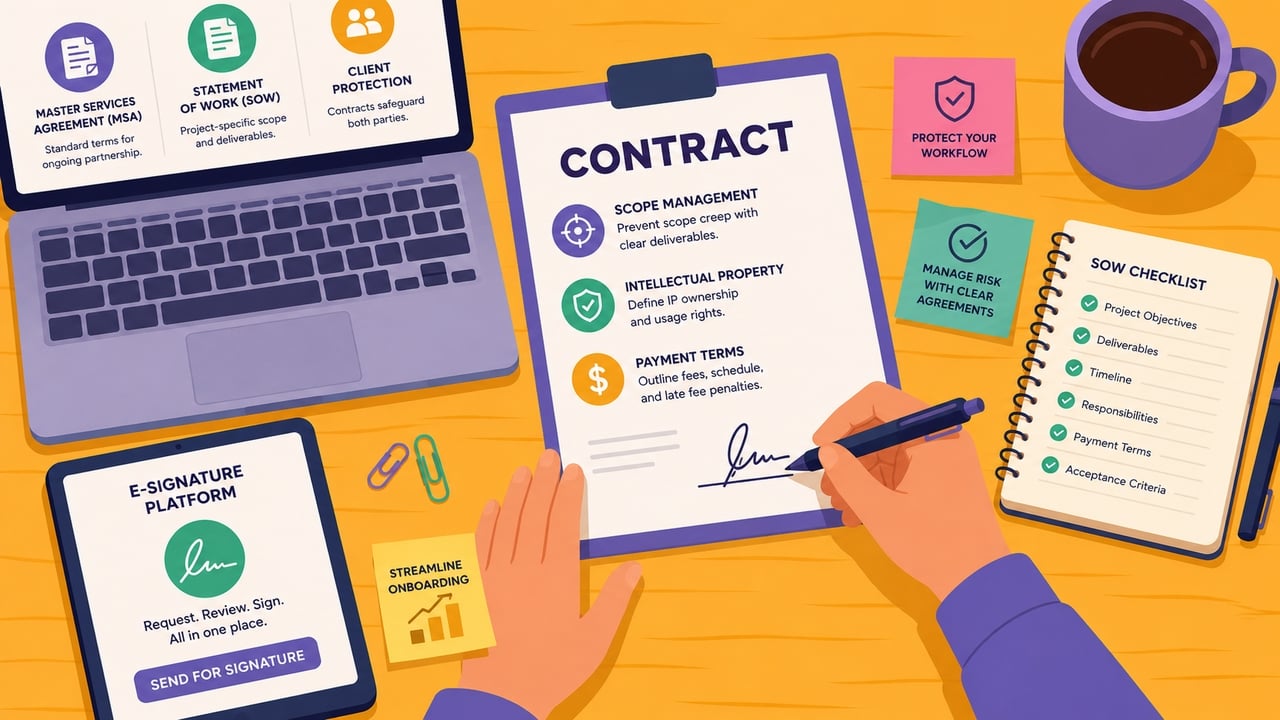
While setting up your business entity protects your personal assets, a solid contract protects your daily workflow and mental bandwidth. Work with a legal professional to draft a standardized Master Services Agreement (MSA) and customized Statements of Work (SOW) for every new project. This ensures that scope creep is aggressively managed, Intellectual Property (IP) rights are clearly defined, and payment terms (including late fee penalties) are legally binding. Utilizing e-signature platforms will streamline this onboarding process.
Tip 6: Launch a High-Converting Digital Storefront
Your website is functioning as your 24/7 sales representative and is often the very first point of contact for potential inbound leads. To command premium industry rates, you need an online presence that establishes supreme trust and authority immediately. You do not need a massive agency budget or weeks of backend development time; modern, AI-powered development environments allow solo consultants to launch customized, lead-generating, responsive sites in a matter of minutes. Focusing on clean UX/UI and Conversion Rate Optimization (CRO) is critical.
Tip 7: Develop a Proprietary Signature Consulting Methodology
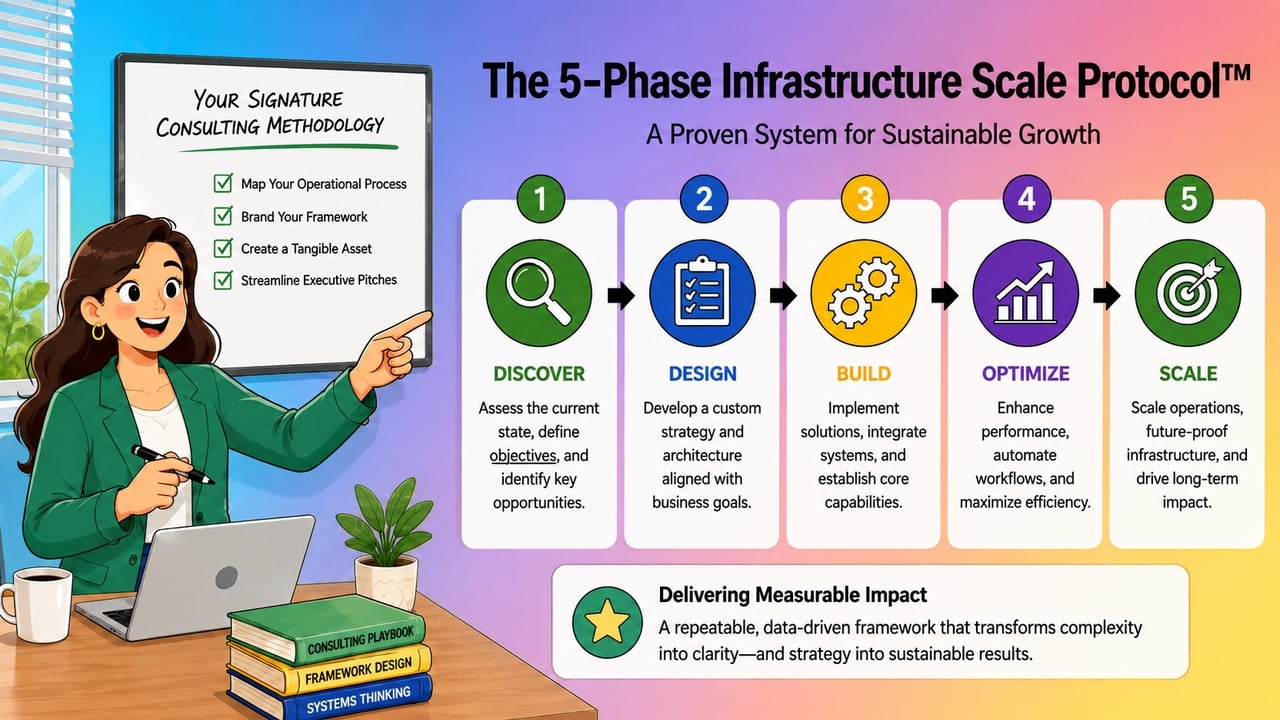
Enterprise clients aren't buying your time or your theoretical advice—they are buying a proven system. To land bigger contracts, you need to productize your expertise. Break down your approach into a clear, repeatable framework:
-
Map Your Operational Process: Document your exact, step-by-step technical pipeline for solving complex client problems. Don't leave anything to guesswork.
-
Brand Your Framework: Give your system a professional name, like "The 5-Phase Infrastructure Scale Protocol." This immediately sets you apart from amateurs who just wing their advisory calls.
-
Create a Tangible Asset: A signature methodology transforms your abstract knowledge into a structured, deployable product.
-
Streamline Executive Pitches: When you sell a named, repeatable framework instead of just "consulting hours," it becomes infinitely easier to get buy-in from a skeptical C-suite or board of directors.
Tip 8: Leverage Professional Networks for Warm Inbound Leads
Your initial client roster will almost certainly come from your existing warm network. Warm introductions bypass the friction of cold outreach and close at a significantly higher percentage rate because the trust is already established.
To execute this effectively, focus on these three scanning-friendly strategies:
-
LinkedIn Profile Optimization: Update your headline and "About" section with targeted SEO keywords that reflect your specific consulting focus. Ensure your profile clearly signals that you are open to high-impact projects.
-
Targeted Outreach: Reach out to former colleagues and employers directly. Instead of a vague "check-in," let them know exactly what operational problems you solve and that you have the current capacity for new side projects.
-
High-Niche Presence: Attend technical industry conferences and specialized webinars. Focus on being a contributor in these spaces rather than just a spectator to build authority within your niche.
| Lead Source | Friction Level | Conversion Velocity | Primary Objective |
|---|---|---|---|
| Cold Outreach | High | Low | Establish Identity & Trust |
| Warm Network | Low | High | Define Project Scope & ROI |
Warm leads allow you to skip the "Who are you?" phase and move directly into "How can you help us?" This efficiency is the fastest way to stabilize your Monthly Recurring Revenue (MRR) during your launch phase.
Tip 9: Master Asynchronous Time Management for Side-Hustlers
Bootstrapping a consultancy while holding down a demanding full-time role means you have to protect your bandwidth ruthlessly. If you want to ship high-quality deliverables without burning out, you need strict operational boundaries. Lock in your workflow using these tactics:

-
Time-Block Your Execution: Dedicate non-negotiable blocks on your weekly calendar exclusively for deep work, client deliverables, and outbound lead generation.
-
Default to Async Communication: Push clients toward asynchronous updates using tools like Loom, Slack, or shared Kanban boards. This keeps you out of endless, low-value synchronous Zoom meetings.
-
Enforce Hard Guardrails: Treat your consulting blocks with the exact same respect—and rigid boundaries—as your primary day job to protect your mental overhead.
Tip 10: Collect Client Testimonials for Immediate Social Proof
Don't wait around once you ship a successful deliverable—ask for a case study or testimonial immediately. In the B2B space, decision-makers rely heavily on consensus before signing off on budgets. Showcasing verifiable metrics, Net Promoter Scores (NPS), and raw client feedback directly on your site builds instant credibility. This hard social proof mitigates the perceived risk for future prospects, removing friction from your sales pipeline and making it significantly easier to close your next enterprise deal.
How to Build Your Consulting Website Instantly with Enter Pro
To capture the inbound leads your networking generates, a professional digital storefront is essential. Enter Pro is an SMB-friendly, no-code AI development agent that handles all the heavy lifting of full-stack development for you. Powered by top-tier LLMs like Claude 4.6 Sonnet and Gemini Pro, it allows you to remix elite community templates or build customized sites from scratch autonomously.
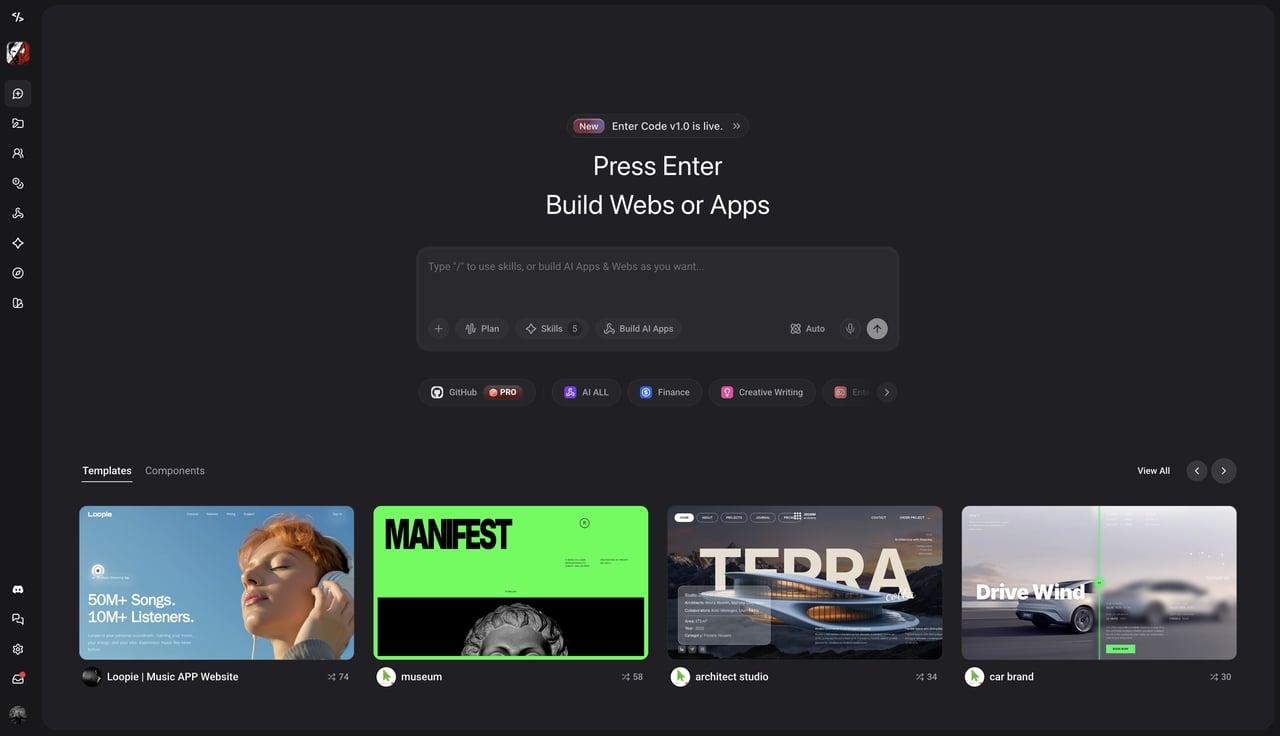
With built-in Stripe and Google Analytics integrations, you get hand-coding precision combined with the blistering speed of AI. This ensures highly responsive layouts and secure retainer payments from day one—without touching a single line of backend logic.
How to Build Your Site with Enter Pro:
Step 1: Input Your Requirements
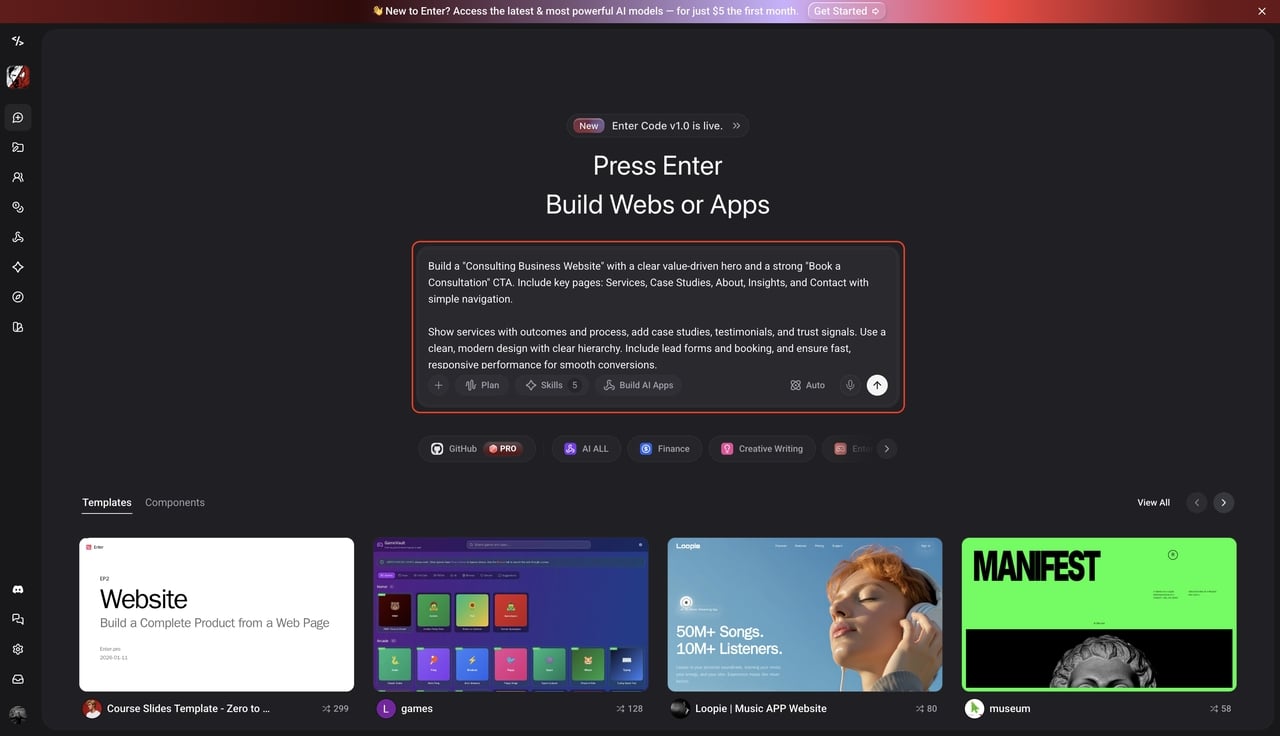
Open the Enter Pro dashboard and enter your consulting niche and value proposition into the prompt queue. The AI uses these cues to architect a custom full-stack layout designed specifically to capture high-ticket leads.
Step 2: Monitor Autonomous Development
The moment you hit submit, the system translates your raw concept into a structured implementation plan that maps out every necessary component. After a few quick multiple-choice questions to align your technical stack, the build begins. If an error occurs, skip the manual logs; simply click a button to let the agent diagnose and resolve it autonomously.
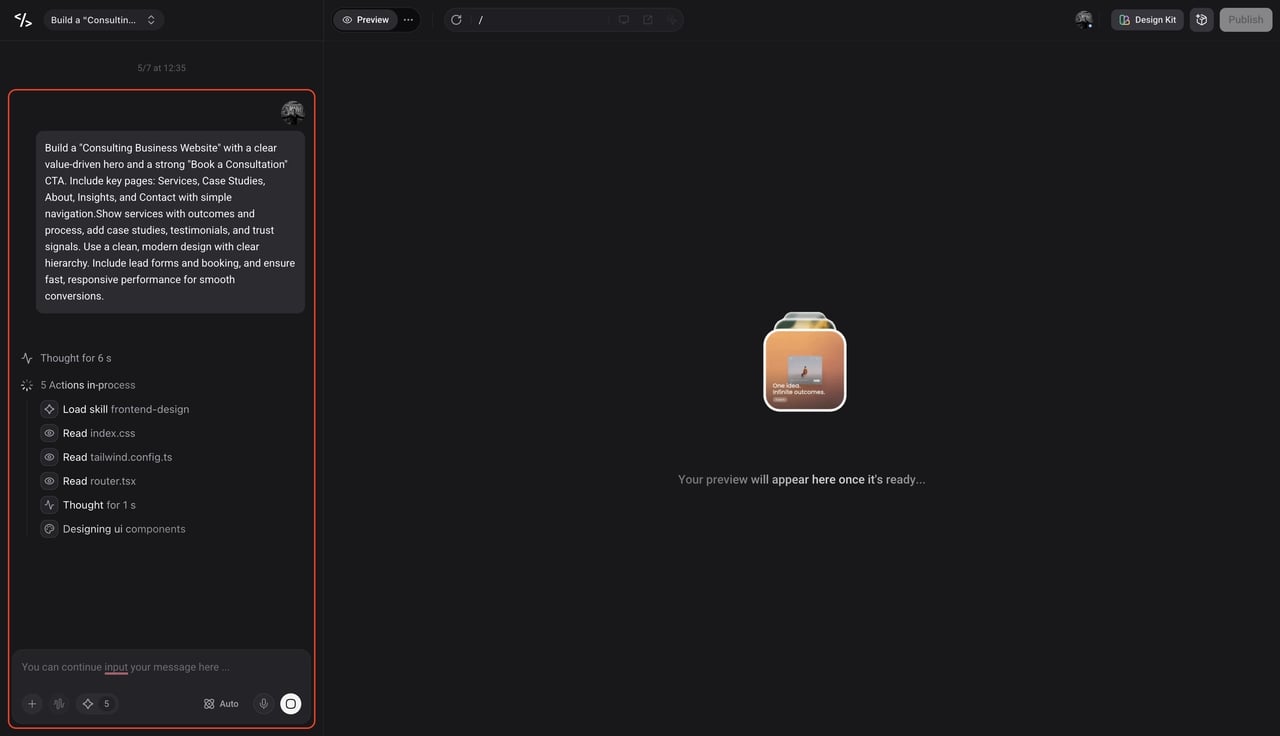
Pro Tip: Watch the "Thought Process" logs. If the AI deviates from your vision, interject with a follow-up prompt immediately to redirect the build before it finalizes the logic.
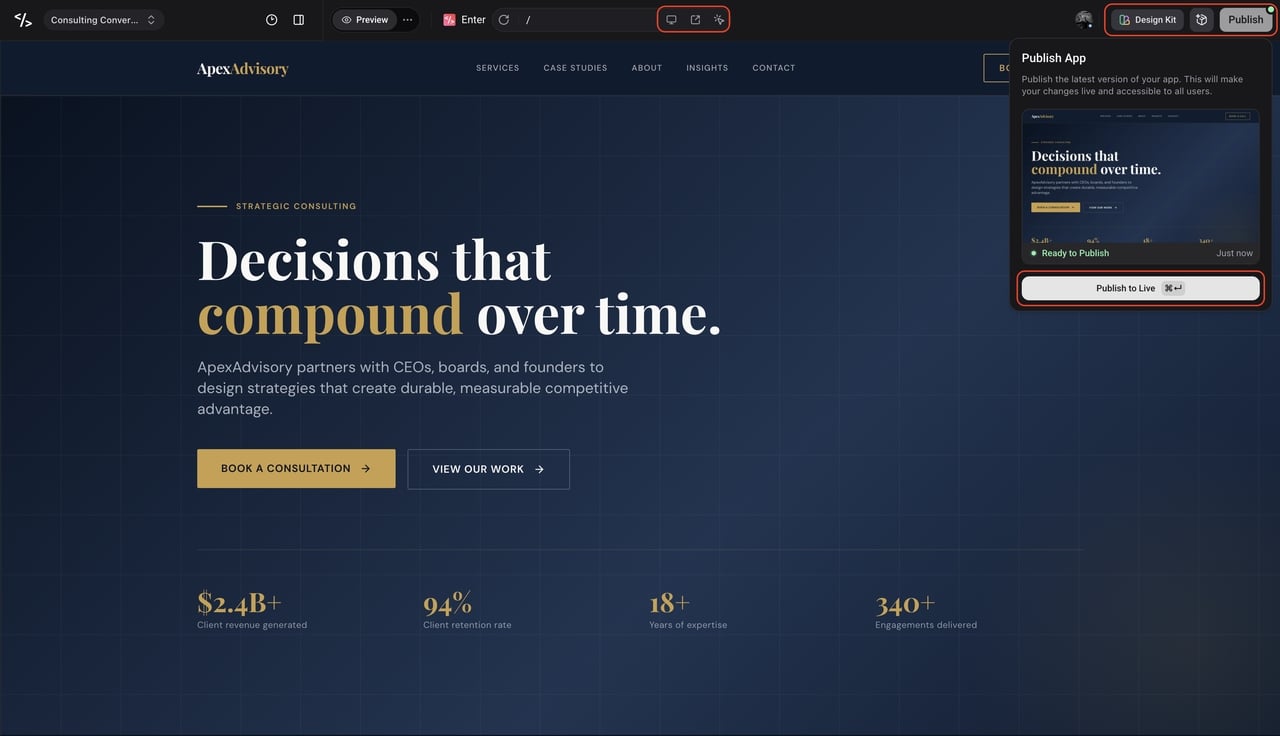
Step 3: Preview, Refine, and Deploy
After using the top navigation to ensure a flawless experience across desktop, tablet, and mobile, you can swap out headers or footers in the Design Kit, manage your high-level integrations and agent tools through the sidebar, and finally hit "Publish to Live" to launch your site globally.
Scaling Your Expertise: The Path Forward
Succeeding as an independent advisor isn't just about what you know—it's about how you execute. Once you've solidified your legal frameworks and mastered how to start a consulting firm business, you're officially built for scale.
Leverage powerful platforms like Enter Pro to handle your digital infrastructure instantly. This allows you to eliminate administrative friction entirely, letting you focus all your energy on delivering outstanding, measurable results to your clients.
FAQs
1. Do I need a specific degree or certification to become a consultant?
No specific degree is legally required for general tech or business consulting. While fields like finance need strict licensing, most B2B roles simply require a demonstrable track record of deep expertise and the ability to architect complex solutions.
2. How much capital does it cost to start a consulting firm?
Starting up is actually quite cheap. Your main costs include legal registration, a clean domain, and your software stack. You'll definitely need a solid CRM and an AI-driven website builder to handle your lead generation and manage your sales pipeline.
3. What is the most effective way to price consulting services?
Value-based or project-based pricing is the most scalable model. Tying your compensation to specific economic outcomes drastically increases your earning potential. You are paid for your deep expertise, not penalized for working highly efficiently.
4. How do I attract my very first paying consulting client?
Systematically tap into your existing network. Fix up your LinkedIn SEO and run some targeted outbound email sequences to former colleagues. Try offering a discounted "beta" audit to a prospect; then over-deliver to secure a killer, metrics-driven brand case study.
5. Do I absolutely need a website before pitching my services?
Yes, a professional website acts as an authoritative digital portfolio, establishing immediate credibility. Sophisticated clients research your digital footprint. Modern AI-native website builders allow you to launch a high-converting storefront rapidly.