
The Ultimate Guide: How to Start an Ecommerce Business from Scratch
Learn how to start an ecommerce business in 2026 with our comprehensive step-by-step guide. Discover niche selection, website building, and marketing tips!
What is an ecommerce business?
At its core, an ecommerce business is any commercial entity that facilitates the buying and selling of goods or services over the internet.
Unlike traditional brick-and-mortar stores bound by physical locations and strict operating hours, an ecommerce business operates in the digital realm, allowing transactions to occur 24/7 across the globe. This business model encompasses a wide variety of formats, including Business-to-Consumer (B2C), where companies sell directly to end users; Business-to-Business (B2B), involving transactions between companies; and Consumer-to-Consumer (C2C), facilitated by platforms like eBay or Etsy.
Whether you are selling physical products like clothing and electronics, digital goods like software and ebooks, or services like online consulting, ecommerce provides a limitless digital storefront. It relies on electronic payment systems, digital shopping carts, and supply chain logistics to deliver a seamless shopping experience directly to the consumer's preferred device.
Reasons to start an ecommerce business in 2026
Launching an ecommerce business in 2026 presents unprecedented opportunities. With advanced AI tools, ultra-fast global shipping networks, and shifting consumer habits, here are five compelling reasons to start your digital store today.
-
Global reach: Unlike physical shops limited by geography, an online store opens your doors to a massive international audience. You can seamlessly target, market, and sell to customers across different continents, dramatically expanding your potential customer base and revenue streams.
-
Lower overhead costs: Starting online significantly reduces the financial burden associated with traditional retail. You bypass expensive storefront leases, high utility bills, and large in-store staffing requirements, allowing you to invest your capital directly into product development and highly targeted digital marketing.
-
24/7 operational capability: Your ecommerce website never sleeps. It acts as a tireless salesperson, processing orders around the clock, including weekends and holidays. This continuous operation maximizes your sales potential, capturing impulse buyers and accommodating customers in completely different time zones easily.
-
Personalized customer experience: Modern ecommerce platforms utilize advanced data analytics and artificial intelligence to track consumer behavior. This empowers you to offer highly personalized product recommendations, targeted email campaigns, and customized shopping experiences that significantly boost conversion rates and foster brand loyalty.
-
Scalability and flexibility: As your business grows, scaling an online store is remarkably agile. Instead of physically expanding a building, you simply upgrade your server capacity, integrate automated inventory software, and expand your digital marketing budget, allowing for rapid and sustainable business growth.
Key components of an ecommerce business
A successful ecommerce business is much more than just a website; it is a complex ecosystem made up of several interconnected components working in harmony.
-
At the forefront is the storefront or website, the digital face of your brand where customers browse products. It must be user-friendly, mobile-responsive, and visually appealing.
-
Behind the scenes, a robust inventory management system is crucial for tracking stock levels in real-time, preventing overselling, and managing supplier relationships.
-
Equally important is the payment gateway, a secure processor that handles customer transactions, encrypts sensitive credit card data, and ensures funds are safely transferred to your merchant account.
-
To physically get products to buyers, efficient order fulfillment and logistics are required. This encompasses warehousing, packaging, and partnering with reliable shipping carriers to ensure timely delivery.
-
Furthermore, effective customer service infrastructure, such as live chat, comprehensive FAQs, and responsive email support, is essential for handling inquiries and resolving issues promptly.
-
Finally, a strong digital marketing and analytics engine acts as the growth catalyst. This includes SEO optimization, email marketing software, and data analytics tools to monitor traffic, track conversions, and understand customer behavior.
Together, these core features create a seamless, end-to-end shopping experience that builds trust and drives sustainable online sales.

How to start an ecommerce business online in 2026
Starting your ecommerce journey requires a strategic, step-by-step approach. Here is your comprehensive guide to launching a successful online business in 2026.
Step 1: Find your niche and product
The foundation of any successful online business lies in identifying a profitable niche and selecting the right products to sell. Instead of trying to compete with massive retailers by selling everything, focus on a specific target audience with unique pain points.
Conduct thorough market research using tools like Google Trends, social media listening, and competitor analysis to discover unmet demands. Consider whether you will sell physical goods, digital products, or services. Validate your product idea by assessing its profit margins, sourcing feasibility, and overall market saturation.
A highly focused niche allows for more effective, targeted marketing and builds a passionate customer base faster.

Step 2: Conduct market and competitor research
Once you have a product idea, you must deeply understand your competitive landscape and target demographic. Analyze your top competitors to evaluate their pricing strategies, website design, product quality, and marketing tactics. Identify their weaknesses and determine how you can offer a superior value proposition, whether through better customer service, higher quality, or unique branding.
Simultaneously, create detailed buyer personas outlining your ideal customer's age, interests, income level, and shopping habits. This critical research phase minimizes financial risk by ensuring there is genuine demand for your offering and helps tailor your future marketing campaigns directly to the right audience.

Step 3: Write a comprehensive business plan
A solid business plan acts as your strategic roadmap, guiding your decisions and helping you secure funding if necessary.
Your plan should clearly define your business model (e.g., dropshipping, direct-to-consumer, white-labeling) and outline your overarching mission and vision. Include a detailed financial projection covering startup costs, expected revenue, and break-even analysis.
Furthermore, detail your operational plan, including how you will source products, manage inventory, and handle shipping logistics. Don't forget to include a robust marketing and sales strategy. Taking the time to document these elements clarifies your goals and keeps you focused as you navigate the initial launch phases.

Step 4: Choose a business name and register your brand
Your business name is the cornerstone of your brand identity. It should be memorable, easy to spell, and highly relevant to your niche. Once you brainstorm the perfect name, verify that the corresponding .com domain name is available, as well as the relevant social media handles across platforms like Instagram and TikTok.
After securing your digital assets, it is time to make it official. Register your business entity (such as an LLC or Sole Proprietorship) with your local government to protect your personal assets. Additionally, apply for any necessary business licenses, permits, and an Employer Identification Number (EIN) for tax purposes.

Naming your businessStep 5: Source your products and manage inventory
You must establish a reliable supply chain before you can start selling.
Depending on your business model, this could involve manufacturing your own products, partnering with a wholesale distributor, or setting up a dropshipping arrangement where a third party handles fulfillment. Request samples from multiple suppliers to rigorously test product quality, shipping times, and communication reliability.
Once you select a supplier, negotiate favorable terms and minimum order quantities. If you are holding your own inventory, invest in a scalable inventory management system to track stock levels accurately, prevent costly stockouts, and streamline the reordering process as your sales volume grows.

Step 6: Build your ecommerce website
Your website is your digital storefront, and its design heavily impacts your conversion rates. Choose a reputable ecommerce platform like Shopify, WooCommerce, or BigCommerce that aligns with your technical skills and budget.
Select a visually appealing, mobile-responsive theme that reflects your brand's aesthetic. Create high-quality product pages featuring clear, professional photography, engaging videos, and compelling, SEO-optimized product descriptions.
Ensure the navigation is intuitive so customers can easily find what they are looking for. Most importantly, streamline the checkout process to be as fast and frictionless as possible, minimizing required fields to reduce shopping cart abandonment and boost overall sales.
How to start an online ecommerce business website with Enter Pro?
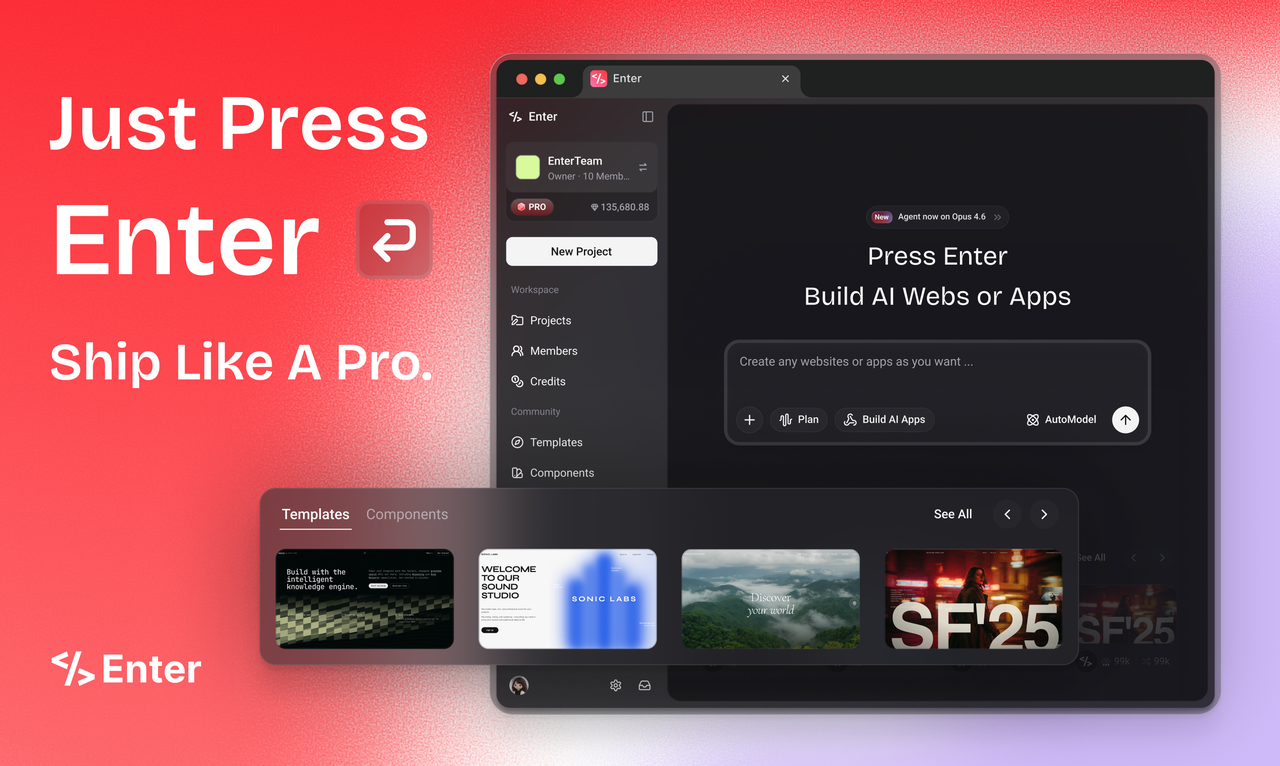
Enter Pro is a revolutionary no-code AI development agent that transforms anyone into a full-stack developer.
By turning your text prompts into deployed applications, this "vibe coding" agent allows founders to build professional-grade e-commerce platforms effortlessly, complete with database, frontend, and backend components, without writing a single line of code.
Key features of Enter Pro:
-
Production-ready integrations: Seamlessly connect your app with Stripe for immediate payments and Supabase for data.
-
**Template remixing: **Instantly clone the community's best-performing full-stack templates instead of starting from scratch.
-
Visual editor: Simply click any element on the canvas to tweak code and visual styles with pinpoint precision.
-
100% code ownership: Export your full source code at any time, ensuring total control and zero vendor lock-in.
3 simple steps to create your e-commerce website with Enter Pro:
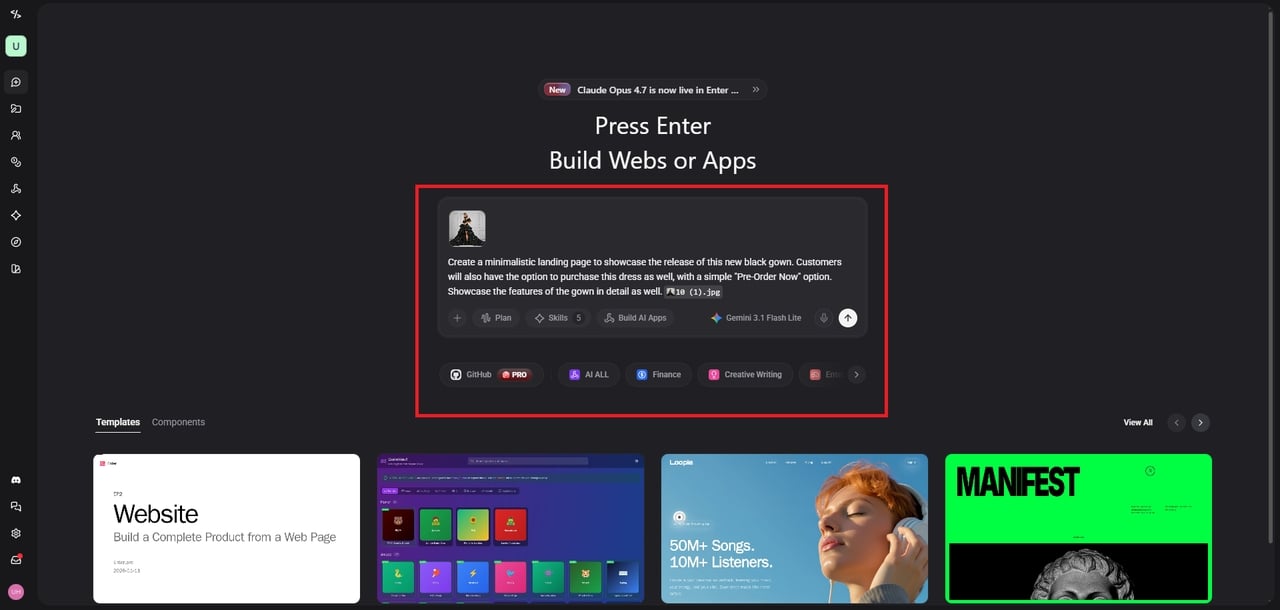
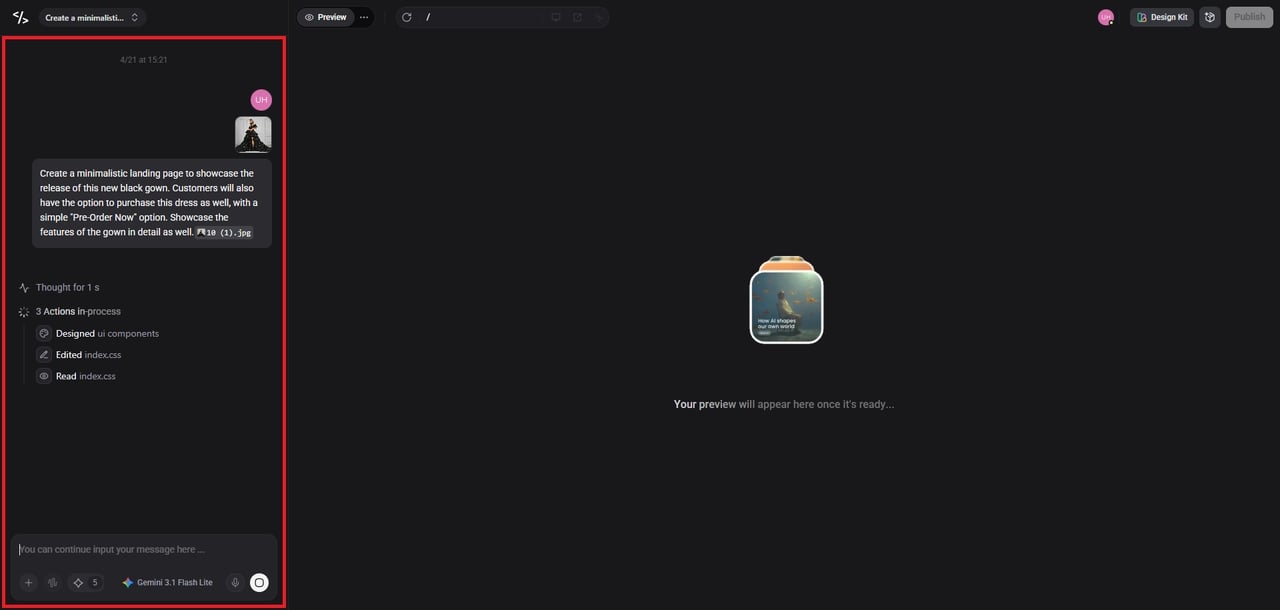
Step 1: Prompt your e-commerce store vision
Start by describing your ideal online store to the Enter Pro AI agent. Simply type your requirements, niche, and desired features in plain English. The AI instantly generates a customized, professional-grade storefront complete with the necessary backend logic and scalable database structures.
Step 2: Customize and refine your e-commerce website
Let Enter Pro bring your dream e-commerce website to life, as it will only take a couple of minutes to complete the initial building process. Once done, you can utilize the intuitive in-built visual editor to perfect your store's design.
Step 3: Integrate and deploy your online business
Connect essential e-commerce tools like Stripe for payment processing and Supabase for customer data management with zero configuration. Once your storefront is polished and integrated, launch your fully functional e-commerce application to the entire world with just a single click.

Step 7: Set up payment gateways and shipping logistics
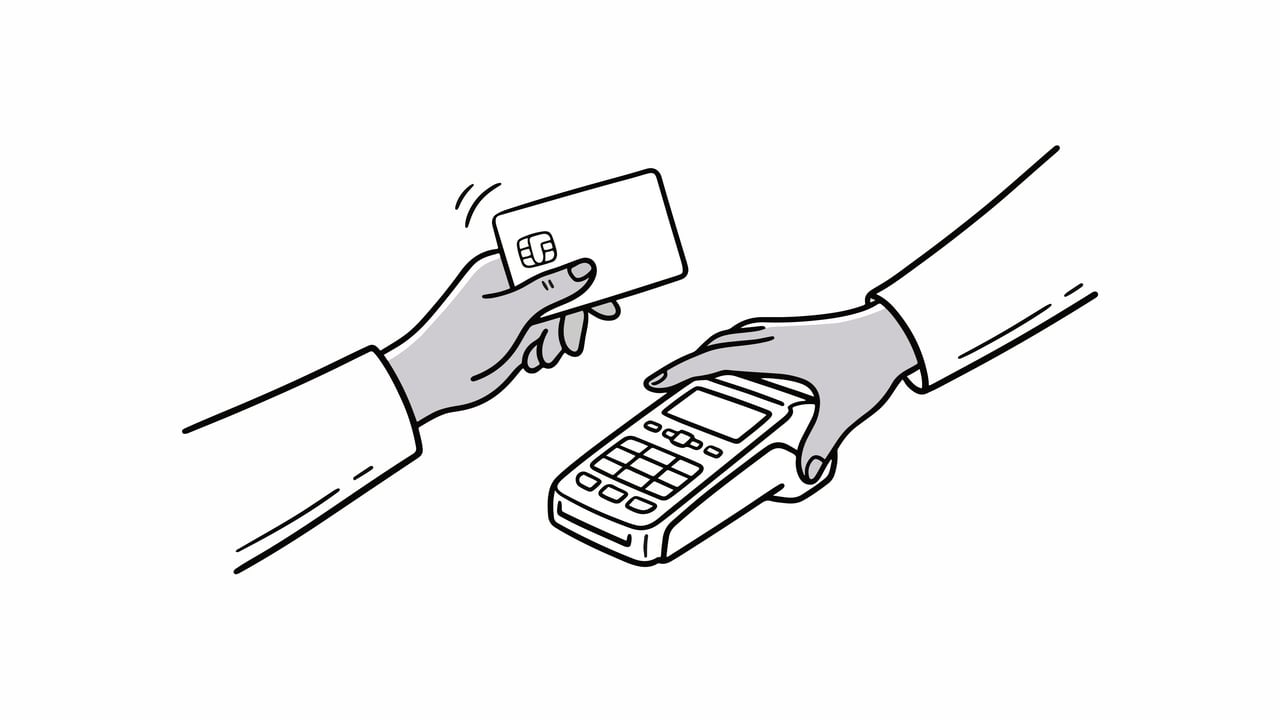
As we covered earlier, to generate revenue, you must offer secure and convenient payment methods.
Integrate popular, trusted payment gateways like Stripe, PayPal, or Apple Pay directly into your store to accommodate diverse customer preferences. Ensure your site is SSL certified to protect sensitive financial data. Simultaneously, define your shipping strategy. Determine whether you will offer free shipping, flat-rate shipping, or real-time carrier rates based on weight and distance.
Partner with reliable couriers and establish a clear, transparent return policy. Clearly communicating your shipping times, costs, and return procedures on your website builds customer trust and significantly reduces post-purchase inquiries and dissatisfaction.
Step 8: Launch, market, and optimize your store
With your store built and tested, it is time to launch and drive targeted traffic to your site.
Implement a multi-channel digital marketing strategy. Utilize Search Engine Optimization (SEO) to rank organically on Google, and leverage paid advertising through Meta Ads or Google Ads for immediate visibility. Build an engaged audience on social media platforms relevant to your niche, and capture emails early to nurture leads through email marketing automation.
Post-launch, continuously analyze your website data using tools like Google Analytics. Track your conversion rates, monitor customer behavior, and heavily A/B test different elements to optimize the shopping experience.
Cost considerations when starting an e-commerce business
Understanding the financial requirements is critical for a successful launch.
The costs of starting an ecommerce business vary wildly depending on your chosen model. A dropshipping store might require as little as $100 to $500 for a domain name, basic platform subscription (like Shopify), and initial ad spend.
However, if you are manufacturing custom products or buying wholesale inventory, upfront costs can range from $2,000 to over $10,000. Key expenses to budget for include platform hosting fees, premium website themes, professional branding and logo design, and essential plugins.
Furthermore, allocate a significant portion of your budget to initial marketing and customer acquisition. You must also account for variable costs such as payment gateway transaction fees, packaging materials, and shipping costs, which directly impact your profit margins.
Crucial tips on how to start an ecommerce business from scratch
To give your new online venture the best chance of survival and rapid growth, keep these proven tips and tricks in mind as you build your ecommerce business.
-
Focus on mobile optimization: The majority of online shopping now occurs on smartphones. Ensure your website theme is flawlessly responsive on mobile devices. Test your mobile checkout process rigorously to ensure buttons are easily clickable and forms are simple to fill out on small screens.
-
Leverage high-quality visuals: Since customers cannot physically touch your products, visual representation is everything. Invest in high-resolution, professional photography from multiple angles. Incorporate lifestyle images and short product demonstration videos to build trust, reduce returns, and clearly communicate the product's value.
-
Build an email list early: Do not rely solely on paid ads. Implement pop-ups or incentive offers (like a 10% discount) to capture visitor emails from day one. Email marketing boasts a massive ROI, allowing you to nurture leads, recover abandoned carts, and drive repeat purchases continuously.
-
Prioritize customer service: Exceptional support sets you apart from massive, impersonal competitors. Offer multiple contact channels, including live chat and a clear contact form. Respond to inquiries rapidly and handle returns gracefully. Positive reviews and word-of-mouth recommendations are invaluable for long-term brand growth.
-
Utilize social proof: Trust is the currency of ecommerce. Actively collect and prominently display customer reviews, ratings, and user-generated content on your product pages. Seeing that others have successfully purchased and enjoyed your products significantly lowers the perceived risk for new, hesitant buyers.

Signing off
Starting an ecommerce business in 2026 is an exciting journey filled with massive potential for growth and financial independence.
While the barrier to entry has never been lower, achieving long-term success requires dedication, continuous learning, and a willingness to adapt to ever-changing consumer trends. By carefully selecting your niche, prioritizing user experience, and executing a data-driven marketing strategy, you can build a resilient digital brand.
Take that crucial first step today, stay focused on delivering exceptional value to your customers, and watch your online storefront thrive in the bustling digital marketplace.
Frequently Asked Questions (FAQs)
Do I need to hold physical inventory to sell online?
No, you do not always need physical inventory when selling online. Business models like dropshipping or print-on-demand allow you to sell products where third-party suppliers handle all the manufacturing, warehousing, and direct customer fulfillment.
What are the best products to sell for beginners?
Beginners should focus on niche products that solve specific problems or cater to passionate hobbies. High-margin, lightweight items that are difficult to find locally generally offer the best initial results.
How to start an ecommerce business with no money?
If you are wondering how to start an ecommerce business without money, then you leverage business models like dropshipping or print-on-demand, where you only pay for products after a customer makes a purchase. Additionally, you can rely on organic social media content for free initial marketing.
How can I drive traffic to my new online store?
Driving traffic requires a strategic digital marketing mix. You should combine search engine optimization, engaging social media content, paid advertising campaigns, and email marketing to consistently attract potential buyers successfully.
What is the most important feature of an ecommerce website?
When building a website with Enter Pro, keep in mind that a frictionless checkout process is absolutely vital. If your payment gateway is complicated or requires too many steps, potential customers will abandon their carts, resulting in lost sales and revenue.