
Top 6 Low-Code Development Platforms: The Ultimate Guide For 2026
Explore the top 6 low-code development platforms to accelerate your software delivery. Plus, meet Enter, your new AI-native dev agent. Read our full guide.
Gone are the days when building an application requires months of coding and a team of engineers. This guide explores how low-code development platforms like Enter Pro are democratizing app creation, empowering everyone to turn their ideas into reality.
What is a low-code development platform?
A low-code development platform is an innovative software environment that allows you to create applications using graphical user interfaces and simple configuration, rather than traditional hand-coded programming. By leveraging intuitive drag-and-drop tools, visual workflow designs, and query builders, these platforms streamline the entire development lifecycle.
Organizations are rapidly adopting these technologies to meet the surging demand for speedy application delivery and enterprise-wide hyper-automation. As businesses race to digitize their operations, low-code provides the crucial agility needed to stay competitive.
The core benefit is dual empowerment. For seasoned developers, it eliminates tedious boilerplate coding, freeing them up to focus on complex logic. Simultaneously, it empowers non-technical staff to bring their own visions to life. This accessibility enables entire teams to rapidly test new ideas, build functional prototypes, and launch minimum viable products (MVPs) to market faster than ever before.

Key features to look for in a low-code app development platform
Selecting the right tool is crucial for your team's success. When evaluating a low-code app development platform, ensure it offers these essential, productivity-boosting features.
-
Intuitive visual builder: Look for an intuitive visual builder featuring a drag-and-drop interface and intent-based layouts. This empowers developers and non-technical users to seamlessly design UIs without writing extensive boilerplate code.
-
Pre-built components & templates: A vast library of pre-built components, ready-to-use widgets, logic blocks, and customizable templates is vital. These out-of-the-box resources drastically accelerate the development lifecycle and ensure consistent application design.
-
Robust integrations: Ensure the platform provides robust, native integrations. You need the ability to easily connect your new applications with existing enterprise databases, third-party APIs, and older legacy systems securely.
-
Secure & flexible deployment: The ideal platform offers highly secure and flexible deployment options. You should be able to host applications via the cloud, on-premises, or in hybrid environments to meet strict firewall requirements.
-
Scalability & version control: Prioritize platforms with built-in scalability and Git-based version control. These tools are essential for meticulously tracking code changes, facilitating seamless team collaboration, and securely scaling applications as your business grows.
Top 6 best low-code development platforms in 2026
With so many options available today, selecting the right tool can feel overwhelming. Below, we explore the top five low-code development platforms leading in 2026.
- Enter
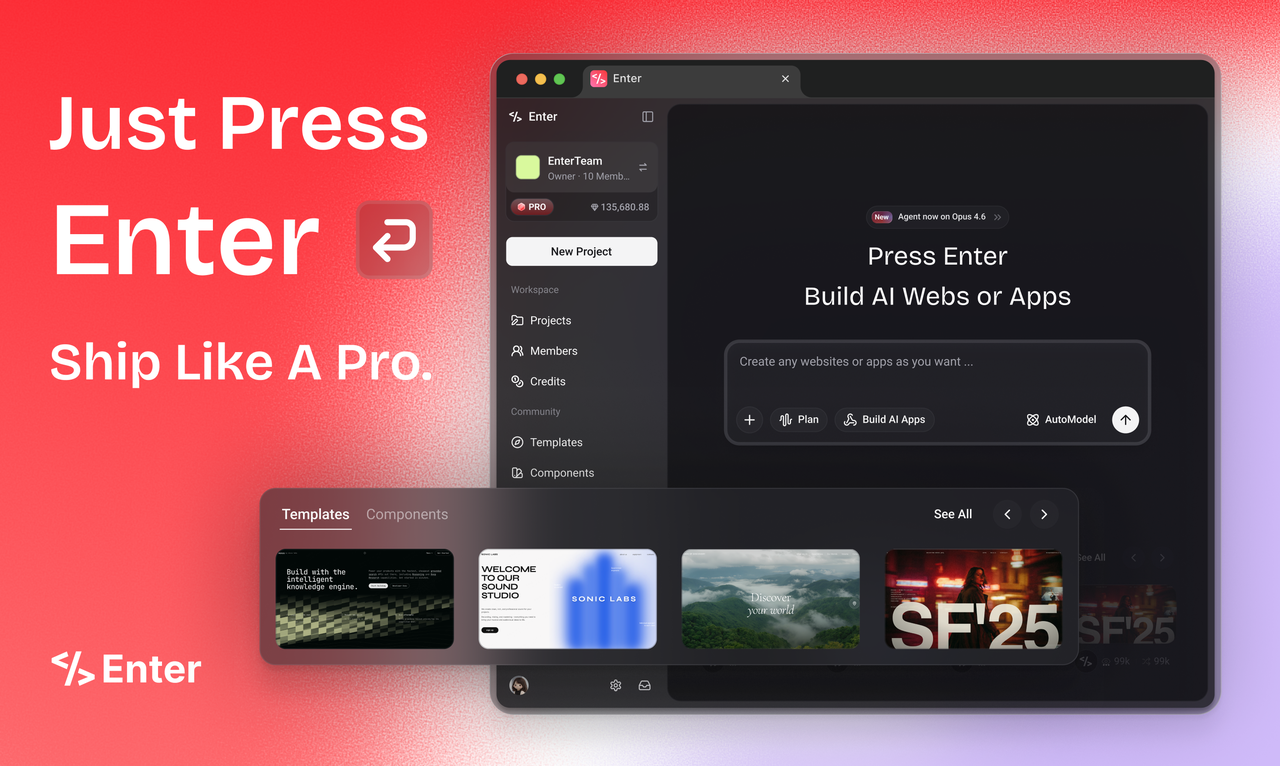
Beyond traditional low-code solutions, artificial intelligence is reshaping application building. Let us explore how Enter Pro Pro is leading this exciting new frontier of software development. Enter Pro** **acts as an innovative, vibe-coding agent to build websites and apps. It turns anyone into a full-stack developer, with professional templates and built-in integrations, all managed seamlessly under a single comprehensive subscription plan.
Features:
-
AI-powered app generation: The Enter Pro's agent turns simple text prompts into fully deployed applications featuring complete backend logic. Built-in LLMs let you switch instantly between top-tier models without managing API keys.
-
**Template remixing & visual editing: **Remix the community's best templates to instantly build a full-stack clone. Then, use the intuitive Visual Editor to click any canvas element and tweak code with absolute precision.
-
**Instant integrations & collaboration: **Enjoy production-ready integrations with Stripe, Supabase, and Google Analytics from your very first prompt. You can also invite your team to a shared workspace to co-create effectively.
-
Transparent workflow & code ownership: Watch the agent plan and debug in real-time via the Chat Queue. Most importantly, maintain 100% code ownership by exporting your source code to deploy on your servers.
Ideal for: PMs, designers, founders, and anyone looking for an AI-powered dev team ready whenever inspiration strikes.
- Appsmith
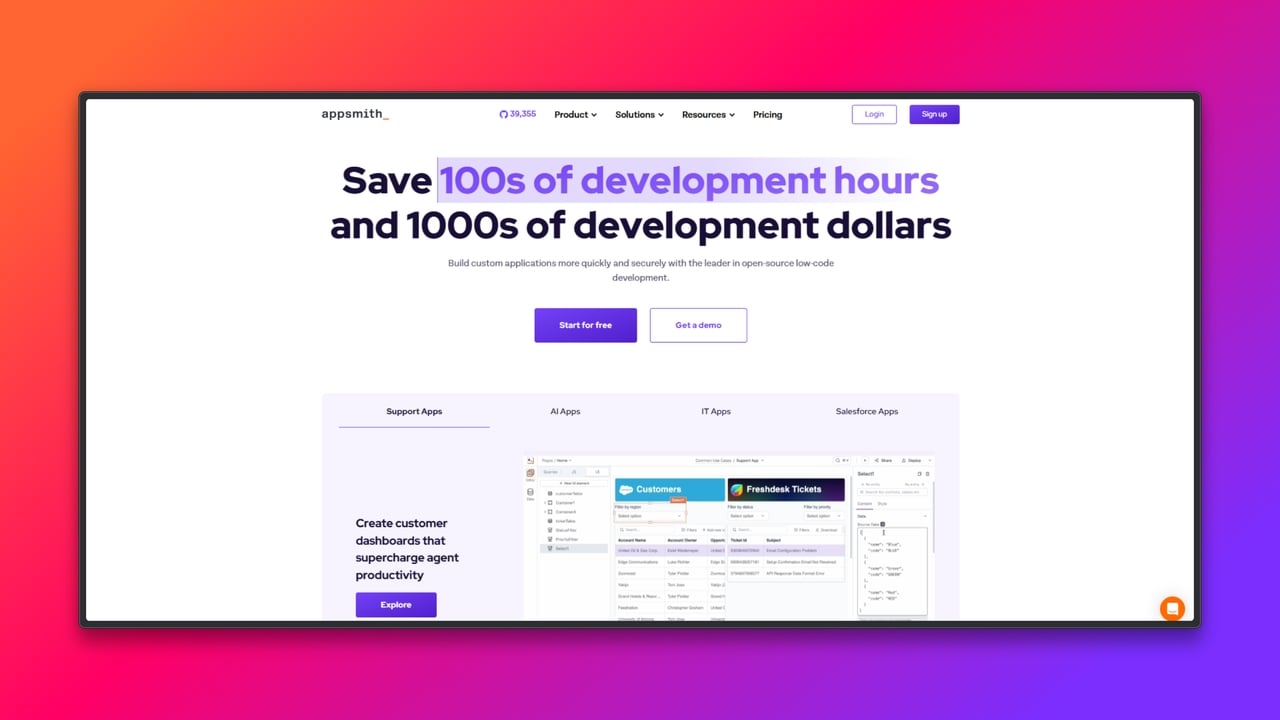
Appsmith stands out as one of the highly developer-centric, open-source low-code mobile development platforms that is built specifically for creating robust internal business tools. It empowers engineering teams to ship essential operational software faster while retaining complete flexibility and control over their code.
Features:
-
Responsive layouts that automatically adapt to different screen sizes and devices.
-
UI code extensions allow custom HTML and JavaScript integration.
-
Git-based version control for seamless team collaboration, tracking, and rollbacks.
-
Over 18 native integrations for easily connecting various databases and APIs.
Ideal for: IT teams and developers looking to build internal dashboards, admin panels, and CRUD apps without vendor lock-in.
- Microsoft Power Apps
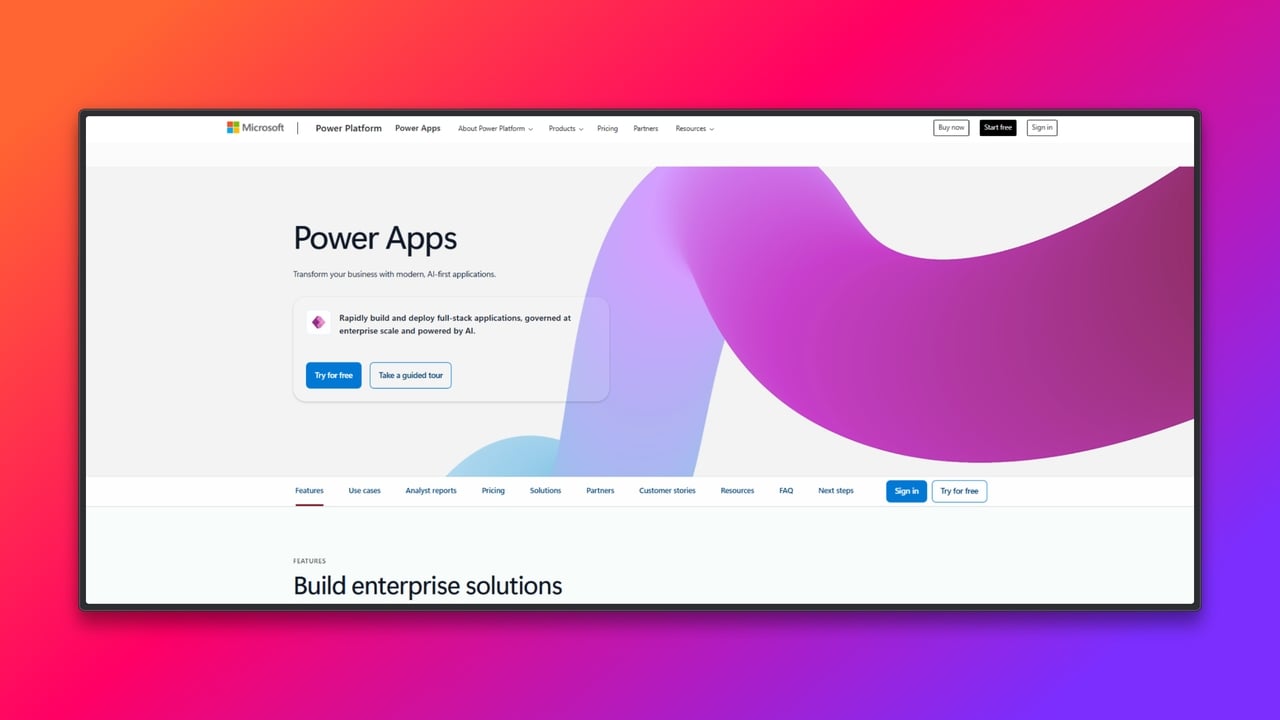
Microsoft Power Apps is a leading enterprise solution for rapidly and efficiently building custom business applications within the broader Microsoft ecosystem. It bridges the gap between data and actionable tools, enabling teams to modernize operations without starting from scratch.
Features:
-
AI-assisted application development powered by the Microsoft Copilot assistant tool.
-
Seamless and native integration across the entire Microsoft 365 product ecosystem.
-
Robust enterprise-grade security framework for safe, compliant application deployment.
-
Comprehensive data connectivity options to link various internal business systems.
Ideal for: Organizations already heavily invested in Microsoft products that need to quickly digitize internal processes.
- Mendix
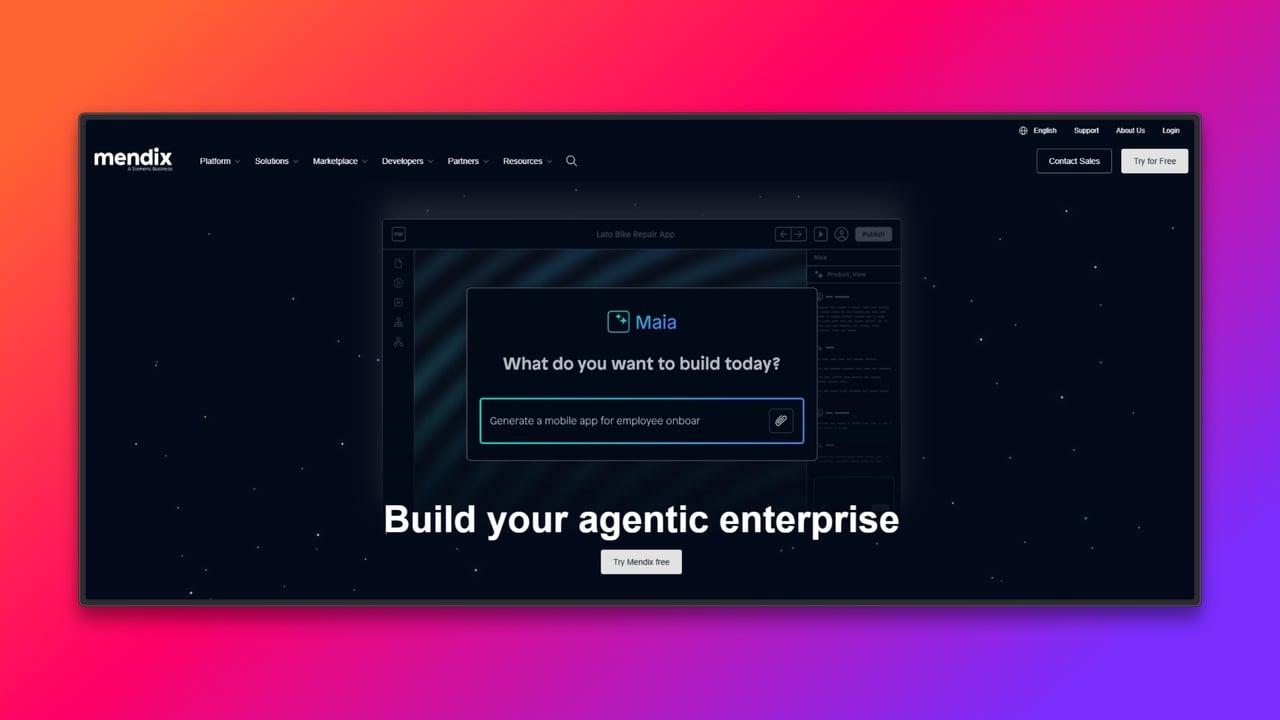
Mendix is recognized as one of the highly adaptable enterprise low-code development platforms focused extensively on driving large-scale digital transformation. By providing an intuitive collaborative environment, it effectively bridges the traditional gap between professional IT developers and domain-expert business teams to accelerate innovation.
Features:
-
Intuitive drag-and-drop visual modeling for accelerated application interface design.
-
Comprehensive version control mechanisms to track and manage collaborative changes.
-
Seamless integration capabilities for utilizing powerful external AI services.
-
Advanced in-platform machine learning functionalities for intelligent application logic.
Ideal for: Large enterprises looking to build complex, scalable applications and foster collaboration between citizen developers and professional coders.
- Zoho Creator
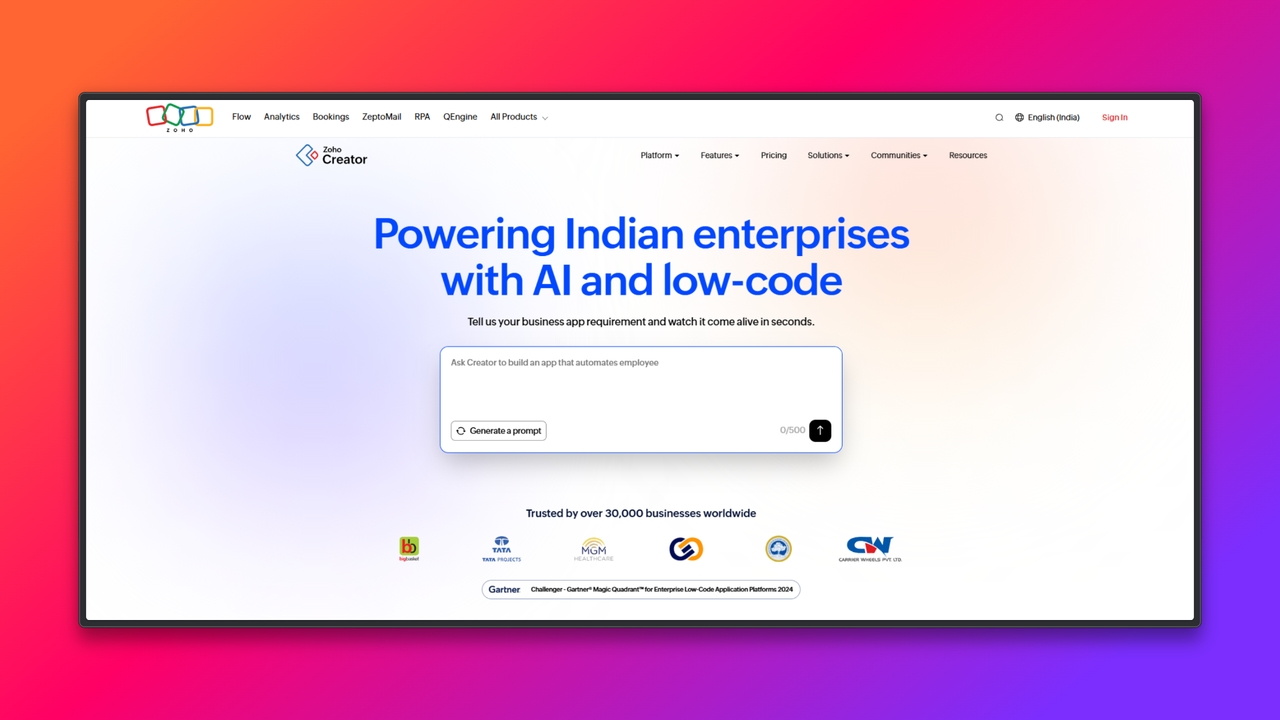
Zoho Creator is a highly versatile and incredibly easy-to-use platform favored globally for developing highly customized business software. It allows organizations to build and deploy powerful applications seamlessly across multiple devices, streamlining complex workflows with minimal technical friction.
Features:
-
A dynamic multi-device UI builder for consistent cross-platform user experiences.
-
Easy and secure data migration tools designed specifically for legacy systems.
-
Powerful workflow automation capabilities to streamline repetitive business processes effortlessly.
-
Extensive UI customization options to seamlessly match specific corporate branding guidelines.
Ideal for: SMEs needing to quickly launch mobile apps, CRM systems, or logistics management dashboards.
- Appian
Appian stands out as a remarkably powerful development platform specifically recognized for handling highly complex business processes. It excels at driving true enterprise-wide automation, enabling organizations to optimize operations, improve efficiency, and maintain strict compliance in heavily regulated industries.
Features:
-
A unique "Data Fabric" architecture to seamlessly integrate enterprise data.
-
Fast CI/CD deployment pipelines for rapid and continuous application delivery.
-
High-level, enterprise-grade security protocols tailored for strictly regulated industries.
-
Advanced process automation tools for managing intricate end-to-end business workflows.
Ideal for: Large corporations that require end-to-end workflow automation and compliance management.
Tips for the ideal low-code application development platform selection
Choosing the right platform is a critical decision that dictates your team's future development speed and scaling capabilities. Here are four essential tips to guide your evaluation process:
-
Define your core requirements: Before searching the market, outline exactly what you need to build, such as internal administrative tools versus customer-facing mobile apps. Furthermore, assess the technical proficiency of your team to ensure the platform's complexity aligns with their skills.
-
Evaluate capabilities & integrations: Your new tool must fit seamlessly into your current ecosystem. Ensure the platform easily connects to your existing software stack, databases, and third-party APIs to prevent data silos and workflow interruptions.
-
Consider community & support: A robust user ecosystem is an invaluable resource. Opting for a platform with a strong community, active forums, and comprehensive official documentation will save your team countless hours of troubleshooting.
-
Run a Proof of Concept (PoC): Don't commit blindly to a new software suite. Utilize available free tiers and trials to build a small-scale prototype. This hands-on approach allows you to rigorously test the platform's limits and usability in a real-world scenario before making a financial commitment.
Wrapping up
Low-code development is no longer a passing trend; it is a fundamental shift in how businesses build and scale software. Platforms have evolved from simple visual builders into sophisticated, AI-driven environments. Next-generation tools, particularly AI-native agents like** **Enter Pro, offer a distinct advantage by acting as virtual technical co-founders, rapidly blurring the lines between a raw idea and final execution.
To navigate this landscape, we encourage you to leverage the free trials and community editions of these platforms. The best way to find your perfect fit is to start small, run a proof of concept, and scale as your confidence grows.
FAQs
Can I build complex applications with low-code app development platforms?
Yes. Modern platforms support complex backend logic and extensive database management. Tools like Enter even offer production-ready integrations with services like Stripe and Supabase to seamlessly build advanced, full-stack applications from scratch.
What is the main difference between low-code and no-code platforms?
Low-code platforms allow custom coding for complex logic, while no-code relies entirely on visual interfaces. However, platforms like Enter blur these lines, offering a visual editor that still generates complete, customizable full-stack code.
How does low-code platform development handle security and data privacy?
Leading platforms prioritize security through role-based access controls, secure cloud or on-premises deployment, and data encryption. They generally comply with strict industry regulations, ensuring your enterprise data and customer information remain protected across all applications.
Will using an AI dev agent like Enter lock me into their ecosystem?
No. Enter specifically guarantees 100% code ownership, ensuring there is no vendor lock-in. You can freely export your full source code at any time and deploy the application directly to your own servers.