

8 Best Supabase Alternatives: Features, Pricing, And Comparison
Explore the best Supabase alternatives with features, pricing, and comparisons to choose the right backend or full-stack solution.
Choosing the right backend platform can significantly impact how fast you build and scale your application. With so many Supabase alternatives available today, finding the right fit can be challenging. In this post, we will explore the best Supabase alternatives, compare their features, pricing, and use cases, and help you decide which platform aligns best with your development needs and project goals.
What is Supabase?
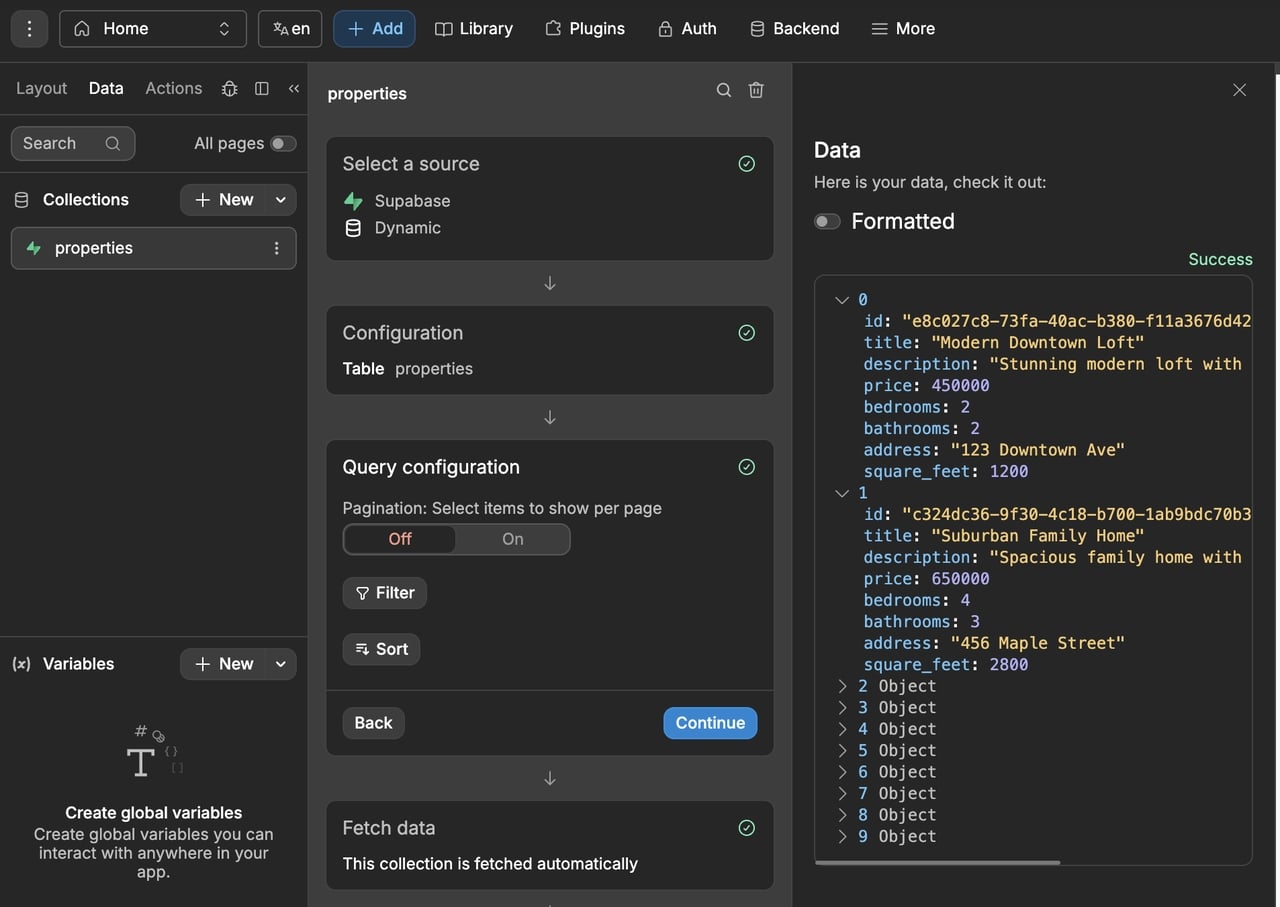
To understand what you might replace, it helps to look at what Supabase actually offers. At its core, Supabase is an open-source backend platform built around PostgreSQL. It provides a ready-to-use database, authentication system, auto-generated APIs, and real-time data syncing out of the box. Instead of spending weeks wiring everything together, developers can connect their frontend and start building immediately.
That said, Supabase still assumes a certain level of backend familiarity. Teams without experience in SQL or database design can find themselves stuck managing queries, permissions, and schemas. For developers prioritizing speed or simplicity, exploring the best Supabase alternatives in 2026 often becomes the next logical step.
Core features of Supabase
To evaluate Supabase effectively, it's important to understand its key features. These capabilities define how it supports backend development and why many teams rely on it.
-
**Open-source flexibility: **Supabase gives developers full access to its underlying architecture because it is open source. This means teams can customize, extend, or even self-host the platform depending on their requirements. It is particularly useful for companies with strict compliance or data-residency requirements. This level of control is one reason it competes strongly with other alternatives to Supabase.
-
PostgreSQL foundation: Supabase runs entirely on PostgreSQL, which is a reliable and widely adopted relational database. Developers can use standard SQL queries without learning a proprietary language. It supports advanced operations such as joins, indexing, and complex filtering. This makes it appealing to teams that want structured, scalable data management.
-
Automatic API generation: Supabase generates REST and GraphQL APIs from your database schema. This eliminates the need to manually write backend endpoints for basic operations. Developers can immediately perform CRUD actions without extra setup. It significantly reduces development time in the early stages of a project.
-
Real-time data syncing: The platform includes built-in real-time functionality that allows applications to listen for database changes. This is especially useful for apps like chat systems or dashboards. Updates are reflected instantly without requiring manual refreshes. It improves user experience and responsiveness.
-
Authentication system: Supabase provides a ready-to-use authentication system with multiple login options. These include email/password, OAuth providers, and third-party integrations. It simplifies user management and security implementation. Developers do not need to build authentication from scratch.
-
Storage and edge functions: Supabase also includes storage solutions for managing files such as images and documents. It integrates with authentication to control access permissions. Additionally, it supports edge functions that run closer to users, improving performance. This allows developers to execute backend logic efficiently without maintaining servers.
Quick Overview of the Best Supabase Alternatives
| Priority | Best Platform | Why it fits |
|---|---|---|
| MVP development with Built-in backend service | Enter Pro | It allows you to use AI to generate full applications and embed a native backend service into them |
| Mobile app scalability | Firebase | It offers real-time sync and strong mobile ecosystem support. |
| Full backend control | Appwrite | It enables self-hosting and complete infrastructure ownership. |
| GraphQL workflows | Nhost | It is designed specifically for GraphQL-based architectures. |
| Enterprise infrastructure | Northflank | It supports Kubernetes and advanced DevOps pipelines. |
| No-code backend | Xano | It allows non-developers to build APIs visually. |
| Beginner-friendly full stack | Backendless | It combines frontend and backend tools in one platform. |
| Internal tools | ToolJet | It simplifies building dashboards and admin panels. |
Top Supabase Alternatives to Explore in 2026
With the rapid evolution of backend tools, there are now several powerful Supabase alternatives available for different use cases. The right choice depends on your development needs, technical expertise, and scalability requirements.
1. Enter Pro
Enter Pro** **stands out among modern Supabase alternatives by using AI to generate full-stack applications from simple prompts. Instead of manually setting up infrastructure, users can quickly build and launch projects with minimal effort. With a built-in "Cloud Panel", Enter provides backend infrastructure that can include database, storage, functions, and secrets right into your project; never the headache of managing servers. It's ideal for teams looking for faster execution, making it one of the best Supabase alternatives in 2026 for speed and simplicity.

Key features
-
Enter Pro allows users to generate full-stack applications using natural language prompts instead of manual coding.
-
Enable Cloud provides a native backend service that helps to manage database, functions, storage, secrets, and auth all in one place.
-
It includes built-in integrations such as payments and analytics from the start.
-
The platform offers a template marketplace that lets users quickly remix existing applications.
-
It provides a visual editor for refining UI and functionality in real time.
Pros
-
Enter Cloud is available at no extra cost during the launch period.
-
It enables non-technical users to build functional applications without coding.
-
It allows full code export, giving users ownership and flexibility.
-
It supports rapid prototyping for startups and small teams.
Cons
-
It offers less granular control compared to traditional backend systems.
-
Advanced developers may find some processes overly abstracted.
Pricing
- Enter Pro offers a free tier, while paid plans scale based on usage and advanced features.
2. Firebase
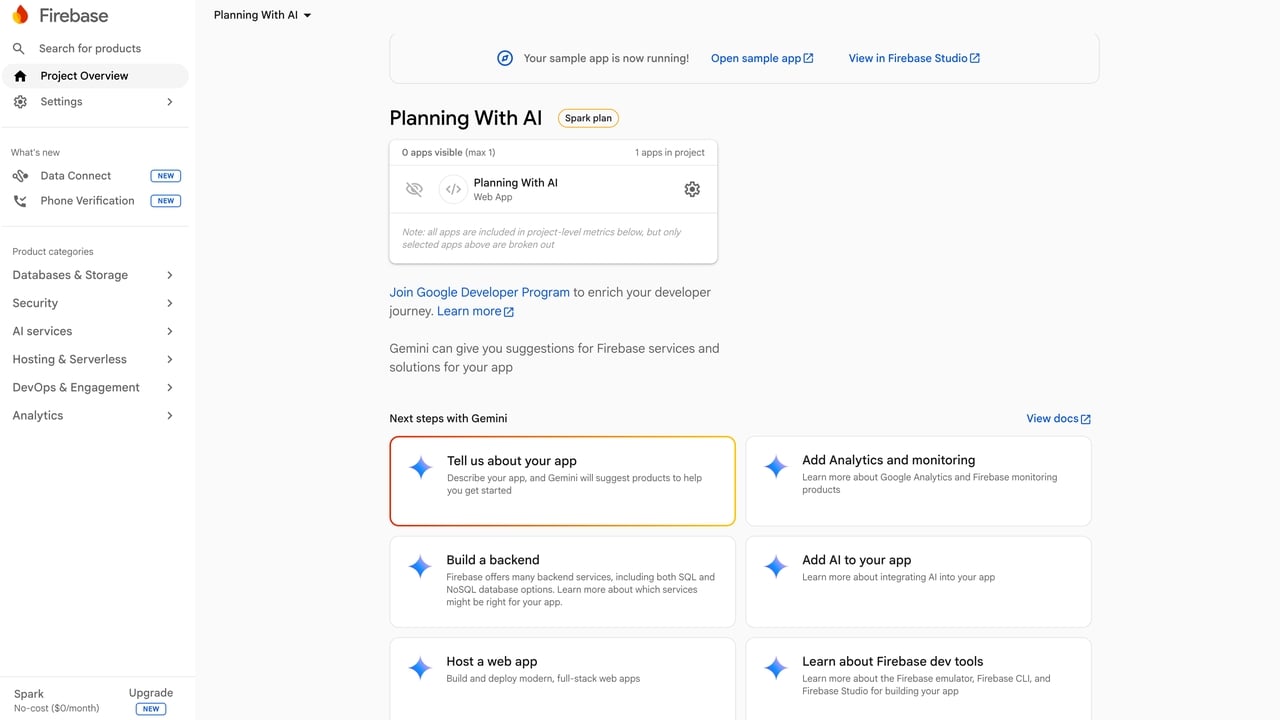
Firebase is one of the most established backend platforms, especially for mobile applications. It offers a full suite of tools, including hosting, authentication, and analytics. Its deep integration with Google services makes it highly scalable. It is widely considered one of the best Supabase alternatives in 2026. If you are confused between Supabase and Firebase, check head-to-head supabase vs firebase comparison to make a decision.
Key features
-
Firebase provides a real-time NoSQL database that syncs data instantly across devices.
-
It includes built-in authentication and hosting services.
-
It offers cloud functions for running backend logic without managing servers.
-
It integrates with analytics tools to track user behavior.
Pros
-
It scales efficiently for large applications with high traffic.
-
It offers strong documentation and community support.
-
It integrates seamlessly with Google Cloud services.
Cons
-
It can lead to vendor lock-in within the Google ecosystem.
-
Its NoSQL structure requires a different data modeling approach.
**Pricing **Firebase offers a generous free tier, with paid plans starting around $25 per month based on usage.
3. Appwrite
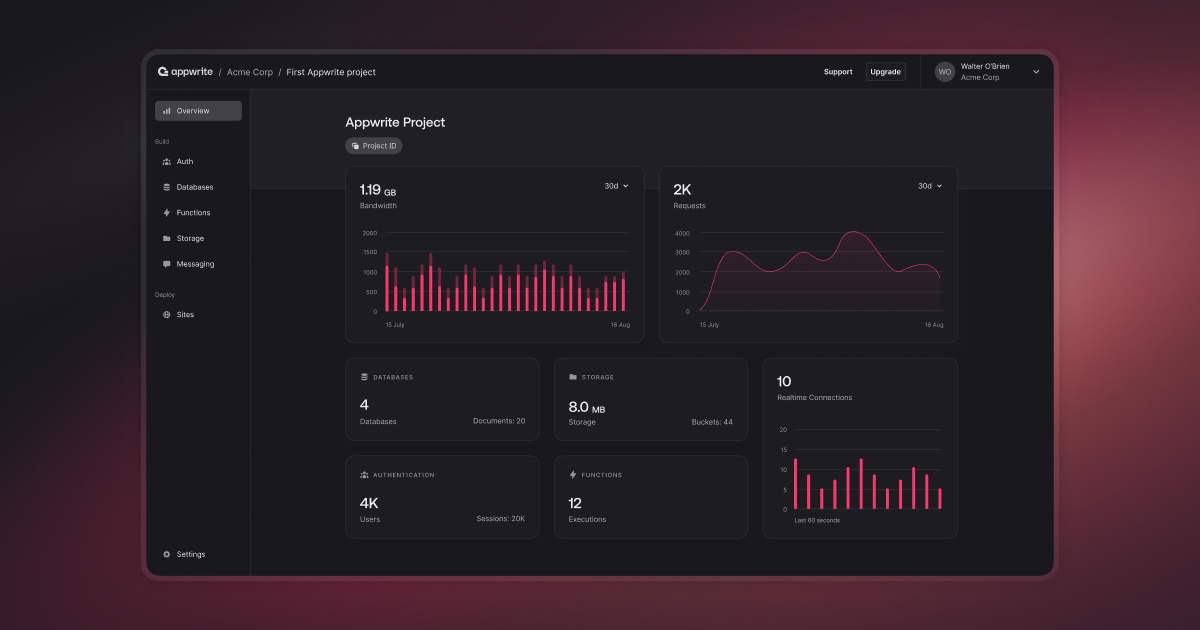
Appwrite is an open-source platform often considered among the free alternatives to Supabase. It provides backend services like authentication, databases, and storage while giving developers full control through self-hosting. Its flexibility and privacy-focused approach make it a strong choice for teams exploring reliable Supabase alternatives.
Key features
-
Appwrite provides authentication and user management capabilities.
-
It includes database and file storage services.
-
It supports serverless functions for backend logic.
Pros
-
It allows complete control through self-hosting.
-
It ensures strong data ownership and privacy.
-
It is fully customizable due to its open-source nature.
Cons
-
It requires manual setup and maintenance.
-
It has a smaller ecosystem compared to larger platforms.
**Pricing **Appwrite is free when self-hosted, while cloud plans vary based on usage.
4. Nhost
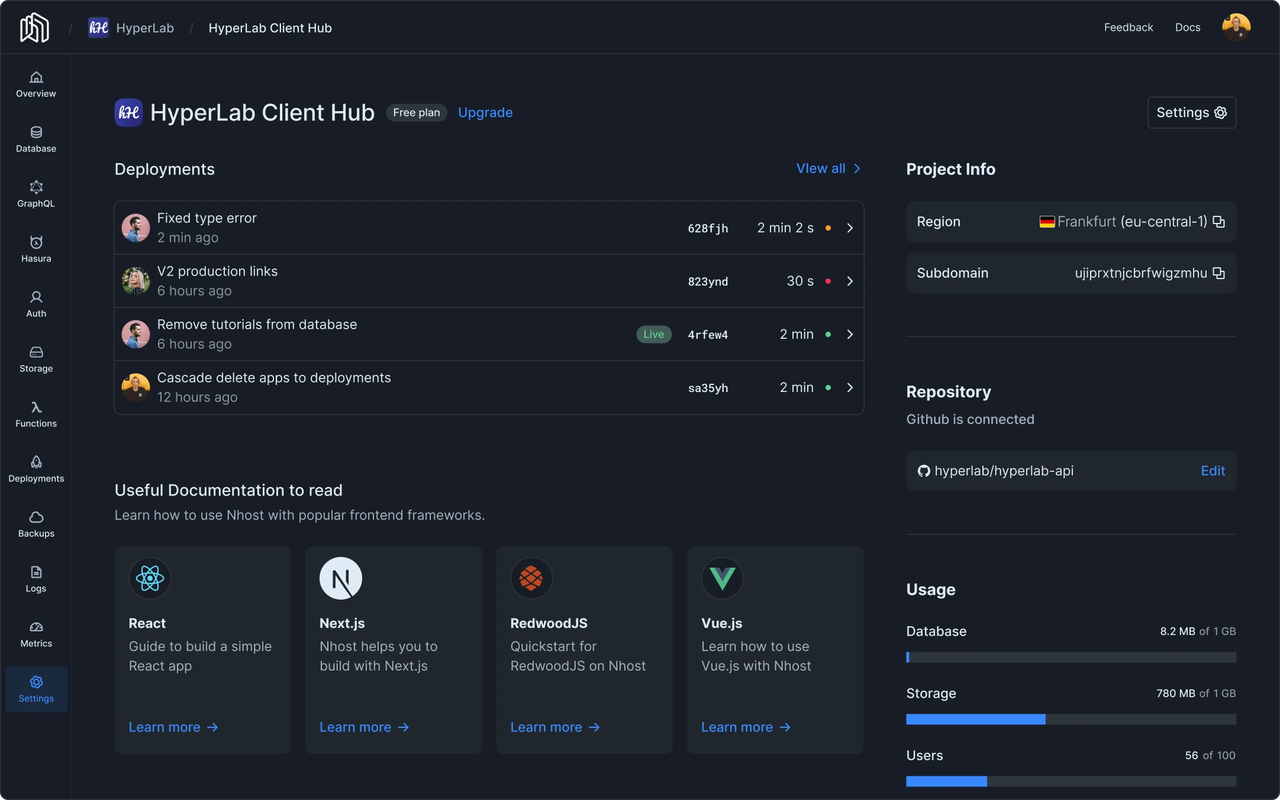
Nhost is a modern backend platform built on PostgreSQL and GraphQL, offering a developer-friendly alternative to Supabase. It combines real-time data, authentication, and APIs in one system. For those looking for alternatives to Supabase with a GraphQL-first approach, Nhost is a practical and efficient option.
Key features
-
Nhost provides a GraphQL API connected to a PostgreSQL database.
-
It includes authentication and file storage features.
-
It supports real-time data updates.
Pros
-
It offers a smooth GraphQL-based development experience.
-
It integrates well with modern frontend frameworks.
-
It provides a familiar structure for Supabase users.
Cons
-
It is limited if you do not use GraphQL.
-
Its ecosystem is smaller compared to competitors.
Pricing
Nhost offers a free tier, with paid plans starting at approximately $25 per month.
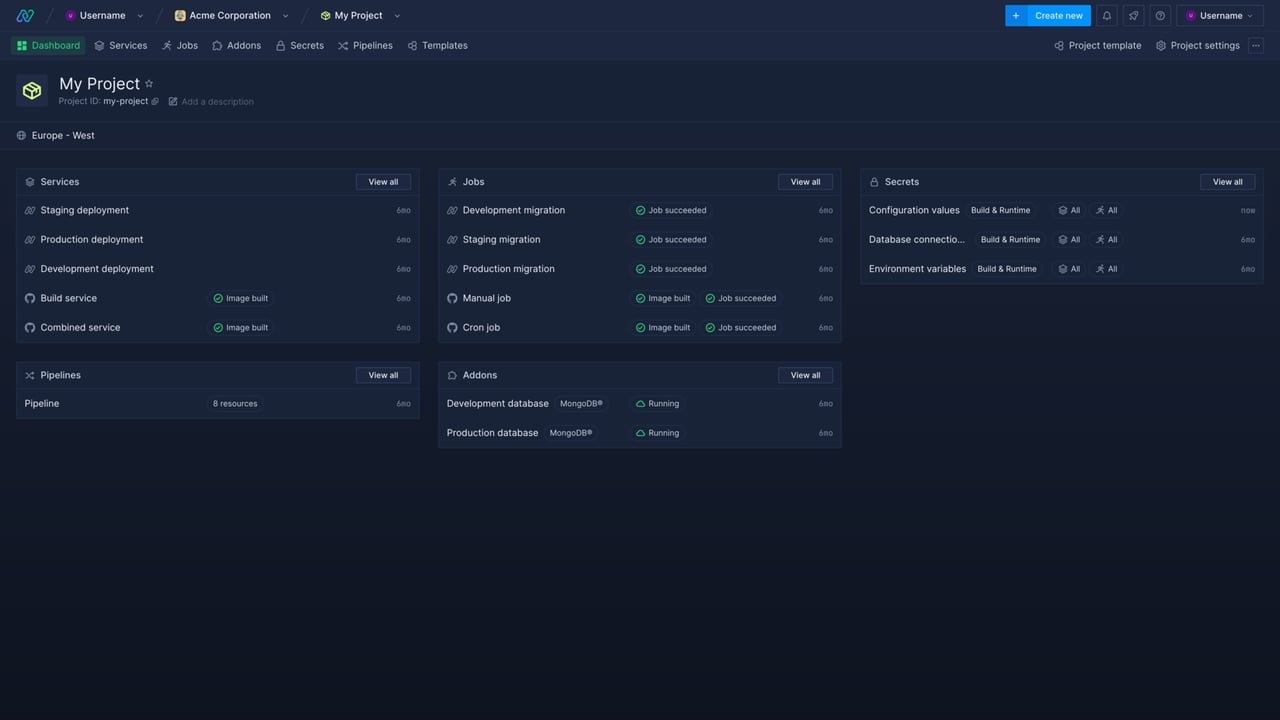
5. Northflank
Northflank is a powerful infrastructure platform designed for teams that need scalable and production-ready environments. Unlike simple backend tools, it focuses on deployment, automation, and performance. It is one of the more advanced Supabase alternatives for 2026, suitable for developers who need greater control over infrastructure.
Key features
-
Northflank provides hosting and deployment capabilities.
-
It uses Kubernetes-based infrastructure for scalability.
-
It supports CI/CD pipelines for automation.
Pros
-
It is highly scalable for enterprise applications.
-
It supports advanced DevOps workflows.
-
It provides strong performance and reliability.
Cons
-
It has a steep learning curve.
-
It requires technical expertise to manage.
Pricing
Northflank uses a usage-based pricing model depending on resources consumed.
6. Xano
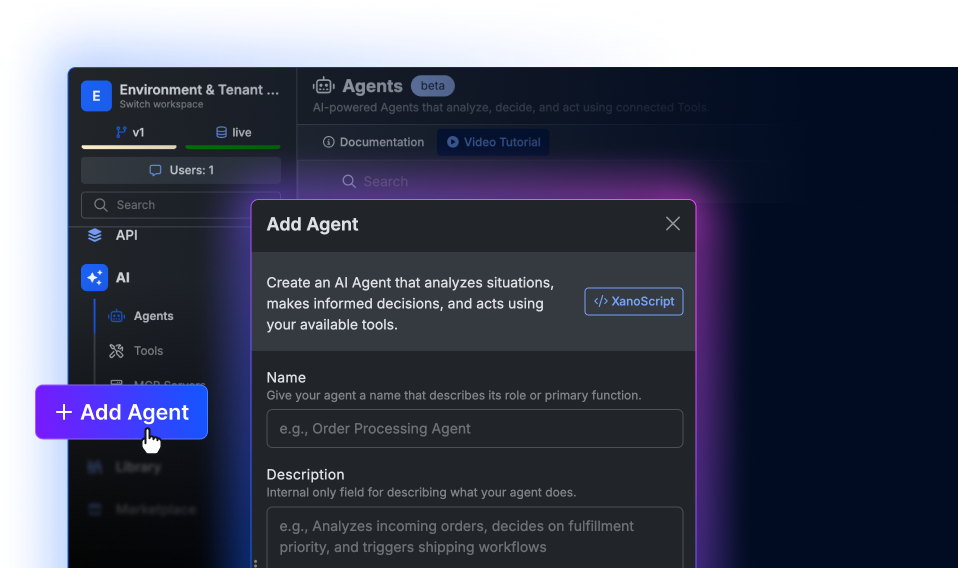
Xano is a no-code backend platform that simplifies application development without requiring programming skills. It allows users to build APIs and manage databases through a visual interface. As one of the more accessible free alternatives to Supabase, it's ideal for startups and non-technical users looking to build quickly.
Key features
-
Xano allows users to build backend systems without writing code.
-
It provides API creation and management tools.
-
It supports scalable database operations.
Pros
-
It is accessible to users without coding experience.
-
It enables rapid development and deployment.
-
It offers flexibility in API design.
Cons
-
It can become expensive as usage increases.
-
It may be limiting for complex logic.
Pricing
Xano plans typically start at around $85 per month.
7. Backendless
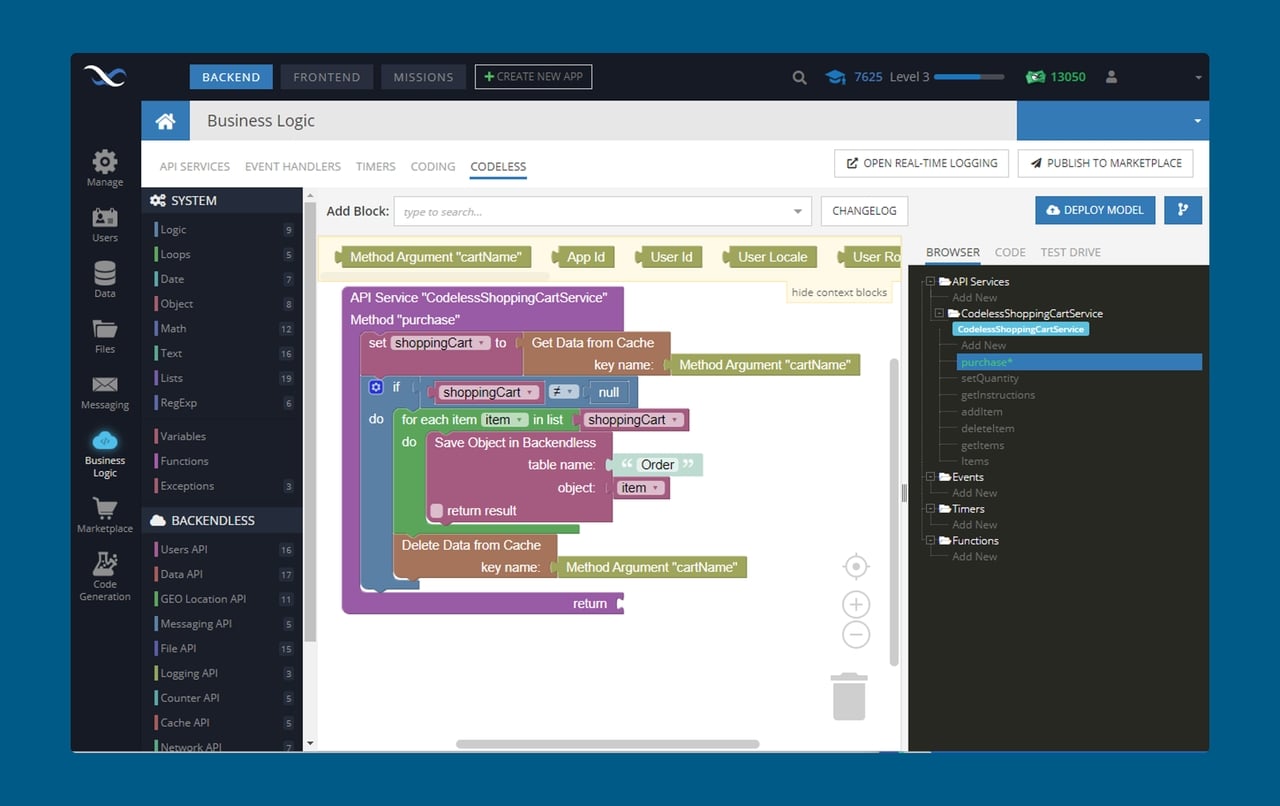
Backendless is a visual development platform that combines backend services with frontend capabilities. It enables users to build full-stack applications through a drag-and-drop interface. For beginners exploring Supabase alternatives, Backendless offers an easy entry point with strong functionality and minimal coding requirements.
Key features
-
Backendless offers a visual interface for building applications.
-
It includes backend services such as databases and authentication.
-
It supports real-time data updates.
Pros
-
It is beginner-friendly and easy to use.
-
It supports full-stack development.
-
It provides comprehensive documentation.
Cons
-
It offers limited flexibility for advanced users.
-
Its visual interface can feel restrictive.
Pricing
Backendless offers a free tier, with paid plans starting at $25 per month.
8. ToolJet
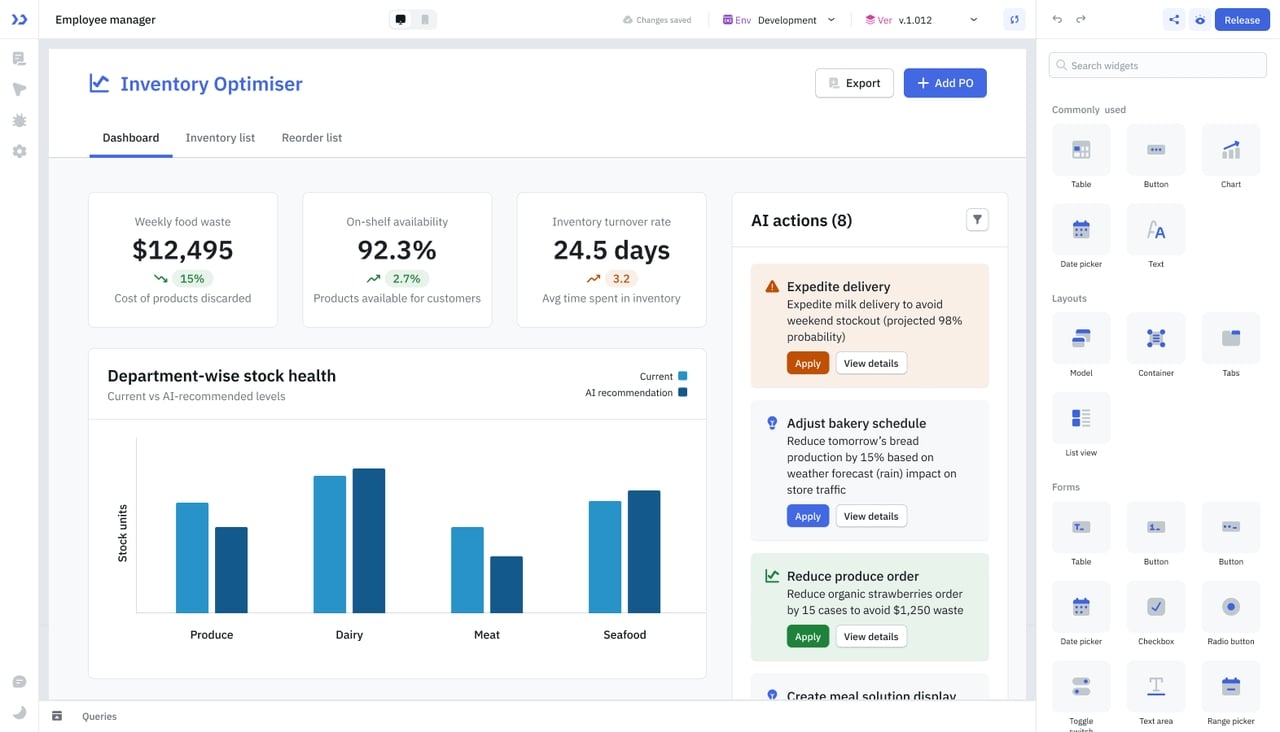
ToolJet is a low-code platform designed to quickly build internal tools and dashboards. It connects to databases and APIs and allows customization when needed. Among Supabase alternatives, it stands out for teams focused on internal workflows rather than customer-facing applications.
Key features
-
ToolJet provides a drag-and-drop interface for building dashboards.
-
It integrates with databases and APIs.
-
It supports customization through code.
Pros
-
It is ideal for internal tools and admin panels.
-
It is open-source and flexible.
-
It allows rapid development of business applications.
Cons
-
It is not suitable for consumer-facing applications.
-
It has limited frontend capabilities.
Pricing
ToolJet is free when self-hosted, while cloud plans range from $20 per month.
Key factors to consider when choosing Supabase alternatives
Choosing among the many Supabase alternatives available today is not just about comparing features—it's about finding a platform that aligns with how you build, scale, and maintain applications. Different tools are designed for different types of users, from backend-heavy developers to no-code founders. Before making a decision, it's important to evaluate a few core factors that directly impact your development experience and long-term success.
-
Ease of use for beginners: Ease of use is crucial, especially for teams without backend expertise. Platforms with visual interfaces and guided workflows reduce complexity and speed up development. The right choice depends on whether you prefer simplicity or technical control.
-
Backend vs full-stack capabilities: Some tools focus only on backend services, while others support full-stack development. If you already have a frontend, backend tools may be enough. Otherwise, full-stack platforms can save time by handling everything in one place.
-
Integration ecosystem: A strong integration ecosystem allows you to connect with tools like analytics, payments, and APIs easily. Platforms with built-in integrations reduce setup time and improve workflow efficiency. This also ensures your system can scale without constant adjustments.
-
Scalability and performance: Scalability ensures your application can handle growth and increased traffic. Look for features like auto-scaling, reliable uptime, and efficient data handling. Choosing a scalable platform early helps avoid costly migrations later.
-
Pricing flexibility: Pricing models vary between usage-based and fixed plans. It's important to understand costs as your application grows to avoid unexpected expenses. Flexible pricing helps you start small while supporting long-term scalability.
Conclusion
We are in a strong era of backend innovation. Supabase remains a powerful platform, but it is no longer the only option. The rise of Supabase alternatives has made it easier to find tools that match specific needs, whether that is speed, control, or simplicity. The right choice depends on your team, your product goals, and how quickly you need to move. For teams that prioritize speed and minimal setup, platforms like Enter Pro can offer a more efficient path to building and launching applications.
Frequently Asked Questions
How do I choose the right platform for my project?
You should evaluate your technical expertise, project complexity, and timeline before choosing a platform. Developers with backend experience may prefer tools like Appwrite or Northflank, while beginners may find Xano or Backendless easier to use. If speed is critical, AI-based platforms can help accelerate development.
Are there reliable free alternatives to Supabase?
Yes, several platforms offer free options. Appwrite and ToolJet are open-source and free when self-hosted, while Firebase and Nhost provide free tiers with usage limits. These options are suitable for testing and small-scale applications.
How do Supabase alternatives compare in pricing?
Pricing varies significantly depending on the platform. Traditional backend tools often use usage-based pricing, while no-code and AI platforms offer subscription-based plans. It is important to estimate long-term costs based on expected growth.
Which Supabase alternative is best for beginners?
Backendless and Xano are strong choices for beginners due to their visual interfaces. They reduce the need for backend knowledge and simplify development workflows. These platforms are ideal for users who want to build applications quickly.
Is Enter Pro a good alternative to Supabase?
Enter Pro can be a strong alternative depending on your goals. It focuses on generating full applications using AI, which eliminates the need for backend setup. This makes it particularly useful for rapid prototyping and faster product launches.